REVIEW · SIGTUNA DAY TRIPS
Private Sigtuna Tour from Stockholm – Oldest Town of Sweden
Book on Viator →Operated by Sweden History Tours · Bookable on Viator
Sigtuna is where small stones tell big stories. This 5-hour trip takes you from central Stockholm to Sweden’s oldest surviving town, with roundtrip pickup and a guided walk that links Viking power, medieval faith, and later town life. It’s a tight route, so you get meaning fast without wasting hours commuting.
I especially like the way the guide connects the sites into a timeline, from early royal center to trading town. And I like that you’re walking key places in town while the context is still fresh in your head, not just snapping photos and hoping you guessed the story right.
One thing to consider is the price for what’s essentially a half-day outside the city. If you prefer to roam at your own pace with no structure, you may feel boxed in by the scheduled stops. Also, lunch is on your own, so plan a meal break in town.
In This Review
- Key points to know before you go
- Sigtuna: the day-trip town where time folds fast
- Price and value: what $628.11 gets you
- Getting there smoothly: hotel pickup and cruise pier meeting spots
- Stop 1: Walking Sigtuna’s Viking-age streets (and why the guide matters)
- Stop 2: Mariakyrkan, the oldest brick church in the region
- Stop 3: Sigtuna Radhus, Sweden’s tiniest town hall
- Stop 4: Wenngarn Hotell & Konferens—castle church and gardens
- Stop 5: S:t Olofs church ruins from the 12th century
- Lunch planning: keep it flexible, keep it simple
- Who this tour suits best (and who might skip it)
- Guide quality: why people mention names like Karin and Calle
- Should you book this Sigtuna private tour?
- FAQ
- How long is the Sigtuna tour from Stockholm?
- Is hotel pickup and drop-off included?
- Is pickup included if my cruise docks at NYNÄSHAMN?
- What’s included in the price?
- Is lunch included?
- Is the tour only for adults, or can children join?
Key points to know before you go
- Hotel (or cruise port) pickup saves time and stress, especially if you’re short on your Stockholm hours
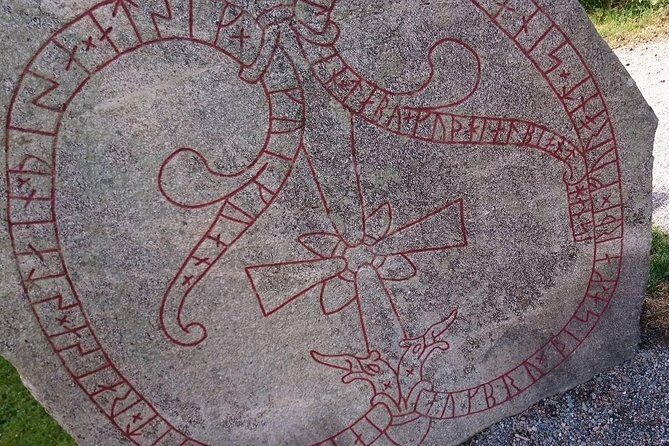
- Viking-era context on foot helps you read Sigtuna’s streets, churches, and ruins as history, not scenery
- Mariakyrkan brings you to the oldest brick building in the Stockholm region, with medieval wall art you can actually see
- Sigtuna Radhus (town hall) is tiny, but it carries stories about fires and later archaeology
- A short list of highly specific stops means less wandering and more understanding
- Maximum 16 travelers keeps it from feeling like a huge bus tour, though it may not be one-on-one private
Sigtuna: the day-trip town where time folds fast
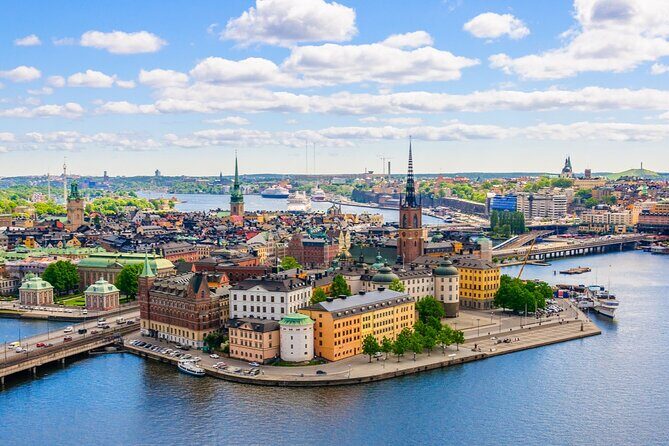
Sigtuna sits far enough from Stockholm to feel like a real change of pace, but close enough that a half-day works. It’s famous for being ancient by Swedish standards, often tied to the origin story that names King Erik the Victorious and a founding around 980 AD. That single fact already shifts how you look at the place.
The best part is that the town doesn’t rely on one big monument. Instead, it’s a chain of small, meaningful stops: church buildings, church ruins, a tiny old town hall, and the street layout you can walk through while a guide explains what mattered and why. You leave with a clearer mental map of how power and trade moved through this lakeside area over centuries.
Other Viking history tours from Stockholm

Price and value: what $628.11 gets you

At $628.11 per person, you’re paying for more than transportation. The included package bundles several things that add up:
- Roundtrip hotel pickup and drop-off in central Stockholm areas
- A guided experience with a local or regional guide
- Transport in an A/C vehicle (air-conditioned minivan or coach)
- Fuel surcharge and local taxes
And the schedule is compact: roughly 5 hours total, with dedicated time at each stop rather than long, aimless drives. For many people, the value comes from efficiency. Getting to Sigtuna by public transit is doable, but the trip can eat up most of your day once you factor in trains, connections, and walking. Here, the tour’s structure keeps your time attached to the historical sites.
That said, this isn’t a deal if you mainly want photos and casual wandering. With a guided format, you’ll cover set points, at set times. The best value is for people who like history explanations while they’re standing in front of the evidence.
Getting there smoothly: hotel pickup and cruise pier meeting spots
The tour starts at 9:30 am, and pickup covers all central hotels, accommodations, cruise ports, and points of interest. If you’re staying in central Stockholm, that’s a big win: you’re not coordinating trains on a clock.
If you’re arriving by cruise, pay attention to the pier-specific guidance. In plain terms: find the meeting point close to your ship, follow the indicated harbor directions, and look for a guide holding an A4 sign labeled Viking Tours.
Key cruise examples you should note:
- If your ship docks at S165 or S167 (Stads.gården), walk a few hundred meters following the BLUE/GREEN lines, then go past fences and guards. The guide waits nearby.
- If you dock at F638 (Frihamnen), meet the guide just outside the terminal building after the sliding doors.
- If you dock at V523 (Värtahamnen), head toward the tourist bus area near the ship hull; the guide waits by the buses.
One important exception: NYNÄSHAMN has no pickup included, since it’s about 50 km from central Stockholm. If you’re on a cruise that docks there, you’ll want to coordinate a central meeting place with the operator using train or cruise bus options.
Also keep in mind that pickup times and transfer length depend on traffic and the time of day, so leave yourself a little breathing room.
Stop 1: Walking Sigtuna’s Viking-age streets (and why the guide matters)
The walk in Sigtuna is the core of the day. You’re spending about 1 hour 20 minutes here, and the value is how the guide frames what you’re seeing.
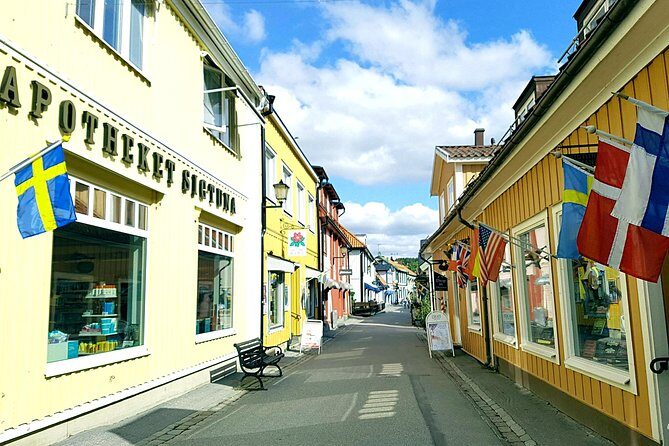
Sigtuna’s story is often described as a shift: from early royal power center into a trading town. That transition is the key to understanding why certain places feel both old and purposeful. A guided walk helps you connect the dots between:
- the town’s Viking-era setting
- later medieval changes
- what excavations and ongoing discoveries have taught researchers about the layout and life of the place
You’ll walk streets where you can picture daily movement—people coming and going, trade happening, churches anchoring community life. Without a guide, you’ll still get charm: narrow streets, classic old-town feel, and the sense of stepping back. But with the guide, it becomes more than atmosphere. You’ll get an actual storyline while you’re physically in the locations.
If you like history that feels practical—where people lived, worked, worshiped, and traveled—this first stop is the one that will make the rest of the day click.
Stop 2: Mariakyrkan, the oldest brick church in the region
Next up is Mariakyrkan, a quick stop at about 15 minutes, but it’s packed with specifics. This is described as the oldest brick building in the Stockholm region. That alone is worth a glance, because brick churches can signal durability, wealth, and organized building during medieval times.
What you’re likely to focus on here:
- medieval wall paintings and sculptures
- the church’s earlier life as a Blackfriars monastery church
Fifteen minutes sounds short, and it is. The trick is to treat it like a focused viewing window, not a long museum visit. If the paintings and sculptures are a priority for you, this is where you benefit from having a guide point out what you’re looking at and why it mattered to the people who built the church.
If you’re the type who enjoys slow looking, you might feel you want more time. Still, it’s a worthwhile stop because it’s an anchor point: a major medieval religious site tied to the right era.
Other Sigtuna day trips from Stockholm



Stop 3: Sigtuna Radhus, Sweden’s tiniest town hall
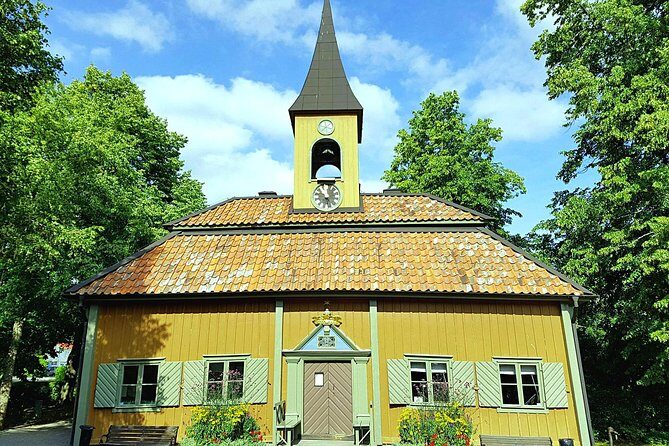
Another 15-minute stop brings you to Sigtuna Radhus, often described as Sweden’s tiniest town hall, built in 1744. The time is short, but the interest is high because the building is small enough that you can grasp it quickly—and the guide can explain why it exists.
Key details you’ll want to keep in mind:
- The interior is preserved enough that you can watch into parts of it
- The square around it was created after severe fires
- Archaeologists have found notable discoveries connected to what happened after those fires
This stop works well as a break from the older church focus. It shifts the day from religious power to civic life—how towns organized themselves and rebuilt after disasters. It’s also a good reminder that even centuries-old towns are not frozen in time. They got hit, repaired, and changed.
Stop 4: Wenngarn Hotell & Konferens—castle church and gardens
You’ll spend about 1 hour at Wenngarn Hotell & Konferens, where the focus is on the castle church and gardens. The duration here suggests the operator expects you’ll slow down a bit and take in the setting rather than only scanning objects.
What I like about this choice is the pacing. After multiple church-centered stops, the gardens and grounds provide a different kind of learning: you can see how church life and estate life related to physical space. This is also where you can take photos, walk a little at your own speed, and reset your brain for the final ruin stop.
One practical note: since this stop is tied to grounds and a church setting, dress for outdoor walking and changing weather. The tour is only a half-day, but Swedish weather can change quickly.
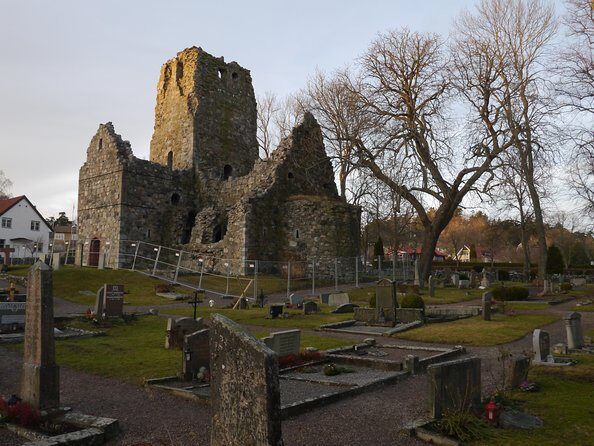
Stop 5: S:t Olofs church ruins from the 12th century
The last stop is S:t Olofs Church Ruins, around 10 minutes. Ruins are sometimes treated like quick picture stops, but they’re often the best teachers of all—if you know what you’re looking for.
Here, the key fact is the era: the ruins come from the 12th century. With a guide, you’ll understand the difference between a destroyed building and a meaningful historical remnant. Even without a full structure, the remaining pieces can tell you about construction choices, importance, and how long the community used it.
If you want one final “aha moment” before the day ends, this is it. It’s a compact ending to a day built on structures: churches built, churches decorated, civic buildings erected, and then time doing what time always does.
Lunch planning: keep it flexible, keep it simple
Lunch is not included, so you’ll need to handle it on your own. That can be a positive, because it lets you choose your timing and appetite. You can grab something from a coffee to a proper meal, depending on what you feel like when you’re done walking.
One name you may hear is Tant Brun’s kaffestuga—often suggested as a cozy fika stop and mentioned as reflecting a classic Swedish children’s-book vibe from earlier 1900s publication years. Whether you choose that or something else in town, the main move is to plan for food during your free time rather than expecting it to happen on the tour’s schedule.
Bring a water bottle too. Even in cooler weather, walking plus church viewing adds up.
Who this tour suits best (and who might skip it)
This tour is a strong fit if:
- you want a guided walk in Sigtuna with Viking-era context while you’re in the right places
- you like a short, efficient itinerary with no wasted time
- you appreciate church history and want medieval details pointed out, not guessed
- you’re traveling with limited Stockholm time and want a clean pickup-and-go plan
It may be less ideal if:
- you want to linger in museums or shop streets without any schedule pressure
- you’re purely sightseeing for scenery and don’t care for historical interpretation
- you prefer completely independent travel from stop to stop
For cruise passengers, the pickup clarity is a big deal. If your ship docks where pickup is included, you remove a layer of confusion. If you dock at NYNÄSHAMN, you’ll need to plan a central meeting place instead.
Guide quality: why people mention names like Karin and Calle
Small details matter on tours like this. In this case, people have praised the way guides show up on time and explain the town in an organized way. Names mentioned include guide Karin and Calle, plus driver Bianca for transport service. That kind of consistency usually signals something practical: clear communication, good pacing, and the ability to handle questions without turning the day into a lecture.
Even if you get a different guide, the structure is built for explanation in the right order: Sigtuna first, then key churches and buildings, then ruins. That sequencing helps you connect the dots.
Should you book this Sigtuna private tour?
If your goal is to get a real sense of why Sigtuna matters—without turning your day into a logistics puzzle—this tour is an easy yes. The biggest reasons to book are hotel/cruise pickup, the guided walking format, and the specific focus on places that make Viking and medieval history understandable in a few hours.
I’d only hesitate if your priorities are mostly shopping, long unstructured wandering, or if you expect lunch to be handled for you. In that case, you’d likely get more satisfaction from a looser self-guided plan.
If you do book, go in with one mindset: you’re not just visiting old buildings. You’re learning a sequence of change—Viking power, medieval faith, rebuilding after fires, and what centuries left behind. That’s what turns Sigtuna from pretty to meaningful.
FAQ
How long is the Sigtuna tour from Stockholm?
The tour runs about 5 hours (approx.), including transport time.
Is hotel pickup and drop-off included?
Yes, hotel pickup and drop-off is included for all central hotels and accommodations (and central cruise ports as described in the meeting point instructions).
Is pickup included if my cruise docks at NYNÄSHAMN?
No. No pickup is included for NYNÄSHAMN because it’s about 50 km from central Stockholm. You’ll need to coordinate a central meeting place using train or cruise bus options.
What’s included in the price?
The tour includes fuel surcharge, local taxes, a local or regional guide, hotel pickup/drop-off, port pickup/drop-off, and transport in an air-conditioned minivan or coach with A/C.
Is lunch included?
No. Lunch is not included, and you’ll pay for your own food and drinks during the day.
Is the tour only for adults, or can children join?
Most travelers can participate, and children must be accompanied by an adult.