REVIEW · HISTORICAL TOURS
Private Half Day Tour: Viking History Trip from Stockholm Including Sigtuna
Book on Viator →Operated by Sweden History Tours · Bookable on Viator
Runes outside Stockholm beat the usual sightseeing. In a five-hour private ride, you’ll stop at Broby Bro, Täby, Arkils tingstad, and Sigtuna, with a guide who explains what the stones mean and who lived nearby. I love the hotel pickup that makes this feel low-stress, and I love the runestone stories—the kind of detail guides like Olof or Jakob are great at turning into something you can actually picture.
One consideration: this is a talk-heavy history tour. If you’re sensitive to accents or you’re in a noisy vehicle, you may want to ask your guide to speak a bit slower or repeat anything that matters to you.
In This Review
- Key Things I’d Watch For Before You Book
- Why This Viking Half-Day Feels Like a Time Machine
- Price and Value: What $532.19 Is Really Paying For
- Pickup Rules, Timing, and How the Day Actually Flows
- Private Isn’t Just a Word: Your Group, Your Pace, Your Questions
- Stop 1: Broby Bro Runestones and Estrid’s Viking-Era Footprints
- Stop 2: Täby Jarlabanke Runestones and the Meaning of a Commemorated Lord
- Stop 3: Arkils tingstad and Viking Assembly Laws You Can Actually Imagine
- Stop 4 and 5: Sigtuna’s Wooden Town Streets and Church Ruins
- Stop 6: St Olof’s Church Ruins and the Early-Christian Timeline
- Lunch Timing: What You Should Plan for (and What You Can’t)
- The Real Star: The Guides (and a Caution About Hearing Accents)
- Who This Tour Fits Best
- Should You Book This Viking History Trip?
- FAQ
- How long is the Viking history trip?
- Is pickup included, and where does it work?
- What’s included in the tour price?
- Is lunch included?
- What are the main stops during the half day?
- Is there free cancellation?
Key Things I’d Watch For Before You Book
- Door-to-door convenience (within limits): Pickup is included for hotels/ports within 5 km of Stockholm central station, but not from Nynäshamn.
- A true private format: Only your group rides along (up to 16 people), so you can ask questions without shouting over strangers.
- Runestones + the people behind them: Expect stories tied to names like Estrid and Jarlabanke, not just stone facts.
- Thing-site time: Arkils tingstad is a preserved assembly place, so you get Viking law and custom, not only Viking warfare.
- Sigtuna’s slower old-town feel: You’ll walk the main street curve, visit church ruins, and check Mariakyrkan if it’s open.
- No lunch included: You’ll get a local lunch stop with time on your own, so plan around that.
Why This Viking Half-Day Feels Like a Time Machine
This tour works because it packs several different pieces of Viking-age life into one short window. You’re not only seeing monuments. You’re getting the human context: who set stones, why assemblies mattered, and how the region fit into broader routes and trading networks.
The day starts with pickup and a short drive outside the city. That matters. If you’re trying to see Viking sites near Stockholm, the biggest barrier is simply getting out there. You skip the taxi math and spend your time where the stories live.
And unlike a lot of “quick stops” that feel like photo breaks, this one leans into explanation. The runestones and church ruins are real, but the tour’s real value is how the guide connects them into a narrative you can follow.
Other private and hidden-gems tours in Stockholm



Price and Value: What $532.19 Is Really Paying For
At $532.19 per person for a private half-day, this isn’t a budget tour. The value comes from three practical things.
First, you’re paying for time. A 5-hour format with hotel/port pickup means you’re not spending half the day figuring out trains, transfers, or parking.
Second, you’re paying for a guide who can connect sites. The itinerary includes several locations with runestones and early Christian remains. The difference between seeing stones on your own and understanding what those names and dates suggest is huge.
Third, you’re paying for structure. The tour is planned so you don’t just hop between places. You get a theme shift as the morning moves: burial field and named people, then a lord’s commemoration, then law and assembly, then Sigtuna’s older religious landscape.
If your goal is only a couple of photos and a short walk, you might feel the price. If your goal is meaning—how Vikings lived, traded, governed, and later how Christianity took hold—this can feel more fair.
Pickup Rules, Timing, and How the Day Actually Flows
The tour departs at 9:30 am and runs about 5 hours total. You’ll be picked up in the morning and returned to your hotel in the early afternoon.
A key detail: pickup is included for hotels/ports/nearby accommodations within 5 km of Stockholm central station. There’s no pickup included from Nynäshamn (about 50 km away). If you’re coming from Nynäshamn, you’ll need to coordinate a central meeting point instead.
If you’re on a cruise, the meeting instructions are very specific by pier. The good news is that it’s designed to reduce confusion: you follow the directions to the meeting spot and look for your guide holding an A4-paper marked Viking Tours. At a few piers, you even head toward the tourist bus area to find the car.
In plain terms: for most hotels near the center, this is smooth. For cruises and Nynäshamn, you’ll want to read the pier/meeting instructions carefully so you’re not standing around waiting.
Private Isn’t Just a Word: Your Group, Your Pace, Your Questions
This is a private tour with a maximum of 16 people. Only your group participates, which matters when you’re on a history tour where questions are part of the fun.
In the stories you’ll hear, the guide isn’t just listing facts. You’ll get context like why Vikings used runes, what a grave field signals about community memory, and how assembly sites worked socially—not only politically.
That flexibility is where private tours can quietly pay off. If you care more about runes than churches, you can usually steer the balance. If you’re curious about how Vikings governed, you can ask for more on the thing-site and legal customs.
Stop 1: Broby Bro Runestones and Estrid’s Viking-Era Footprints
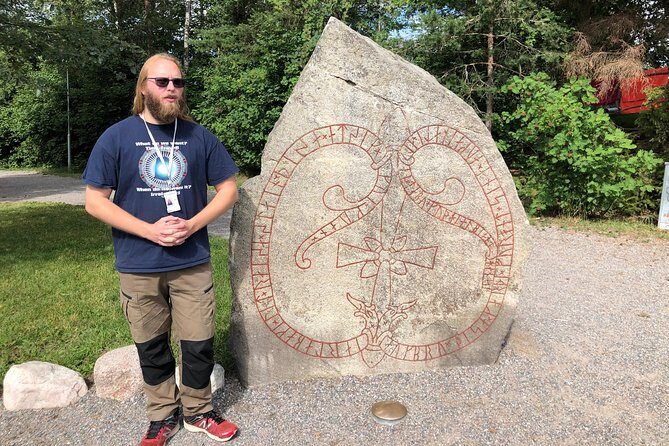
Broby Bro is the emotional opener of the day. It’s where you start to understand that runestones weren’t random graffiti. They were social statements—names carved into landscape to keep relationships visible across time.
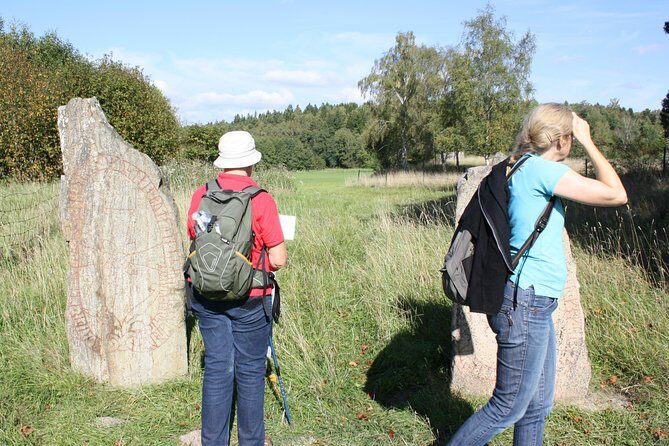
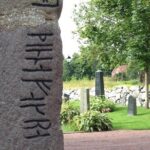
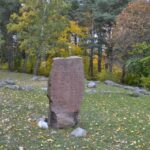
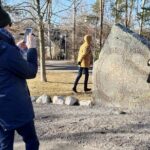
At Broby Bro, you’ll visit a Viking grave field and three runestones. One of the stones includes references tied to Jesuralem, and you’ll hear about the women involved—specifically Estrid, who shows up as a major figure in the region’s story.
This stop is also where daily life takes center stage. The guide talks about what Vikings here would have been doing in their Scandinavian world—how reputation formed, how names lasted, and why stones were worth the work.
Time on site is about 55 minutes, and admission tickets are free. That free entry is a small detail, but it matters because it keeps the schedule from turning into a waiting-and-paying detour.
What to watch for: don’t rush this. The runestone explanations land best when you have a moment to look at each stone and connect it to the guide’s story.
Other Viking history tours from Stockholm


Stop 2: Täby Jarlabanke Runestones and the Meaning of a Commemorated Lord
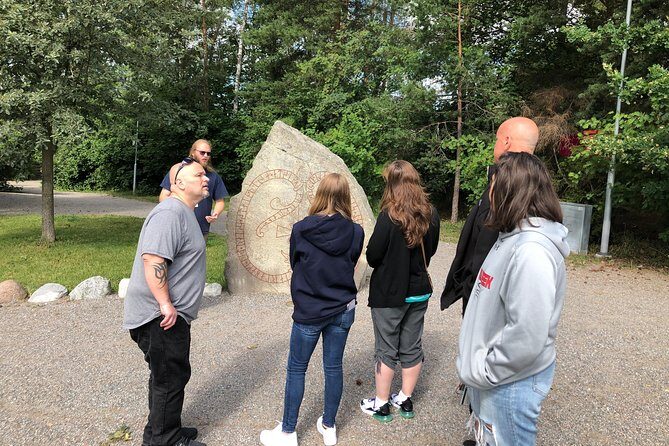
After Broby Bro, the tour shifts to Jarlabanke Runestones in Täby. This is a short stop—about 20 minutes—but it’s focused.
You’ll admire the stones near a reconstructed Viking causeway. That’s useful. Even when runestones look simple at first glance, context helps you see why they were placed where they were.
You’ll also hear about Jarlabanke, the lord behind the commemoration, and what Viking lords did in practice—how they managed and ruled local populations. The guide also connects this stop to wider themes like roads and trading networks, so the region doesn’t feel isolated.
The benefit of a quick stop here is that it keeps momentum. The drawback is you won’t get long “linger and ask everything” time. If Jarlabanke is your main target, plan to ask your most important question early in the visit.
Stop 3: Arkils tingstad and Viking Assembly Laws You Can Actually Imagine
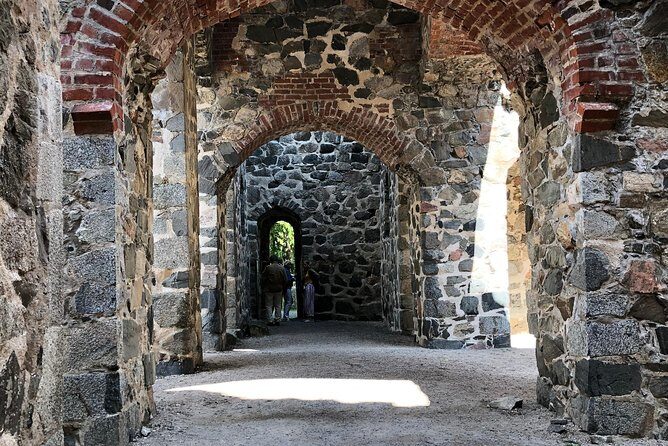
Arkils tingstad is one of the most interesting stops on the route. This is described as one of the best preserved assembly places, and the tour turns that into a lesson on how power worked.
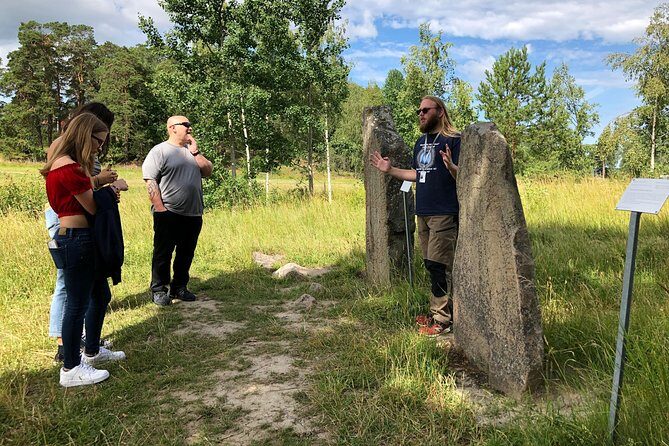
You’ll visit the thing-site and see runestones associated with it. You’ll also hear about the Skålhamra family and the kind of influence tied to creating an assembly place.
More importantly, you’ll get a sense of Viking law and culture customs. This is where you start learning that Vikings weren’t only raids and ships. They had structured decision-making and social rules.
Time here is again about 55 minutes, and admission tickets are free. This is the stop where I’d expect the guide’s storytelling to matter most. If you’re interested in governance, this is a strong use of your half-day time.
Practical tip: if you like this theme, don’t be shy about asking how assembly sites worked day-to-day versus ceremony. The tour’s format is built for questions.
Stop 4 and 5: Sigtuna’s Wooden Town Streets and Church Ruins
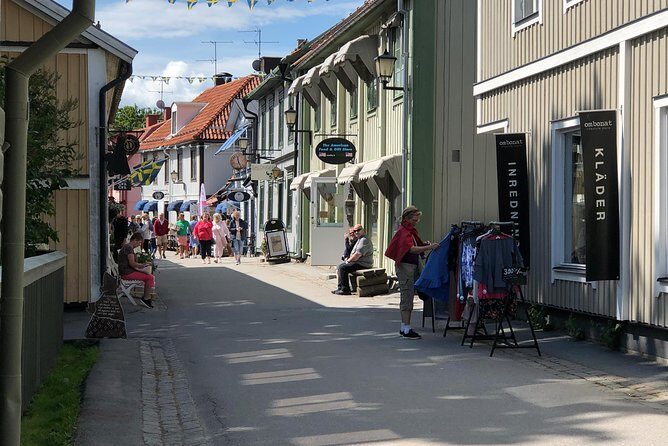
Then you head to the charming town of Sigtuna. This is the part of the day that softens from runes and laws into everyday walking.
You’ll get lunch time (own expense) with about 40 minutes allocated for the Sigtuna lunch stop. After that, you’ll do the historic walking portion with more time—another 40 minutes—to explore.
You’ll walk along the main street, including the curving street layout that still remains from the Viking-era street pattern. That kind of street geometry is subtle, but when a guide points it out, it becomes a real clue you can feel with your feet.
You’ll also look at church ruins and other highlights. If Mariakyrkan is open, you’ll visit it. Even if it’s not open, the guide will help you connect the area to the story of a powerful monastery located right outside the city.
This is the stop where the tour’s pacing matters. You want enough time to walk, look carefully, and ask questions without feeling rushed. The allotted time is tight, but it’s the kind of tight that works if you’re staying engaged rather than checking your phone every five minutes.
Stop 6: St Olof’s Church Ruins and the Early-Christian Timeline
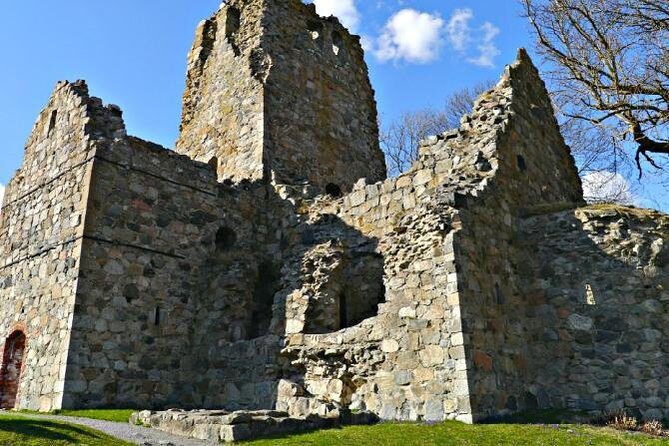
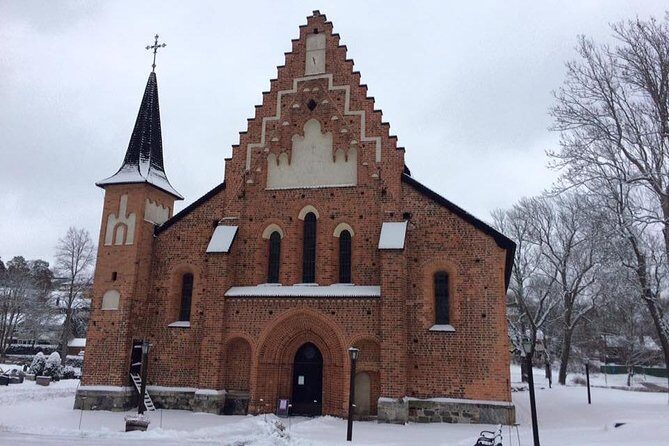
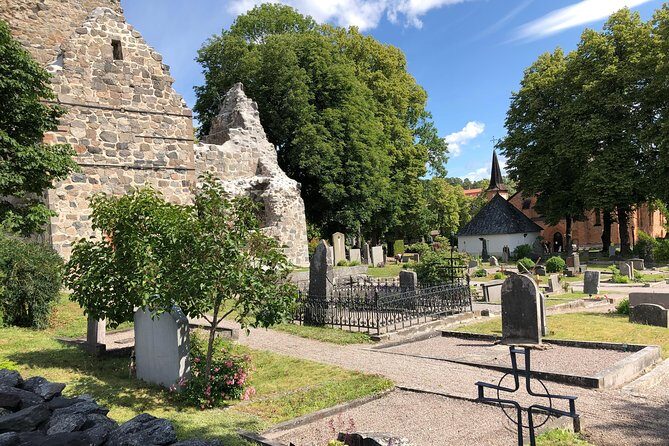
The final Sigtuna stop is the S:t Olofs Church Ruins. It’s described as the biggest and most well-preserved of the three church ruins around Sigtuna, and it’s tied to a long timeline—construction dated roughly to 1080–1120 near a holy well.
It’s only about 10 minutes here, so it’s not a full “sit and read” stop. But it gives you a strong closing idea: Viking-era memory doesn’t just end at runestones. It transitions into the religious architecture that followed.
If your brain loves timelines, use this last segment to mentally link the runes to the churches. In a single morning, you go from carved pagan-era messages to early Christian physical remains.
Lunch Timing: What You Should Plan for (and What You Can’t)
Lunch is not included. You’ll stop for lunch at your own expense, with about 40 minutes.
This matters because you’ll be in and out of places quickly. If you have strong preferences (vegetarian, specific allergy needs, or a must-have coffee stop), make that clear to yourself before you arrive. The tour gives you time, but it won’t wait while you hunt for the perfect spot.
If you want the most stress-free experience, eat somewhere simple and filling. Then you can focus on the ruins and runestones instead of negotiating meal decisions while you’re already on a schedule.
The Real Star: The Guides (and a Caution About Hearing Accents)
The tour lives or dies on guide skill, and the record here is strong. Names that show up as standout guides include Olof, Jakob, Gustav, Gabriel, Calle, Christian (as a driver), and Jonathan. More than one guide is described as turning the sites into stories you can follow, with lots of explanation and an easy willingness to answer questions.
You’ll also notice a pattern: guides often add regional folklore or cultural context. That’s valuable because it helps the sites feel less like “objects” and more like places where real communities lived.
The caution: one review notes difficulty understanding a guide due to accent and hearing challenges. If you fall into that category, it’s smart to go in expecting a talking-heavy experience. Bring your best listening strategy: ask for repetition early, sit where you can hear clearly, and don’t wait until you’re frustrated to speak up.
Who This Tour Fits Best
This is a great fit if you want:
- A guided Viking history day that mixes runestones, grave fields, and assembly/law themes
- A shorter route that still hits multiple key areas around Stockholm
- To see Sigtuna without needing to plan the transportation yourself
It might not be your best choice if:
- You’re expecting a lot of museum-style indoor time and more built attractions
- You feel runestones and ruins are too “few things” for the price
- You need a very quiet, low-talk experience
This is also a nice option for first-time Viking history fans. You’ll leave understanding what runestones are for and why they matter.
Should You Book This Viking History Trip?
Book it if you want a focused Viking day with hotel pickup, a private format, and a guide who connects Estrid, Jarlabanke, assembly culture, and Sigtuna’s church ruins into one story. It’s the kind of itinerary that saves you from doing three separate half-plans and still gives you time to ask questions.
Skip it or reconsider if you’re budget-sensitive at $532.19 per person, or if you know you need lots of downtime. This is an efficient route. That efficiency is part of the charm, but it also means you’re not “wandering” on your own schedule.
If you want the best outcome: come ready to look closely, ask questions early, and treat lunch as a quick local reset—not the main event.
FAQ
How long is the Viking history trip?
It runs about 5 hours (approx.), starting at 9:30 am and returning you to your hotel in the early afternoon.
Is pickup included, and where does it work?
Pickup is included for hotels and ports within 5 km of Stockholm central station. Pickup is not included from Nynäshamn.
What’s included in the tour price?
The tour includes the driver/vehicle, hotel/port pickup and drop-off (within the stated area), all taxes and surcharges, and a private small-group format. Mobile ticket and English are included.
Is lunch included?
No. There’s a lunch stop in Sigtuna where lunch is at your own expense.
What are the main stops during the half day?
You’ll visit Broby Bro, Jarlabanke Runestones in Täby, Arkils tingstad, and Sigtuna, including church ruins and S:t Olofs Church Ruins. Mariakyrkan is visited if open.
Is there free cancellation?
Yes, free cancellation is offered. You can cancel up to 24 hours before the experience’s start time for a full refund.