REVIEW · GAMLA STAN & OLD TOWN TOURS
Stockholm Troll Hunt: Self-Guided Old Town Adventure
Book on Viator →Operated by Questo · Bookable on Viator
Your phone turns Old Town into a game. This private troll-hunt quest lets you play with your group only, using mobile puzzle challenges at landmark stops from the Royal Swedish Opera to Stortorget.
I love that it’s designed for your pace, so you can take breaks and keep going when you want. The storyline is built around local legends and history, and it’s delivered through 12 interactive challenges instead of a lecture.
One possible drawback: the success of the experience depends on getting the mobile setup smooth and the in-app instructions clear enough for you to answer the challenges.
In This Review
- Key things to know before you go
- Stockholm Troll Hunt: a phone quest through Gamla Stan’s big landmarks
- Price and value: $7.21 for 50–75 minutes of puzzles
- How the quest works: mobile code, answer challenges, keep moving
- Stop-by-stop route: from Royal Swedish Opera to Stortorget
- 1) Royal Swedish Opera: where Swedish opera took shape
- 2) Early parliamentary roots: the Four Estates story
- 3) A Baroque-era palace: 18th-century building stir
- 4) Royal Armoury and the Three Crowns legacy
- 5) Storkyrkan (Stockholm Cathedral): oldest church in Gamla Stan
- 6) The sculpture behind the Finnish Church: hard to spot, fun to find
- 7) Sten Sture the Elder and the Battle of Brunkeberg
- 8) Den Gyldene Freden: Golden Peace since 1722
- 9) Järntorget: trade square dating to around 1300
- 10) A long open space by the library and Storkyrkoskolan
- 11) Sankta Gertrud church: German neighborhood roots and a traveler patron
- 12) Palace of the Purse area: French rococo and Nobel connections
- What I like about this format (and why it works for most people)
- Where this might feel frustrating
- Timing tips: getting the most out of 50 minutes to 1 hour 15
- Who should book this Troll Hunt quest
- Should you book Stockholm Troll Hunt?
- FAQ
- How long does the Stockholm Troll Hunt take?
- Is there a physical tour guide with you?
- Is it private or shared with other people?
- Where do you start and where do you finish?
- What do I need to play the quest?
- What’s included in the activity?
- Is the tour available in English?
- Are service animals allowed?
- FAQ (end)
Key things to know before you go
- Private group play: only your group participates, so you’re not stuck with strangers.
- 12 interactive puzzle challenges: each one ties to a real Old Town landmark.
- Fully virtual, self-paced format: you don’t need a person trailing behind you with a script.
- Pause and resume anytime: ideal if your day in Stockholm runs long or short.
- English mobile content: helpful if you’re planning a non-swedish speaking route.
- Old Town focus: the route moves through Gamla Stan’s most famous squares, churches, and institutions.
Stockholm Troll Hunt: a phone quest through Gamla Stan’s big landmarks
Stockholm’s Old Town is the kind of place where you can walk for hours and still feel like you’re missing things. This self-guided Troll Hunt is a smart fix for that problem. Instead of trying to remember facts from a guidebook, you solve puzzle prompts at historic spots—using your phone—to move through the story at a comfortable speed.
The basic idea is simple: you start at Royal Swedish Opera (Kungliga Operan), Gustav Adolfs torg 2, and end at Stortorget 7. Along the way, you’re guided through a series of stops, each one giving you a bit of context about what you’re looking at and what the challenge is asking you to figure out.
What makes this feel fun (and practical) is the mix of real sightseeing with a built-in reason to pay attention. If you like walking cities but dislike the pressure of constant reading, this format hits a sweet spot.
Other Gamla Stan and Old Town tours in Stockholm
Price and value: $7.21 for 50–75 minutes of puzzles
At about $7.21 per person, this is priced more like an attraction than a full guided tour. For that money, you’re buying something specific: a mobile-access quest with 12 interactive puzzle challenges and a storyline inspired by Stockholm legends and history.
The value works best if you’re already planning to spend time in Gamla Stan anyway. In that case, the quest becomes a “game layer” on top of a walk you’d likely do. You’re not paying for transport, and you’re not paying for a guide’s time in the classic sense—so you keep the cost down while still getting structured stops.
It’s also worth noting the tour is listed as private and supports group discounts. If you’re traveling with friends or family, that can make the per-person cost feel even more reasonable.
How the quest works: mobile code, answer challenges, keep moving

You don’t meet a guide at the start. Instead, you use a mobile access code to load the experience and follow the prompts. The format is fully virtual (in other words: your phone is the tour), and it’s designed so you can play within the overall opening window listed as 5:00 AM to 9:00 PM.
The stops are where the learning happens. At each location, the experience gives you a short piece of history and then challenges you to look around to find the answer. That’s a very different style of sightseeing than reading signs at random. You’re hunting for one specific detail at one specific point—and that makes it easier to remember what you noticed.
Two practical things I’d plan around:
- Bring your phone battery and charging plan for a walk through central Stockholm.
- Read the instructions carefully before you start moving between stops, so you don’t lose time at the first couple of locations.
Stop-by-stop route: from Royal Swedish Opera to Stortorget
This is a compact Old Town route. Think: lots of famous buildings, a few hidden-feeling corners, and squares where you’ll naturally slow down.
1) Royal Swedish Opera: where Swedish opera took shape
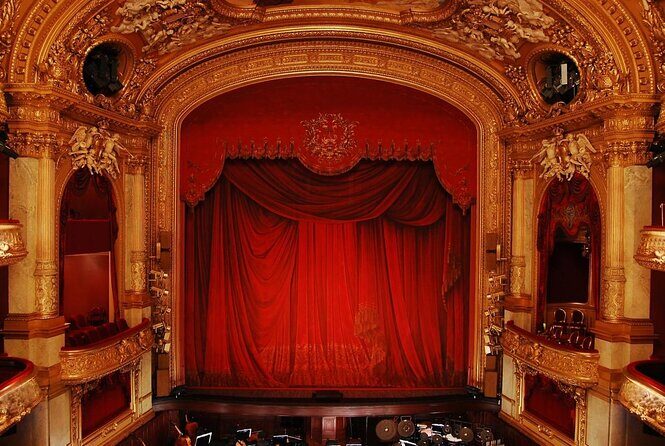
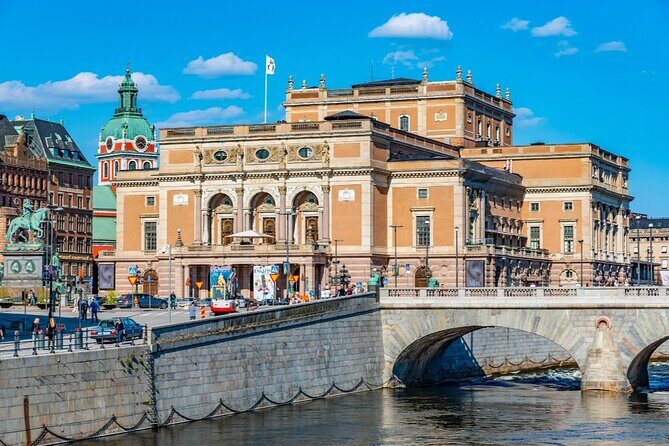
You begin at Kungliga Operan, Sweden’s national theatre for opera and ballet. It opened in a role that dates back to January 18, 1773, with early performances connected to King Gustav III’s push for a Swedish ensemble. Before the opera house was finished, the Swedish troupe performed earlier at Bollhuset and then moved when a new opera space was ready in 1782.
In the quest, this stop is your first “look around” challenge. The prompt ties the architecture and location to that shift in Swedish performing arts history. It’s a good warm-up stop because it sets the tone: you’ll keep connecting what you see to stories about power, culture, and the people running institutions.
Other ghost and dark-folklore tours in Stockholm






2) Early parliamentary roots: the Four Estates story
Next comes a challenge connected to Sweden’s early political history, often linked to a first parliament meeting in Arboga in 1435. From there, Sweden’s government evolved, and parliament became represented through the Four Estates: nobility, clergy, burghers, and peasants.
Here’s why this works as a puzzle stop: the information is bigger than one building, so your phone turns it into a “find the connection” moment. You’ll be looking at your immediate surroundings while the story nudges you toward a wider historical system.
3) A Baroque-era palace: 18th-century building stir
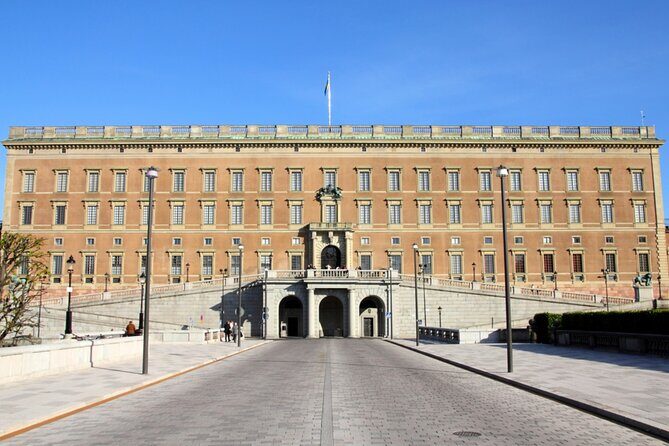
Another stop points to an 18th-century palace associated with the Baroque era. When it was first built, it created a stir across Europe—and today it’s treated as one of the emblematic examples of that style.
In practice, you’ll likely notice the question prompts encourage you to look closely at form and setting, not just “spot a famous building.” That makes the architecture feel less like background and more like the answer.
4) Royal Armoury and the Three Crowns legacy
The quest then shifts into weapons-and-memory territory with the Royal Armoury. It highlights that the oldest artifacts include royal state and ceremonial weapons stored in the old Three Crowns Palace in the 16th century. It also mentions that in the 1620s, Gustavus Adolphus wanted his blood-spattered clothes saved as a perpetual memoria—something meant to last in memory, not just in storage.
If you like darker or dramatic history, this stop adds a human edge. It’s not abstract. It’s about how objects were treated as political and personal symbols.
5) Storkyrkan (Stockholm Cathedral): oldest church in Gamla Stan
You’ll then reach Storkyrkan, officially the Church of St. Nicholas. It’s described as the oldest church in Gamla Stan, first mentioned in 1279, and connected by tradition to Birger Jarl, the founder of the city.
This is a great mid-quest checkpoint because it’s a recognizable landmark and one where details around the church can give you clues for your puzzle. Also, churches naturally slow people down—so it’s easier to stay focused when the walking rhythms change.
6) The sculpture behind the Finnish Church: hard to spot, fun to find
Next is a sculpture made by Swedish artist Liss Eriksson, created in 1954 and inaugurated in 1967. It’s located behind the Finnish Church, only a few meters from the Stockholm Palace, but described as being hard to find due to a more secluded placement.
This stop is a good reminder that “close by” in Old Town Stockholm doesn’t always mean “easy to see.” Your puzzle likely encourages careful looking—exactly the kind of activity that makes self-guided experiences feel more like discovery than walking.
7) Sten Sture the Elder and the Battle of Brunkeberg
Another challenge centers on a statue commissioned by Sten Sture the Elder after his victory over the Danish army in the Battle of Brunkeberg in 1471. The story in the quest mentions Sten Sture put his army under the protection of Saint George, and it also notes that the work is widely attributed to the workshop of Bernt Notke (even if it isn’t signed).
This is one of those stops where the context turns the statue from “a figure you pass” into “a political message made of stone.” If you like military history, or you enjoy seeing how cities remember conflict, this is a strong one.
8) Den Gyldene Freden: Golden Peace since 1722
Then you hit Den Gyldene Freden, translated as The Golden Peace. The experience notes it opened in 1722 and has delighted Stockholmers (including members of the Royal Academy) for almost 300 years, without moving from its original location.
This stop is especially useful if you want a natural break point. Even if you don’t stop for food, the building gives you a moment to reset and check your progress in the quest.
9) Järntorget: trade square dating to around 1300
Next is Järntorget, described as the second oldest square in Stockholm, slightly younger than Stortorget. It dates back to about 1300 and served as a key trade center for centuries, with goods transported from shore to shore and along surrounding buildings.
In puzzle form, this is a clever way to teach “place-based history.” You’ll be looking at a square that once functioned like a busy logistics hub, not just a scenic postcard spot.
10) A long open space by the library and Storkyrkoskolan
The quest then points to an elongated open area near the public library and the major school, Storkyrkoskolan (School of the Great Church). It also notes that while it’s named a square, some people might think of it more as a street.
This stop helps if you like the softer urban texture of Old Town—schools, libraries, daily public life—rather than only palaces and monuments.
11) Sankta Gertrud church: German neighborhood roots and a traveler patron
You’ll then move to the church of Sankta Gertrud, dedicated to Saint Gertrude (626–659), described as patron saint of travellers. The quest text also connects the church’s name and location to a Middle Ages neighborhood dominated by Germans.
This is a great example of how the quest uses quick historical facts to change your view. You’re not only seeing a church—you’re seeing why that area became what it became.
12) Palace of the Purse area: French rococo and Nobel connections
Finally, you reach the area tied to the palace of the purse, built between 1773 and 1776 in French rococo style by Erik Palmsted. Today, it’s noted as the seat of the Swedish Academy and the Nobel Museum, with the fountain of the square built by the same architect.
Since your listed endpoint is Stortorget 7, this stop fits as a fitting finale: an institutional center with international recognition, all while you’re still in the heart of Gamla Stan.
What I like about this format (and why it works for most people)
The biggest strength here is that it turns Old Town sightseeing into a sequence of “missions.” That matters because Stockholm’s center is packed with sights. With a normal walking plan, it’s easy to blur together everything you’ve seen. With a puzzle quest, each stop has a purpose.
Here are the most praised parts (the ones that clearly drive the overall rating around 4.1):
- Private, self-paced structure: you’re not stuck waiting for others.
- Phone-based flexibility: pause and resume anytime, which helps when weather or timing changes.
- Family-friendly entertainment: the game format makes historical context feel more approachable.
- Legend-and-history storyline: even when you don’t know Stockholm’s past, the prompts give you a way in.
Where this might feel frustrating
The low score you should keep in mind isn’t about the locations—it’s about the experience delivery. If app setup takes too long, you can run out of time and end up rushing the last stops. And if the in-app English text feels confusing, puzzle answers become harder than they should be.
So my practical advice is simple: don’t start the quest right before you’re late for something. Give yourself buffer time so you can troubleshoot quickly.
Timing tips: getting the most out of 50 minutes to 1 hour 15
Because the quest is designed to take about 50 minutes to 1 hour 15, you’ll want to treat it like a focused block, not a wandering day activity. If you’re the type who likes to stop for photos every few minutes, you might lean closer to the longer end.
Use the stop variety to control pace:
- Start strong at Royal Swedish Opera and keep moving through the early history stops.
- Slow down at Storkyrkan and Den Gyldene Freden, where the buildings naturally invite longer looks.
- Finish with the institutions around Stortorget so you end in a lively, central area.
Also, because it’s listed with broad daily hours, you can generally slot it into the time window your day allows—morning, afternoon, or evening.
Who should book this Troll Hunt quest

I’d point you toward this experience if:
- You want a short, structured Old Town walk with built-in “what to look for.”
- You prefer self-guided activity where you can pause and resume anytime.
- You’re traveling with a group that includes kids or people who don’t want a traditional guide narration.
It may be less ideal if:
- You know you’ll have spotty phone connectivity or limited battery.
- You dislike puzzle-style experiences and would rather read signs at your own rhythm.
- Your group needs very simple, error-proof instructions on the phone to feel comfortable.
Should you book Stockholm Troll Hunt?
If you’re planning a first-timer walk through Gamla Stan, this is a smart way to turn “I’ve seen the highlights” into “I remember what I saw and why.” The 12 interactive challenges are the core value, and the private format means you can keep the pace your group likes.
My call: book it if you’re comfortable using your phone as the guide and you’re willing to take a little time to get started calmly. If you’re the type who wants a no-friction, human-hosted tour, then you may prefer a traditional guided walk instead.
FAQ
How long does the Stockholm Troll Hunt take?
The duration is listed as about 50 minutes to 1 hour 15 minutes.
Is there a physical tour guide with you?
No. This is described as a fully virtual, self-guided activity.
Is it private or shared with other people?
It’s private. Only your group will participate.
Where do you start and where do you finish?
You start at Royal Swedish Opera (Kungliga Operan), Gustav Adolfs torg 2, and the tour ends at Stortorget 7.
What do I need to play the quest?
You’ll need the mobile access code for the quest and use your mobile for the mobile ticket and puzzles.
What’s included in the activity?
It includes mobile access code for the quest, 12 interactive puzzle challenges, and storyline content inspired by Stockholm legends and history, with flexibility to pause and resume.
Is the tour available in English?
Yes, it’s offered in English.
Are service animals allowed?
Yes, service animals are allowed.