REVIEW · GHOST & DARK FOLKLORE TOURS
Stockholm Syndrome Private Walking Tour
Book on Viator →Operated by OURWAY Tours - Stockholm · Bookable on Viator
Stockholm has a talent for turning everyday places into big stories. This private walking tour strings together the city’s key sights—starting at Norrmalmstorg and ending in Södermalm—using a guide’s calm, story-first commentary to help it all click. I also love that it includes fika (coffee/tea plus a pastry), so the route has a real break built in.
My other big plus is how flexible it feels: you can share what you care about, and the guide can adjust the emphasis. One possible drawback to plan for: the walk finishes in Södermalm, so you’ll want a simple plan for getting back (and note that the Royal Palace and Stockholm Cathedral have entrance costs that aren’t included).
In This Review
- Quick hits
- Why this Stockholm private walk is great for first-timers
- Price and what $418.80 per person actually buys you
- Where you start at Norrmalmstorg—and how to use the first 30 minutes
- From Royal Dramatic Theatre to the Parliament: city power in walking distance
- Royal Palace and Storkyrkan: when Stockholm’s royal sites stay walkable
- Gamla Stan on foot: Stortorget, the Iron Boy, and Mårten Trotzig
- St. George symbolism and the quick detour to Slussen
- Södermalm’s alt side: Götgatsbacken, the Katarina Elevator viewpoint, and Mosebacke
- Fika and literature stops: Fiskargatan, Katarina Kyrka, and wooden-house streets
- Ending at Cornelisparken: your launchpad for more exploring
- Who this tour suits best (and who might want a different style)
- Should you book this Stockholm walk?
- FAQ
- How long is the Stockholm private walking tour?
- Where do we meet the guide?
- Where does the tour end?
- Is this a private tour or a group tour?
- What language is the tour offered in?
- What’s included besides the guide?
- Are admission tickets included for major sites like the Royal Palace and Stockholm Cathedral?
- Does the tour run in bad weather?
- Can I cancel for a full refund?
Quick hits
- Norrmalmstorg to Södermalm in about 3 hours, with short stops that keep energy up
- Stockholm syndrome origins explained right where the term comes from
- Gamla Stan highlights on foot, including Stortorget and the narrow alley Mårten Trotzig
- St. George + the Dragon symbolism, tied to the Kalmar Union story
- Fika included, with a coffee-and-sweet break built into the route
- Customizable private pacing, just your group with an English-speaking guide
Why this Stockholm private walk is great for first-timers
If you’re new to Stockholm, the city can feel like a puzzle. This tour helps you solve it fast, because you’re not just seeing places—you’re learning how they connect, from the dramatic modern-day city center to medieval Old Town and then down into Södermalm’s more artsy, relaxed vibe.
The route is also realistic. You’re walking between the big landmarks, but you’re not doing a nonstop slog: the stops are brief, the guide keeps moving, and you still get enough time at key spots to take photos and understand what you’re looking at.
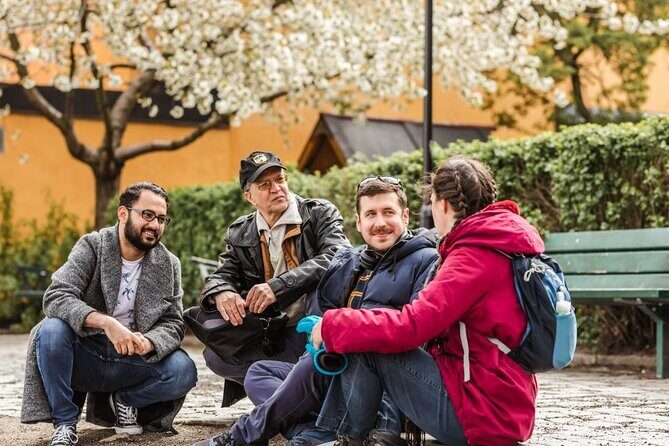
Finally, the private format matters. You can ask questions as you go, and if you want more time at one area—history, architecture, or simply photo stops—the guide can shape the day around your interests. And based on guide praise (like Katrin, noted for fascinating storytelling and good recommendations), the narration is a real part of the value, not just background noise.
Other private and hidden-gems tours in Stockholm



Price and what $418.80 per person actually buys you
At $418.80 per person for a roughly 3-hour private tour, this isn’t a budget option. But it can still be good value if you’re comparing what you get versus a generic hop-on hop-off route.
Here’s the practical math. You’re paying for a professional guide, an English-language walkthrough of major sites across multiple neighborhoods, and a planned fika break (coffee/tea plus pastry). Most of the stops are free to view on the outside, so your money goes to interpretation—helping you understand what you’re seeing—rather than paying entry fees for every stop.
One thing to keep in mind: a couple of big stops have extra admission costs. The Royal Palace is not included, and Stockholm Cathedral (Storkyrkan) has a small entrance fee if you go inside. If you want a day focused more on interiors, you’ll likely spend additional money after this tour too.
Where you start at Norrmalmstorg—and how to use the first 30 minutes
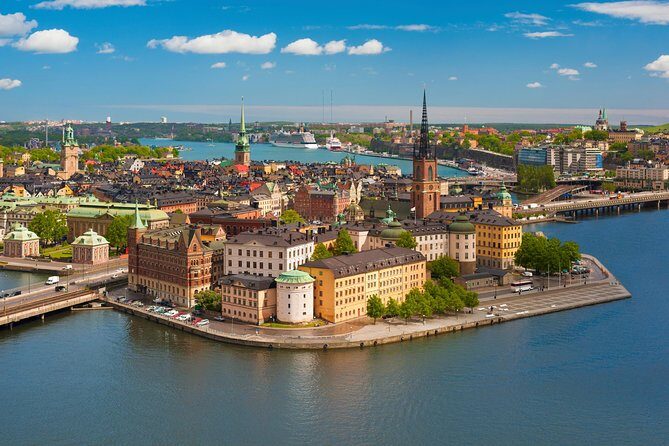
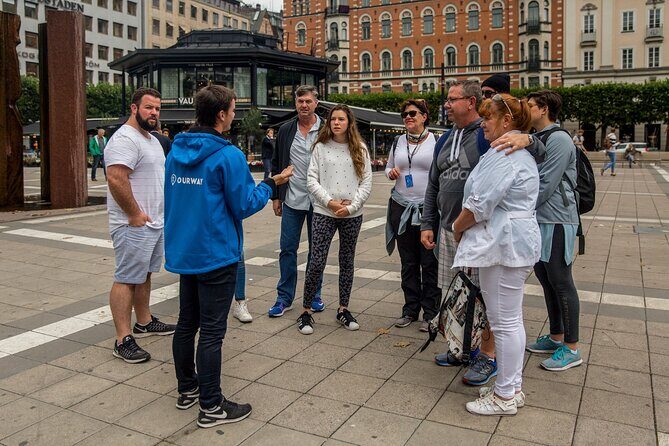
You meet in the central Norrmalmstorg town square. This is a great start point because it’s easy to orient yourself quickly, and it also sets the tour’s theme in a very literal way: Norrmalmstorg is where the term Stockholm syndrome was coined after a robbery and hostage situation in the early 1970s.
Expect the guide to do something smart here: link the story to the geography. Once you understand why that area got the label, it becomes more than a quirky trivia fact. It also helps you see Stockholm’s mix of public space, power, and everyday life—because the next stops bring you right into government and cultural landmarks.
Tip: if you have specific interests, say them early. This is a private tour, and the guide is set up to customize around what you want more of—whether that’s royal sites, medieval streets, or the city’s modern creative corners.
From Royal Dramatic Theatre to the Parliament: city power in walking distance
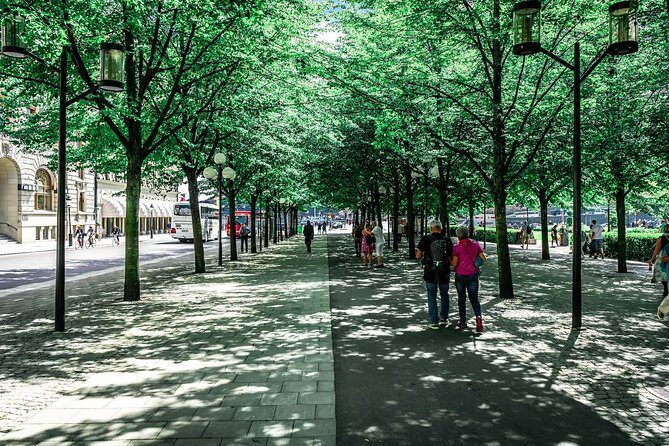
After Norrmalmstorg, you head toward Nybroplan and the Royal Dramatic Theatre (Kungliga Dramatiska Teatern). Even if you’re not planning to enter, this is a nice tonal shift. You go from a newsy, human drama origin story to the idea of Sweden’s national stage for spoken drama—one more reminder that Stockholm tells stories in every era.
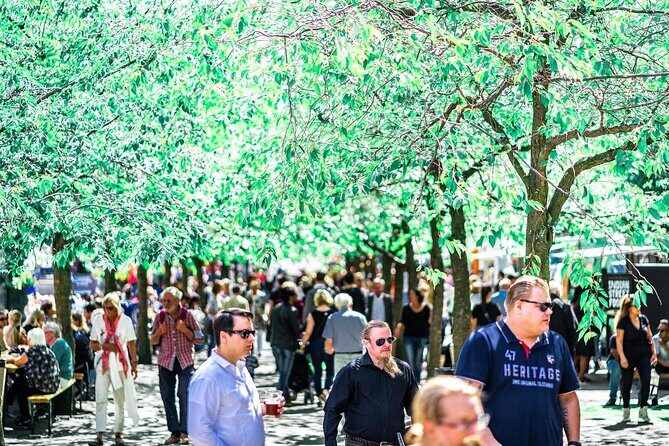
Next comes Kungsträdgården, nicknamed Kungsan, one of the city’s main meeting points. You’ll hear how it started as the king’s kitchen garden and later became shared public space. The park is also an easy win for photos—plus the guide will point out seasonal life here, like summer concerts and winter ice skating, depending on when you’re visiting.
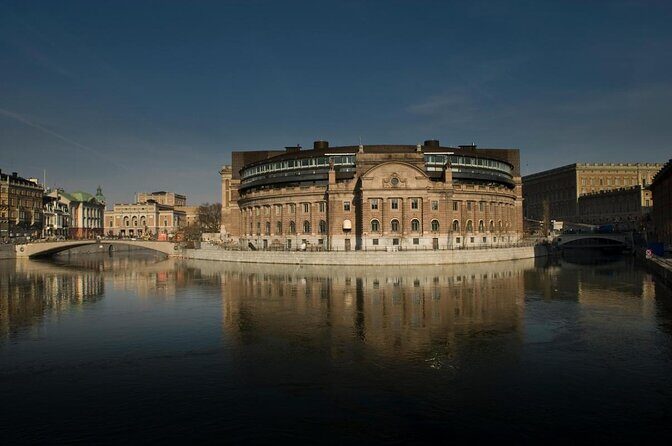
Then you reach the Parliament Building (Riksdagshuset) on Helgeandsholmen, the island where Sweden’s governing happens. This stop is short but meaningful. The guide’s narration helps you understand how Swedish public power is organized, including that the parliament has one chamber and that members are elected for four-year terms.
Practical note: this stretch is mostly about understanding. If you expect constant photo landmarks, you’ll still get them, but the real payoff is the storytelling that helps the city feel coherent.
Royal Palace and Storkyrkan: when Stockholm’s royal sites stay walkable
From the parliament area, you move toward the Royal sector.
At the Royal Palace, you’re guided around what you can comfortably see from outside. The palace is described as one of Europe’s largest royal residences, with the king’s official role and the monarchy’s representation tied to what happens here. Entrance is not included, so if you want to go in, you’ll need to plan for that separately.
Then you continue to Storkyrkan, Stockholm Cathedral area, where King Carl XVI Gustav and Queen Silvia married. You’ll see the church’s exterior and the guide will also point out the famed wooden statue of St. George and the Dragon inside. The statue dates back to the 1470s and connects to a battle between Denmark and Sweden during the Kalmar Union.
This is one of those spots where a little context changes everything. The dragon isn’t just a fun medieval sculpture—it’s part of a larger political story the guide will keep tying together as you move on.
If you choose to enter the church: there’s a small entrance fee. The tour is built so you can do the outside highlights even if you decide not to pay for interiors that day.
Other ghost and dark-folklore tours in Stockholm





Gamla Stan on foot: Stortorget, the Iron Boy, and Mårten Trotzig
Now you transition into Old Town’s heart. Stortorget is a perfect anchor stop. It’s Stockholm’s main square in Gamla Stan, and it’s where you’ll find layers of civic life. You’ll also hear about major events connected to the square, including the Stockholm Bloodbath. A neat detail the guide shares: the Nobel Museum is located there now but is expected to move soon, so this can be a timely snapshot of what’s on view.
Next you’ll spot the Iron Boy statue, also called Jarnpojken—the Boy looking at the Moon. The story is personal and charming: it’s partly based on sculptor Liss Eriksson, who as a child couldn’t sleep and would stare out at the moon. This is the kind of stop that makes a walking tour feel human, not just academic.
Then comes Mårten Trotzigs gränd (Mårten Trotzig’s narrow alley). It’s short, but it’s hard to forget. At its narrowest, it’s about 90 cm wide. Some guidebooks claim it’s the narrowest alley in Europe; the guide will clarify that a narrower alley exists in Prague (about 60 cm), and that other countries likely have even tighter passages too.
Why these three stops work together: they show different ages of the same place. The square is civic and dramatic. The statue is quiet and personal. The alley is physical proof that old Stockholm wasn’t built for big modern bodies and wide roads. Together, you get a sharper sense of what Gamla Stan is actually like to walk.
St. George symbolism and the quick detour to Slussen
You also spend time with the Statue of St. George, which connects symbol to history. St. George represents Sweden, while the dragon represents Denmark. The guide will also tie the imagery to King Kristian I and to Sten Sture the elder, linking what you see in stone to the politics of the Kalmar Union era.
Then you head toward Slussen, which translates to the lock. Here the geography matters. Stockholm sits between Lake Mälaren and the Baltic Sea, and the guide explains the water level difference—about 70 cm—so the “lock” idea makes sense even if you’re not a water-structure person. Slussen is also a useful visual break. You’re still in the city core, but the energy shifts from medieval streets toward modern infrastructure and connections.
If you’re trying to keep the day efficient, this mid-tour moment helps. It’s a chance to reset, get a wider view, and understand how the city manages its built environment around water.
Södermalm’s alt side: Götgatsbacken, the Katarina Elevator viewpoint, and Mosebacke
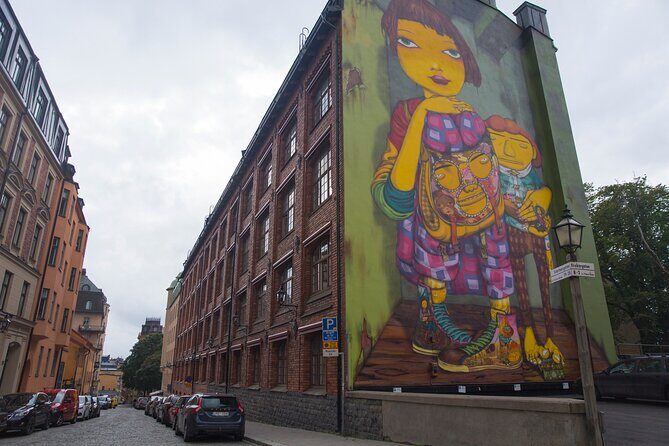
After Slussen, the tour starts leaning more local and less postcard. You’ll pass through Götgatsbacken, a pedestrian street area tied to Götgatan—a place where you’ll find modern shopping brands, plus casual bars and pubs. If you want a taste of where people actually go without turning the day into a full shopping mission, this stop delivers.
Then you reach the Katarinahissen area. The Katarina Elevator used to replace some of the stairs up the cliff side of Södermalm. Now it’s a photo-worthy viewpoint stop, and it’s a good one to bring out your camera because the city angles change quickly here.
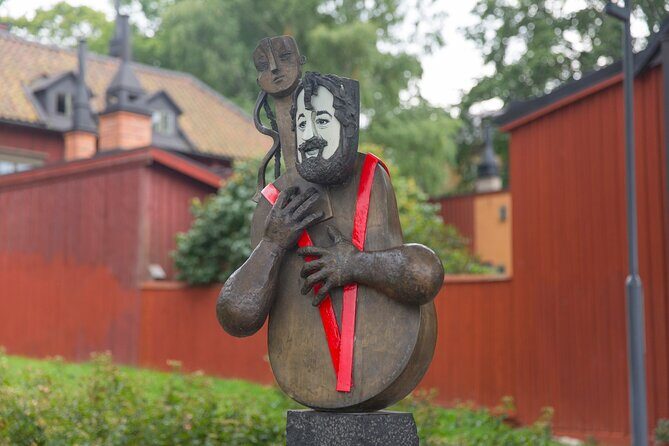
After that, you pause at Mosebacke Torg, a calmer square near Södra Teatern. The guide points out that in summer you can find a popular Biergarten there, and the square also has a sculpture called The Sisters. Even in off-season, it’s a nice reminder that Södermalm isn’t all steep streets and museum stops—it’s social space too.
These stops are short, but that’s the point. In three hours, you want variety without burning your legs out early.
Fika and literature stops: Fiskargatan, Katarina Kyrka, and wooden-house streets
This is where the tour earns its cozy factor.
You’ll have a fika break—coffee or tea plus a pastry—typically at the moment the route naturally slows down. This is more than a snack. It’s your chance to ask questions while everyone’s energy is steady, and it helps you avoid the classic walking-tour fatigue where you rush through the best parts just to keep up.
Then you move along Fiskargatan, a street associated with author Stieg Larsson. The guide shares that Larsson pictured Lisbeth Salander living in a luxurious apartment on this street in the second Millennium book, The Girl Who Played with Fire. If you’re a fan, it adds a fun layer. If you’re not, it still gives you a sense of Södermalm’s cultural footprint—stories written here, not just filmed about it.
Next is Katarina Kyrka. In the surrounding cemetery you’ll hear about prominent Swedes buried there, including Anna Lindh (the assassinated foreign minister), plus Per Anders Fogelström and troubadour Cornelis Vreeswijk. Even if you’re only seeing the exterior, these names give the stop weight.
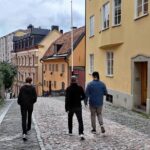
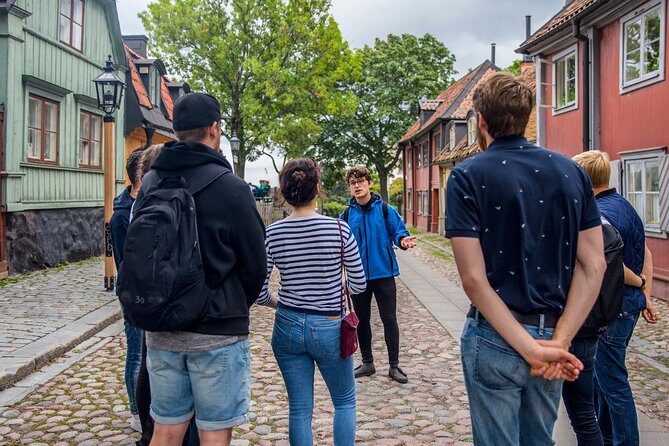
You’ll also walk Master Mikaels Gata, a small street with colorful wooden houses. The guide explains it was named in 1939 after Mikael Reissuer, an executor of Stockholm’s city administration in the 1600s. Today, many of the wooden houses are owned by AB Stadsholmen, a government-owned real estate company tasked with caring for cultural heritage buildings.
That’s a great detail, because it shows how Stockholm protects its character while still living a modern city life.
Ending at Cornelisparken: your launchpad for more exploring
The tour finishes in the heart of Södermalm at Cornelis park (listed as Cornelis park116 20). This finish point is designed to drop you into a scenic, view-focused area where you can continue on your own after the guided portion ends.
Cornelisparken, inaugurated in 2000, is dedicated to Cornelis Vreeswijk—described as a Swedish equivalent of Bob Dylan in spirit. You’ll get great views of Stockholm from here, so it’s a strong final stop if your goal is to leave with a mental map of what’s where.
One more practical reality: some people find it tiring if they then have to walk back the full distance to their lodging. So plan your route home before you start, and consider how you’ll get back from Södermalm after the tour.
Who this tour suits best (and who might want a different style)
This experience fits you if you want a structured overview without feeling stuck in a rigid schedule. It’s especially useful for first-time visitors who want Gamla Stan basics, royal-area landmarks, and then a shift into Södermalm culture—all in a short morning or early afternoon window.
It’s also a good pick if you like history, but not dry history. The guide storytelling is built into the pacing, and the stops like Norrmalmstorg, St. George, and the narrow alley make the past feel tied to real streets you can stand on.
If you want to spend most of your day inside museums and paying for interiors, you might find this tour leaves some of that for later. A couple of major sites have entrance fees, and you only have so much time to go inside during a 3-hour walk.
Should you book this Stockholm walk?
I’d book it if you want an easy way to get your bearings fast, especially if you’re juggling only a couple days in Stockholm. You’ll see the city’s core sections on foot, understand why iconic places matter (including the origin of the term Stockholm syndrome), and you’ll get a human pause with fika.
Don’t book it blindly if your lodging is far from Södermalm or you hate walking on cobblestones. This is a moderate-fitness experience with some cobblestone walking and a finish that’s not right back where you started.
If you’re flexible and you plan your transport back, this is a smart way to start Stockholm with stories—and end with views.
FAQ
How long is the Stockholm private walking tour?
It runs for about 3 hours.
Where do we meet the guide?
You meet at the central Norrmalmstorg town square in Stockholm.
Where does the tour end?
The tour ends in Södermalm at Cornelis park (listed as Cornelis park116 20 Stockholm).
Is this a private tour or a group tour?
It’s private, and only your group participates.
What language is the tour offered in?
The tour is offered in English.
What’s included besides the guide?
Fika is included: coffee and/or tea plus a pastry.
Are admission tickets included for major sites like the Royal Palace and Stockholm Cathedral?
No. Royal Palace admission is not included, and Stockholm Cathedral has a small entrance fee if you want to enter.
Does the tour run in bad weather?
It operates in all weather conditions. You should dress comfortably and appropriately.
Can I cancel for a full refund?
Yes. Cancellation is free up to 24 hours before the experience start time for a full refund.