REVIEW · GAMLA STAN & OLD TOWN TOURS
Stockholm Old Town and the Viking Museum, a Small Group Walking Tour
Book on Viator →Operated by Stockholm DriveAndGuide · Bookable on Viator
A city can feel confusing until someone gives it a spine.
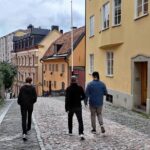
This 3-hour Old Town and Viking Museum tour strings together centuries of Swedish history through real streets, statues, and power buildings—then finishes with included admission to the Viking Museum so you don’t waste time hunting tickets or lines. Two things I really like: you get a clear, guided story (not just dates), and the small-group format (max 10) makes it easier to ask questions and move at a human pace. One thing to consider: you will be doing a fair bit of walking on uneven old-stone streets, so pack sensible shoes.
You’ll start in Gamla Stan and end on Djurgården, which is a smart way to cover more than one “mood” of Stockholm in a short visit. The guide—often named Bengt Nykvist in English—brings the landmarks to life with calm, practical context, from early settlement times all the way to the politics that shaped modern Sweden. If you want a purely relaxing stroll with zero history, this probably won’t be your best match. But if you like seeing how stories connect, it’s a great use of time.
In This Review
- Key things to know before you go
- Stockholm Old Town plus Viking Museum: why this format works
- Meeting point and pacing: a 10:00 start with a guided rhythm
- Stop-by-stop: how the Old Town story unfolds
- Gamla Stan Metro and Riddarholmen: early origins by the water
- Riddarholmen: Birger Jarl and the first written mention
- Riddarhuset (House of Nobility): Gustav Vasa and the price of power
- Vasabron: Gustav II Adolf and the Vasa ship connection
- Riksdagshuset (Parliament Building): from estates to general suffrage
- Royal Palace area: Peter the Great, Karl XII, and Gustav III
- Jarnpojken: small statue, big personality
- Stortorget and the Nobel Prize Museum area
- Stockholm Old Town stretch: the Bernadottes and the long peace
- Ferry to Djurgården: the included ride that changes the mood
- Viking Museum: included entry and what to expect
- Value for money: $118.96 for 3 hours, and why it can be fair
- Who this tour suits best (and who should skip it)
- Final thoughts: should you book it?
- FAQ
- FAQ
- How long is the tour?
- What language is the tour offered in?
- How big is the group?
- Where does the tour start and end?
- Is the Viking Museum ticket included?
- Do I need to bring paper tickets?
- Is the ferry included?
- Is there a fitness requirement?
- Can I cancel for a full refund?
Key things to know before you go
- Max 10 people means you’ll get more personal attention than the big-bus style tours.
- Viking Museum entry is included, and you’re not left guessing what to prioritize inside.
- You ride the Djurgårdsfärjan ferry from Skeppsbron to Djurgården as part of the experience.
- The tour is in English with guides known for clear, friendly explanations.
- You start at Gamla Stan Metro area (near the Pressbyrån kiosk), which is convenient if you’re using public transit.
- Designed for moderate fitness, with a good amount of walking through historic streets.
Stockholm Old Town plus Viking Museum: why this format works
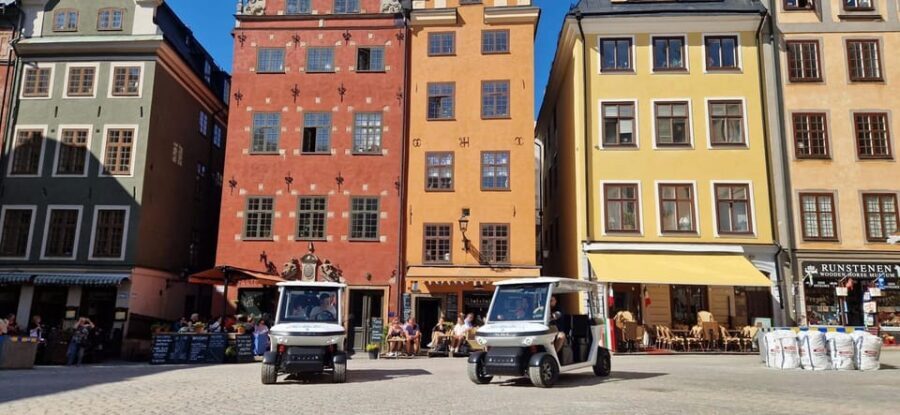
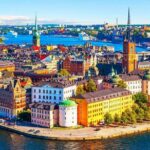
Stockholm is one of those cities where the postcard view is only half the story. The other half is the tug-of-war between power, religion, trade, and geography—how islands became a city, and how that city stayed relevant by reinventing itself again and again.
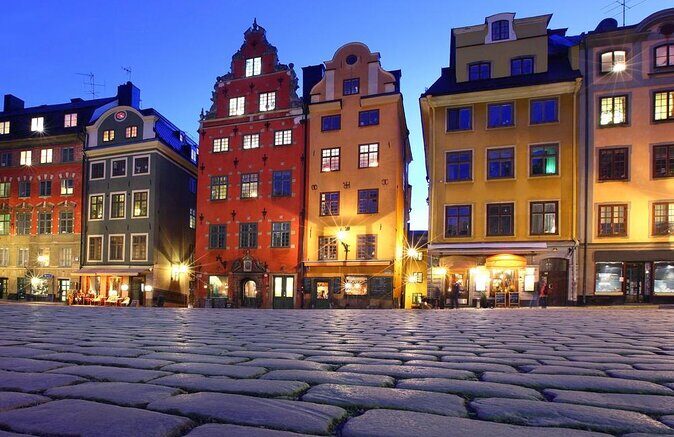
This tour is built for that. Instead of doing Old Town as a set of random “look there” stops, it treats Gamla Stan like a timeline you can walk. You’ll see the political landmarks that shaped Sweden, from the early mention of Stockholm in written text to the rise of Gustav Vasa and the long sweep toward modern governance. Then you shift to Djurgården for the Viking Museum to ground the vibe with artifacts and interpretation.
And honestly, I like the included parts. Entrance to the Viking Museum is covered, and the ferry ride to Djurgården is included too. That means less time “organizing while you travel,” and more time actually sightseeing.
Other Gamla Stan and Old Town tours in Stockholm

Meeting point and pacing: a 10:00 start with a guided rhythm
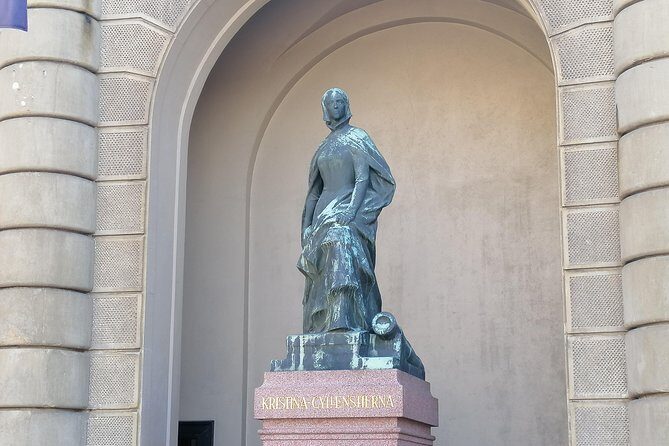
You begin at Munkbrogatan 8, and your first actual historical storytelling point is at the Gamla Stan Metro station area, specifically inside/under ground in front of the Pressbyrån kiosk. That’s a practical choice. You avoid wasting time searching for the group out in the open, and you start with a bit of orientation right away.
The tour runs about 3 hours and keeps a steady rhythm: short stops outdoors for viewpoint moments and statue-and-building context, then a museum segment at the end. The pacing is built for people with moderate physical fitness—so it’s not a sprint, but it’s not a sit-down-and-glide tour either.
Group size matters here. With a cap of 10 travelers, you’re less likely to feel like you’re getting dragged along. You’ll also hear the guide’s explanations more clearly than you would on very large tours.
Stop-by-stop: how the Old Town story unfolds
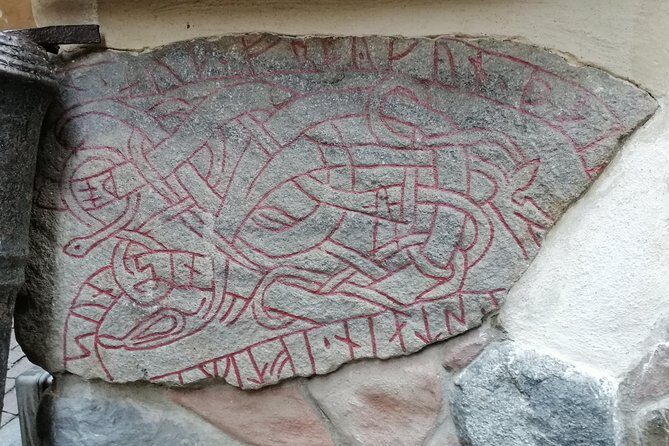
Gamla Stan Metro and Riddarholmen: early origins by the water
The tour opens with a history lesson that starts far earlier than most visitors expect. You’re guided through the idea of early Stockholm and Sweden from the ice age through the first settlement patterns on the islands. It’s a smart warm-up. By the time you reach Riddarholmen, you’re not just admiring scenery—you’re understanding why people settled here at all.
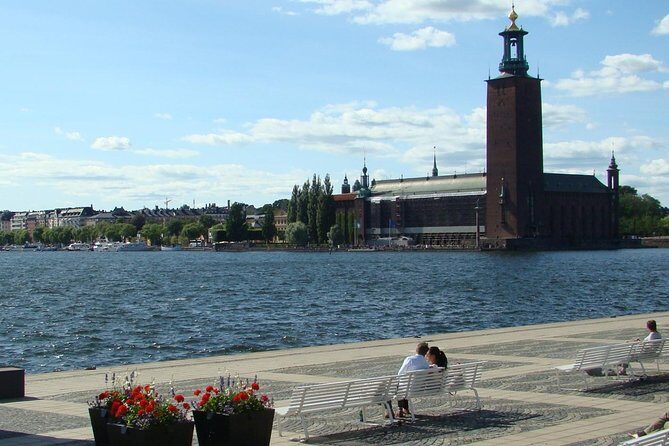
Then you get outside for one of those “oh, that’s Stockholm” views: Lake Mälaren with the City Hall visible in the distance. It’s not just pretty. It helps you picture the geography that made this region a crossroads for travel, trade, and influence.
What to watch for: this is an area where the light and reflections can look amazing. If you’re the type who likes one good photo, take it—but don’t get stuck. The guide’s story moves through the streets in a way that pays off later.
Riddarholmen: Birger Jarl and the first written mention
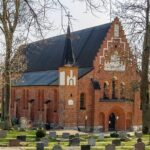
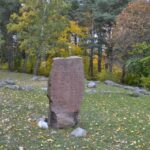
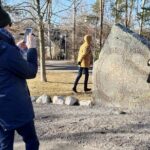
At Riddarholmen Church, the tour meets the presumed founder figure—Birger Jarl—either as a statue or through the story attached to him. The name is familiar to Swedes, and it’s one of those anchors that makes the early timeline feel real.
The guide also places the spotlight on 1252, the year Stockholm was first mentioned in a written text that still exists. That date can feel like trivia until you hear it framed as a turning point. Suddenly, Stockholm isn’t just a place on a map—it becomes a documented political and cultural hub.
Why it matters for you: if you’re only in Stockholm for a short time, this kind of date-based grounding prevents the rest of the Old Town from turning into a blur of buildings and statues.
Other Viking history tours from Stockholm


Riddarhuset (House of Nobility): Gustav Vasa and the price of power
Next comes Riddarhuset, the House of Nobility. Outside it, you’ll find a statue of Gustav Vasa, described as the father of Sweden. The guide connects his rise to the big upheaval of the period, including the bloodbath of Stockholm, where 80 to 100 noblemen were killed. The tour frames this as part of the bigger power struggle, including an uprising led against forces from the south.
There’s also the religious shift: Gustav Vasa is credited with changing Sweden from Catholicism to Lutheran Protestantism. That’s a huge thread in European history, and here it’s tied directly to the political story you’re walking through.
Possible drawback to keep in mind: for some visitors, this section can feel heavy—politics and violence are unavoidable parts of the story. If you prefer purely aesthetic sightseeing, you may need to balance this stop by taking your time with the architecture and symbols around you.
Vasabron: Gustav II Adolf and the Vasa ship connection
The tour then moves across Vasabron, continuing the storyline of Gustav Vasa’s heirs and the next generation’s priorities. You’ll hear about Gustav II Adolf, described as a major warrior king, and how the Baltic Sea’s strategic role shifted during his time.
Then comes the detail that links royal power to real-world craft: it’s when Gustav II Adolf is king that the Vasa ship was built. That single sentence bridges the political talk with the kind of “objects matter” energy you’ll later get in the museum.
If you’re a “history by artifacts” person, you’ll appreciate this transition. It keeps the walk from being only about ideas.
Riksdagshuset (Parliament Building): from estates to general suffrage
At Riksdagshuset, you’re taught how representation evolved over time. The tour describes the predecessor institution called the Riksdag of the Estates (Ståndsriksdagen), where nobility, clergy, burghers, and peasants met in separate groups before coming together with the king in the palace.
The guide then moves forward to 1866, when the institution changed into a parliament with two chambers, still without equal voting rights for all citizens. Finally, you reach general suffrage and the first elections with broad voting rights in 1921, following a long political struggle led by liberals and socialists.
Why this stop is worth it: many Old Town tours stop at kings and battles. Here, you get the shift toward how decisions were actually made. It’s a useful lens for understanding Sweden as more than a monarchy with dramatic costumes.
Royal Palace area: Peter the Great, Karl XII, and Gustav III
Near the Royal Palace, the tour takes you to Lejonbacken, on the north side of the palace. Here, the stories turn sharp again. You’ll hear how Peter the Great of Russia checked Sweden’s ambitions in Northern Europe, and how Karl XII, described as the last of the warrior kings, is still pointing east—toward where defeats, including Poltava in 1709, eventually came.
Then the tone softens in a different direction: the age of enlightenment and the growing interest in arts and science. Gustav III is described as an enlightened despot with a serious interest in theater, and the guide connects him to contributions in the arts.
This is a good reminder that “history” isn’t only war. It’s also cultural control, patronage, and ideas.
Jarnpojken: small statue, big personality
You’ll also stop at Jarnpojken, described as the smallest and nicest statue in Sweden. I love these stops because they show the guide’s attention to local quirks. It’s not a monument to international fame—it’s the kind of detail that makes you feel like you’re seeing what locals notice.
If you like playful contrast after serious political stories, this works nicely.
Stortorget and the Nobel Prize Museum area
Next is Stortorget, where the Nobel Prize Museum is located. The tour frames it simply and usefully: Swedish royal academies designate winners of prestigious prizes across science and art.
For your trip, this is a helpful pivot. It reminds you Sweden’s global influence isn’t only historical or military—it’s also about research, scholarship, and culture.
Stockholm Old Town stretch: the Bernadottes and the long peace
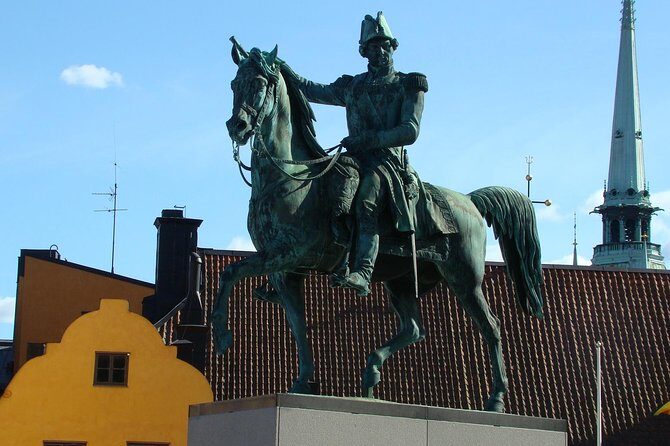
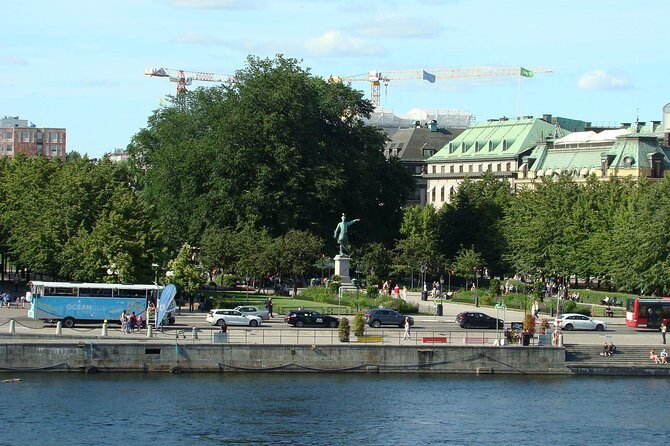
Finally, in the Stockholm Old Town portion below the statue of Carl XIV Johan, you get the transition into the 19th and 20th-century Sweden story. You’ll hear that he was imported from France to Sweden in the early 1800s to recover what was lost to the Russians. Then the guide shifts the focus to diplomacy, infrastructure, and education.
There’s also a “modern Sweden” thread. The tour mentions 2014 as the celebration of 200 years of peace in Sweden, and connects that to industrial change, natural resources, inventions, and the growth of a welfare-state foundation.
If you’ve ever felt that Old Town is trapped in medieval time, this part breaks that illusion. It connects the stone streets to the present-day country you’ll be visiting.
Ferry to Djurgården: the included ride that changes the mood
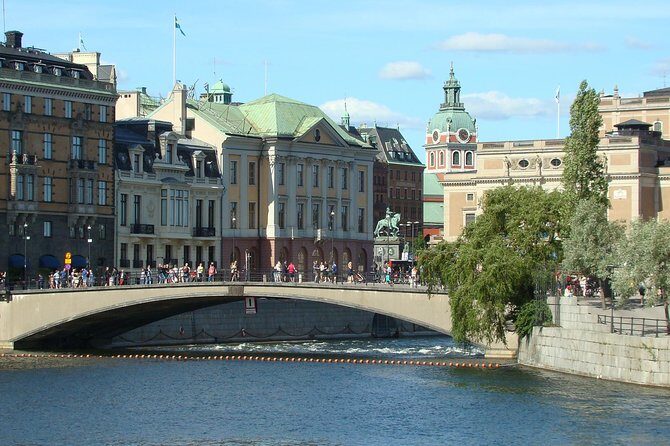
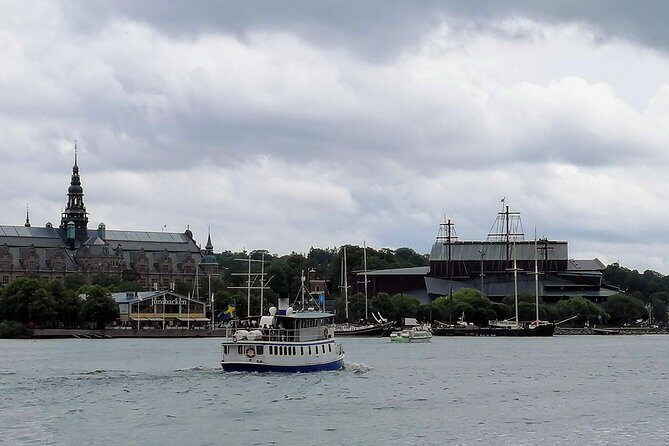
From Skeppsbron, you take the Djurgårdsfärjan ferry to Djurgården (the ferry segment is included and takes about 10 minutes). This matters more than you might think.
On foot, you’re inside the old-city feel. On the ferry, you get a water-level perspective—plus a short reset in energy. For a trip that’s packed with political storytelling, a quick ride on open water is a smart way to keep it from feeling like one long lecture.
Viking Museum: included entry and what to expect
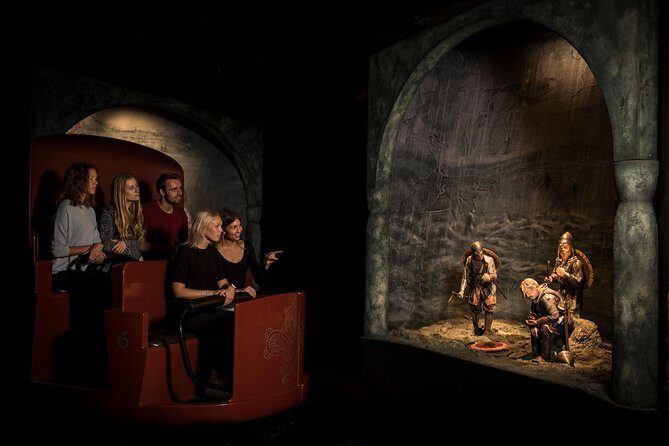
The guided portion ends at the Viking Museum, located on Djurgårdsstrand 15, where admission is included. Your guide introduces the museum and highlights key attractions, then you’re welcome to stay after the tour finishes.
The museum is described as small-scale rather than a huge, warehouse-style institution. It also has an unusual behind-the-scenes concept: it’s the result of cooperation between professionals in performing arts and Sweden’s most respected historical scientists. The goal is a combination of thrilling experiences and historical facts.
How you’ll likely feel here: if you’ve been trudging through political names for hours, the museum gives you a more sensory way to connect to the Viking era. Even if you’re not a museum “power user,” the guide’s intro should give you a map so you don’t wander aimlessly.
Timing tip: since the guided part ends and you can stay, build in time after the intro. If you only rush through, you lose the museum’s advantage: it’s designed to feel like more than a list of facts.
Value for money: $118.96 for 3 hours, and why it can be fair
At $118.96 per person for roughly 3 hours, it’s not a bargain-basement deal. But you’re not paying just for a walk and a stamp.
You’re paying for:
- a guided Old Town storyline across major landmarks (palace area, parliament area, nobility area, major squares),
- small group size (max 10),
- included Viking Museum entry, and
- an included ferry ride to Djurgården.
When you compare those “extras,” the price starts to make sense. A lot of city walking tours charge less but then make you buy museum tickets separately. Here, the museum part is handled.
Also, the fact that the tour is often booked about 104 days in advance suggests it’s a popular format with good scheduling options—if you’re flexible with dates, booking earlier usually helps.
Who this tour suits best (and who should skip it)
This is a strong pick if you:
- want Old Town that makes sense as a timeline,
- like guides who explain connections between politics, religion, and everyday life,
- want a guided jump into the Viking Museum without figuring out what matters on your own, and
- prefer smaller groups with more room to ask questions.
It might be less ideal if you:
- want minimal walking,
- hate history-heavy tours, or
- are looking only for free time and casual strolling.
Final thoughts: should you book it?
I’d book this if you want an efficient hit of Stockholm: Old Town context first, then Viking Museum content with the door already open. The included entry and ferry ride reduce decision fatigue, and the small-group cap keeps it from feeling like a conveyor belt.
If you’re the type who reads plaques on your own and doesn’t need a guide, you could DIY parts of it. But if you want someone to connect the dots—from Birger Jarl to Gustav Vasa to the parliament timeline—this tour is built to do that.
FAQ
FAQ
How long is the tour?
The tour is about 3 hours.
What language is the tour offered in?
It’s offered in English.
How big is the group?
The tour has a maximum of 10 travelers.
Where does the tour start and end?
It starts at Munkbrogatan 8, 111 27 Stockholm and ends at the Viking Museum, Djurgårdsstrand 15, 115 21 Stockholm.
Is the Viking Museum ticket included?
Yes. Entry to the Viking Museum is included, and your guide will introduce highlights inside.
Do I need to bring paper tickets?
No. You get a mobile ticket.
Is the ferry included?
Yes. The tour includes a ferry ride called Djurgårdsfärjan from Skeppsbron to Djurgården.
Is there a fitness requirement?
The tour calls for moderate physical fitness.
Can I cancel for a full refund?
Yes, free cancellation is available up to 24 hours in advance for a full refund.