REVIEW · CITY TOURS
Stockholm: Old Town and City Guided Walking Tour
Book on Viator →Operated by Vox City International Ltd · Bookable on Viator
Gamla Stan hits fast. In about two hours you’ll get live English commentary while the guide connects places from Gustav III to Nobel Square, and you also receive the Vox City app with extra self-guided stops. One catch: attraction entry isn’t included, so you’ll mostly see the exteriors and you’ll want a plan if you want inside visits too.
You meet at the Gustav III Statue on Skeppsbrokajen, just by the pier below Slottsbacken, and you end back at the same spot. The guide wears a dark blue Vox City Walks uniform and holds a VOX City sign, so it’s straightforward to find the group.
This is a classic “see a lot in a short time” setup with a maximum of 99 people, so it won’t feel like a private tour. Good shoes help, because Gamla Stan is all medieval streets and cobblestones.
In This Review
- Key highlights at a glance
- Starting at Skeppsbrokajen: easy meeting, tight timing
- The Royal Swedish Opera stop: why Gustav III matters
- Gustav II Adolf’s square and the Vasa ship link
- Parliament area (Riksdag building): modern government with older bones
- The old royal palace story: from medieval beginnings to the Drottningholm era
- Gamla Stan’s medieval core: Västerlånggatan and a thousand years of streets
- Sweden’s Supreme Court: turning a private residence into a courtroom
- A 17th-century noble building tied to Gustav III’s assassination
- Riddarholm Church: one of Stockholm’s oldest and a royal burial site
- Birger Jarl’s square and the Swedish High Court (Svea Hovrätt)
- Evert Taube statue: a quick photo moment with real cultural weight
- Stockholm City Hall and the Nobel Banquet Blue Hall
- Great Fire of 1625 area: Stampen jazz and the everyday street vibe
- The witch trial street and the Gray Man folklore
- Stortorget, the Stockholm Bloodbath, and the cannonball detail
- Swedish Academy and Nobel literature: Alfred Nobel’s legacy in focus
- Final stop: Gustav III obelisk and Karl XIV Johan statue
- Price and value: is $34.70 worth two hours?
- Best fit: who will love this tour most
- Should you book Stockholm Old Town and City Guided Walking Tour?
- FAQ
- How long is the Stockholm Old Town and City guided walking tour?
- Where does the tour start and where does it end?
- What language is the live commentary?
- Does the tour include access to attractions?
- What’s included besides the guided walk?
- Are headphones or a mobile device provided?
- Is there an app download required?
- What languages are the audio commentaries available in?
- What’s the cancellation policy?
Key highlights at a glance

- Live guide in English plus optional audio in five languages (English, Italian, French, Spanish, German)
- Vox City app perks: 5 free self-guided tours and 125 points of interest across Stockholm
- A clean route through Old Town power sites: the Parliament building, courts, and Nobel-adjacent stops
- One story thread connects multiple landmarks tied to King Gustav III and the 1792 assassination
- Photo-ready moments like the Evert Taube statue and major squares such as Stortorget
- A darker Stockholm vibe in spots tied to witch trials and the Gray Man folklore
Starting at Skeppsbrokajen: easy meeting, tight timing
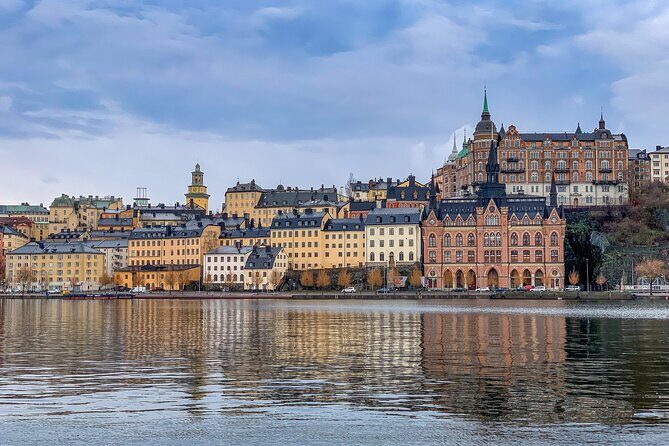
The tour starts where it should: right by the Gustav III Statue on Skeppsbrokajen (111 30 Stockholm), at the pier below Slottsbacken. You’ll end back at that same meeting point, so you’re not stuck figuring out a new “drop-off” later.
The walk departs at your booked time, and the guide is easy to spot—dark blue Vox City Walks uniform, plus a sign with the VOX City logo. If you’re the type who likes to arrive slightly early and settle in, do it here; it keeps the start smooth.
This tour is also designed for short-stay planning. It runs about two hours, which is long enough to get your bearings but short enough to keep the rest of your day flexible.
Other Gamla Stan and Old Town tours in Stockholm


The Royal Swedish Opera stop: why Gustav III matters

One of the most interesting early stops ties directly to the man behind the famous tragedy: King Gustav III. You’ll hear how Sweden’s national stage for Swedish opera and ballet was founded in the 18th century, and how today’s building came as a gift from King Oscar II.
Then the story turns sharp. This opera house is famously linked to the assassination of Gustav III in 1792. Even if you don’t go inside (entry isn’t included), just knowing what happened in that exact setting gives the rest of Stockholm’s royal sites a darker edge.
Look for the guide’s connection-making here. The value isn’t only in listing facts—it’s in using one key event to explain why the same names keep popping up across Old Town and nearby districts.
Gustav II Adolf’s square and the Vasa ship link

Next, you’ll reach a square named for King Gustav II Adolf, known as the Lion of the North for his military impact in the 17th century. This is also where the route brings in the story of the ill-fated Vasa ship.
Even if you’re not planning to visit the Vasa Museum on this specific outing, this stop helps you understand why Stockholm’s waterfront history matters. It’s a reminder that the city’s big dreams and big failures both grew out of the same era.
Parliament area (Riksdag building): modern government with older bones
The Swedish Parliament building is a standout for architecture lovers and history fans alike. The building was constructed from 1895 to 1904, and the stop includes details like an underground passage that connects to the Assembly Hall. There’s also a Medieval Museum located beneath the bridge in this area.
This is a useful moment in the tour because it shifts you from royal stories to civic power. You’re still in “old Stockholm,” but you’re also seeing the city how it functions today—legislation, ceremonies, and the way the past literally sits under the present.
Tip for you: take a slow minute here. If you rush, you miss the way the guide explains the physical layout.
The old royal palace story: from medieval beginnings to the Drottningholm era
Another stop focuses on a royal residence that goes way back: originally built in the 13th century, then reconstructed after a fire in the 17th century. The key point is how it served as the royal residence until the current king moved to Drottningholm Castle.
In plain terms, this stop gives you a timeline you can hold onto. Stockholm isn’t one “style” city; it’s a set of layers. Once you get that, Gamla Stan makes more sense—why some streets feel medieval while the institutions nearby feel newer.
Other walking tours we've reviewed in Stockholm



Gamla Stan’s medieval core: Västerlånggatan and a thousand years of streets
Now you’re in the heart of it: an area in Gamla Stan where people have lived for over a thousand years. The guide points out the medieval street Västerlånggatan, which traces the line of the old defensive wall of the city.
This is one of the best parts of the tour for first-timers, because you stop treating Gamla Stan as just a pretty maze. You start seeing how it was designed for defense, movement, and survival.
You’ll also get that classic Old Town atmosphere here—narrow streets, older stone, and the sense that the city was built to be walked slowly.
Sweden’s Supreme Court: turning a private residence into a courtroom
You then move to a former private residence that later became Sweden’s Supreme Court, the highest court of appeal in the country.
It’s a small stop on paper, but it’s a big idea in practice. Stockholm reuses buildings. It recycles space. That’s why the city often feels like it’s wearing multiple hats at once—home, palace, office, court, event space.
If you like architecture that carries personality, this is a good one to pay attention to.
A 17th-century noble building tied to Gustav III’s assassination
Another historic stop covers a 17th-century building that once served Swedish nobility and is now used for events. It’s also connected to the dark story of the Gustav III assassination.
The helpful part here is how the guide threads the narrative. Instead of treating each address like a separate trivia question, you hear how people, politics, and violence link across the same small geography.
Riddarholm Church: one of Stockholm’s oldest and a royal burial site
Riddarholm Church is next, and it’s exactly the kind of stop that makes Old Town feel real. This is one of Stockholm’s oldest buildings, and it’s also the burial site for Swedish monarchs.
Even from the outside, a church that’s tied to royal burials changes your mindset. You’re no longer just walking past “old buildings.” You’re walking through a place that held status, ritual, and final chapters.
Birger Jarl’s square and the Swedish High Court (Svea Hovrätt)
The tour pauses at a square named for Birger Jarl, who first mentioned Stockholm in 1252. Nearby you’ll find the Svea Hovrätt (Swedish High Court).
This is a good time to slow down and connect dates to streets. Birger Jarl’s name gives you the early origin point for the city, while the courts show you what “power” looks like centuries later.
For many visitors, this is where the walking route starts clicking into place: Old Town isn’t only medieval charm. It’s also governance and authority.
Evert Taube statue: a quick photo moment with real cultural weight
Then you get a lighter, more playful stop: the area features a statue of Evert Taube, a famous Swedish author and musician. It’s also a strong photo spot.
This matters more than you might think. A tour that hits only royal and political sites can feel heavy. This gives you a pause and something human—music, writing, personality—on the street.
Stockholm City Hall and the Nobel Banquet Blue Hall
The walk moves toward Stockholm’s City Hall, which is famous for hosting the Nobel Banquet. You’ll learn about the Blue Hall, and you’ll also notice the City Hall’s three golden crowns, which echo the Castle of Three Crowns.
This part of the tour is great if you like your history with modern impact. Nobel stories aren’t just museum facts; they’re global culture. Standing near the City Hall helps you understand why Sweden’s international reputation is so tied to Stockholm’s landmarks.
If you’re planning later activities, consider using this stop as your “Nobel day anchor,” then choose your time for the Nobel Museum separately since entry isn’t included.
Great Fire of 1625 area: Stampen jazz and the everyday street vibe
Next you’ll hear about the Great Fire of 1625, which shaped the city’s urban history. The area around it is also lively today, including jazz bar Stampen and boutique shops.
This is one of those “now and then” transitions that keeps your brain awake. You’re not only learning about catastrophe; you’re seeing how people built habits and culture afterward.
A practical note: because this is an active street environment, the guide’s explanations here often land best if you take one short pause rather than walking fast through the area.
The witch trial street and the Gray Man folklore
Then comes a darker Old Town flavor: you’ll visit one of the oldest streets, known for stories tied to witch trials and ghosts, including the Gray Man.
This stop is valuable because it adds a different kind of history—belief, fear, and rumor—rather than only kings and courts. It also makes Gamla Stan feel like a living storybook rather than a list of monuments.
If you enjoy spooky legends with grounding context (instead of pure jump-scare storytelling), this is a good fit.
Stortorget, the Stockholm Bloodbath, and the cannonball detail
Stortorget is the tour’s big square moment. It’s the oldest square in Stockholm, and it’s linked to the Stockholm Bloodbath of 1520. There’s even a cannonball embedded in a building that’s said to symbolize the siege of 1521.
This is the kind of stop where a guide can turn “one photo spot” into a place you actually understand. The square is visually open, so your photos come out well—but your takeaway should be historical weight.
If you only remember one square from this whole outing, make it Stortorget. It’s the one with the most story packed into a single glance.
Swedish Academy and Nobel literature: Alfred Nobel’s legacy in focus
The route then includes the Swedish Academy, which oversees the Nobel Prize in Literature. You’ll also hear how the Nobel Museum honors Nobel laureates and Alfred Nobel’s legacy.
Even if you don’t enter the museums, this stop works as a map in your head. When you decide later whether to do the Nobel Museum, you’ll know what you’re walking toward and why it’s there.
This is also a good stop for literature lovers who don’t want to only hear about kings. It’s a different kind of prestige, and it helps explain why Stockholm attracts culture-focused visitors year-round.
Final stop: Gustav III obelisk and Karl XIV Johan statue
The tour wraps with a final set of monuments tied to King Gustav III and to Karl XIV Johan, a French general who became the Swedish king. You’ll see an obelisk dedicated by Gustav III and the statue of Karl XIV Johan.
This ending is helpful because it gives you closure: names you heard earlier come back, and the tour’s theme—power, legacy, and places where stories happened—starts to feel complete.
Then you’re back at your starting point, ready to choose your next move.
Price and value: is $34.70 worth two hours?
At $34.70 per person for about two hours, this is priced like a solid orientation tour rather than a full-day ticket that covers entry fees. Since attraction entry isn’t included, you should think of this as buying time, context, and direction.
Here’s what pushes the value up:
- Live guide in English, which helps you connect the names and dates so they stick.
- Vox City app access, including 5 free self-guided tours and 125 points of interest around Stockholm, not only in Old Town.
- Audio commentary in multiple languages, useful if you want to go slower later or you’re traveling with someone who prefers audio.
- A route that hits major anchors: the opera/royal thread, Parliament area, Gamla Stan streets, City Hall, and Nobel-literature connections.
What might keep it from being a home run for you:
- If you want to spend the whole time inside big sites, this won’t fully satisfy. You’ll mainly be looking from the outside unless you add entries separately.
- You’ll get the best experience by bringing your own mobile device and headphones, since a headset/mobile device isn’t included.
Best fit: who will love this tour most
This walk is ideal if you’re:
- In Stockholm for a short stay and need a clear Old Town route.
- Interested in how one historical storyline can connect several landmarks.
- Trying to balance “must-sees” (City Hall, Nobel-adjacent sites, Stortorget) with street-level details and folklore.
It’s also a good choice if you enjoy a guided tour that doesn’t hog your entire day. Two hours leaves room for a museum visit, a coffee break, or even a nighttime stroll through Gamla Stan streets after the big sights cool down.
Should you book Stockholm Old Town and City Guided Walking Tour?
I’d book it if you want a strong first pass through Gamla Stan and the Nobel/City Hall zone with a guide who can connect names to places. The Cox-like trick here is the story chain: Gustav III shows up again and again, and Stortorget gives you a major historical anchor.
Skip it or pair it differently if your priority is interior access and long museum time. Since entry isn’t included, you’ll want to plan separate tickets if you’re serious about going inside.
If you’re the “I like a plan but I still want freedom” type, this works well. Buy the ticket, scan the QR code for the audio guide before you arrive, then use the Vox City app later to build your remaining day around what actually caught your attention.
FAQ
How long is the Stockholm Old Town and City guided walking tour?
It’s about 2 hours.
Where does the tour start and where does it end?
It starts at the pier below Slottsbacken, in front of the Gustav III Statue on Skeppsbrokajen (111 30 Stockholm), and it ends back at the meeting point.
What language is the live commentary?
The live commentary is in English.
Does the tour include access to attractions?
No. Entry to attractions is not included.
What’s included besides the guided walk?
You get free access to the Vox City app, which includes 5 self-guided tours and 125 points of interest in Stockholm, plus multilingual audio commentary.
Are headphones or a mobile device provided?
No. Headset and a mobile device are not included.
Is there an app download required?
You should scan the QR code on your voucher to download the audio guide before arrival.
What languages are the audio commentaries available in?
The audio commentary is available in English, Italian, French, Spanish, and German.
What’s the cancellation policy?
You can cancel for a full refund if you cancel up to 24 hours in advance of the experience start time.