REVIEW · 3-HOUR EXPERIENCES
Stockholm Must See – Old Town, boat + Vasa Museum 3h small group
Book on Viator →Operated by Sweden History Tours · Bookable on Viator
Stockholm can feel like a puzzle with islands and bridges. This 3-hour small-group walk + ferry + Vasa Museum combo helps you fit the biggest highlights into one tight visit, with a guide who turns stone and streets into stories you would not piece together alone. I especially love the skip-the-line Vasa Museum access, because it removes one of the most annoying parts of visiting. I also like how the guide keeps the Old Town moving while still telling the darker, stranger chapters of Stockholm.
The only catch is timing: the Vasa Museum portion depends on the tour start time and season, so if you book the later departure, you may have less time to linger inside the museum.
In This Review
- Key things I’d circle before you book
- How the 3-hour Old Town + ferry + Vasa format really feels
- Slottsbacken obelisk: the opening story that sets the tone
- Royal Palace and the monarchy theme: quick but useful
- Stortorget and the Bloodbath story: where Old Town drama is on display
- Nobel Prize Museum pass-by: Alfred Nobel meets the square’s story
- Runsten and Prästgatan: the Old Town’s dark side in small bites
- Storkyrkan (and archaeology): life in ancient Stockholm, explained
- Riddarholmen and the house of knights: monks, fires, and stories
- Järntorget, the German part of Old Town, and trade networks
- Marten Trotzigs grand: the smallest ally with the biggest tragedy
- Skeppsbrokajen promenade and the ferry wait: the city’s water logic
- Statue of St. George: medieval battles without the textbook tone
- Djurgården: from royal hunting grounds to park and museum island
- Vrak and Viking museums: WWII shelters built to resist bombs
- Galarvarvet and Nordiska Museet pass-by: naval remains and 1500-to-today collecting
- Vasa Museum: the main event, and why skip-the-line matters
- Price and value: what you get for $135.69 and where it can feel tight
- The guide factor: why the stories are the real product
- Who this tour suits best (and who should skip it)
- Should you book Stockholm Must See – Old Town, boat + Vasa Museum 3h small group?
- FAQ
- How long is the tour?
- How much does it cost?
- Is the Vasa Museum ticket included?
- What’s included besides the guided walk?
- Where do I meet the guide?
- How big is the group?
- Is the tour only in good weather?
- Is the tour in English?
- Can I cancel and get a full refund?
Key things I’d circle before you book

- Skip-the-line entry to Vasa Museum, saving you time when lines can get messy
- Small group cap (max 15), so questions don’t get swallowed by a crowd
- One-way ferry included for a real water-and-islands feel, not just a street crawl
- Old Town density: you hit squares, churches, alleys, and monuments in one compact route
- Guides with real stories (I’ve seen examples like Peter, a retired Vasa Museum historian) that make the stops stick
How the 3-hour Old Town + ferry + Vasa format really feels
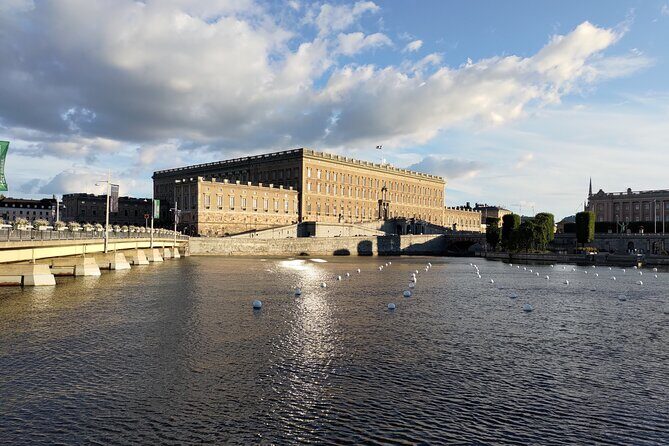
This is built for short visits. You get a guided route through Gamla Stan-style Old Town highlights, then a one-way ferry ride out toward Djurgården, and finally you finish at the Vasa Museum area. The whole experience is about pace: enough time to see the key sights, not so much time that you lose the thread.
The tour is in English and runs in all weather. That matters in Stockholm. You’ll be outside for stretches, so pack layers and plan on walking on uneven cobblestones.
Price-wise, $135.69 for about 3 hours is not cheap, but you are paying for two things that usually cost time (and sometimes energy): organized access to Vasa Museum and a guide who bundles many Old Town stops together. If you are trying to see Stockholm’s core in one morning or one late afternoon, this format can be good value.
Other Gamla Stan and Old Town tours in Stockholm

Slottsbacken obelisk: the opening story that sets the tone
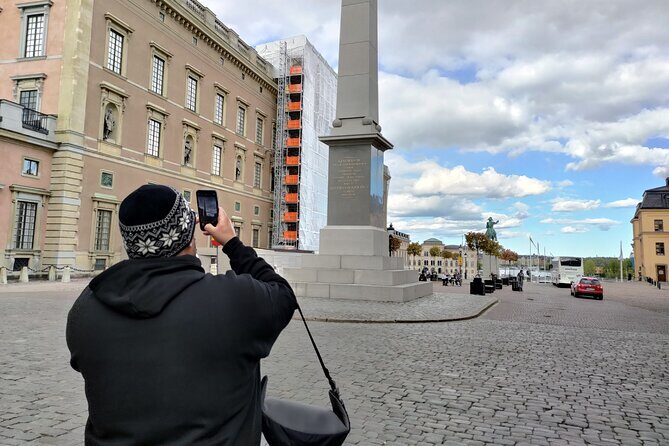
You start at Gustav III’s obelisk at Slottsbacken, with the tour meeting at the foot of the monument (Slottsbacken 1). The guide starts with introductions, the day’s plan, and a history of the killing of King Gustav III at the Royal Opera, tied to the obelisk. It’s a sharp way to begin because it frames what you’re about to see: power, ceremony, and consequences.
A practical note: stop 1 includes an opening intro that’s not just trivia. It’s there to help you read the city around you. When you then move toward the Royal Palace and the square, the names and buildings feel like they mean something.
Royal Palace and the monarchy theme: quick but useful
Next up is a brief look at the Royal Palace. You won’t have long to stare at every facade, because this tour is designed to stack stops. But even a short stop can work if the guide connects what you’re seeing to Sweden’s monarchy and how power shaped daily life.
If you want a deep self-guided palace visit, this tour isn’t built for that. Admission is not included for the palace, and the stop is short. Think of it as orientation with context, not as a palace “day.”
Stortorget and the Bloodbath story: where Old Town drama is on display
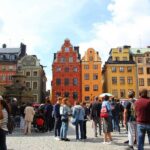
Then you hit Stortorget, Stockholm’s main square. This is one of the best places for a tour guide to do their magic, because the square is physically dramatic and historically loaded. You explore the architecture and decoration, and you hear the story of the Bloodbath of Stockholm.
This is also where the tour’s “small details, big meaning” style shows up. A flat, unsupervised square visit can feel like, nice buildings. With a guide, it becomes: who did what, why did it happen here, and how did people live in the aftermath.
Nobel Prize Museum pass-by: Alfred Nobel meets the square’s story
The route then takes you past the Nobel Prize Museum. You don’t go inside on this tour, but you get a guide explanation of Alfred Nobel and how the history of Stortorget connects to the surrounding story.
I like these pass-by moments on structured tours when you have limited time. They give you enough direction that, if you later decide to return for the museum, you’ll know what you’re looking for. If you dislike “look but don’t enter” stops, this part might feel a little lighter.
Other Stockholm highlights and must-see tours






Runsten and Prästgatan: the Old Town’s dark side in small bites
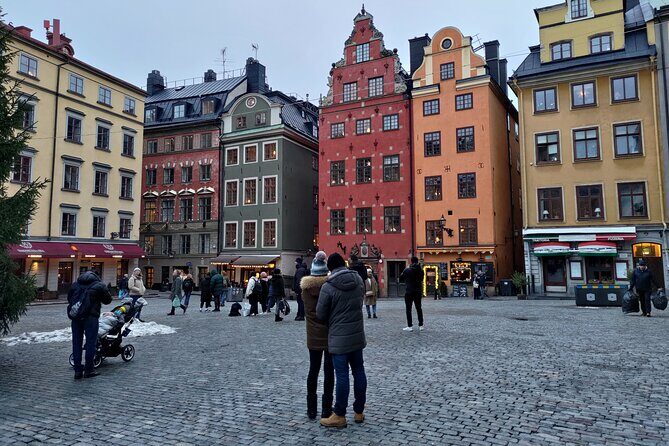
Several stops focus on darker, older layers of the city.
- Runsten: you briefly experience the old town runestone and its history.
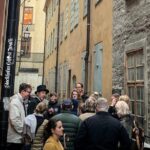
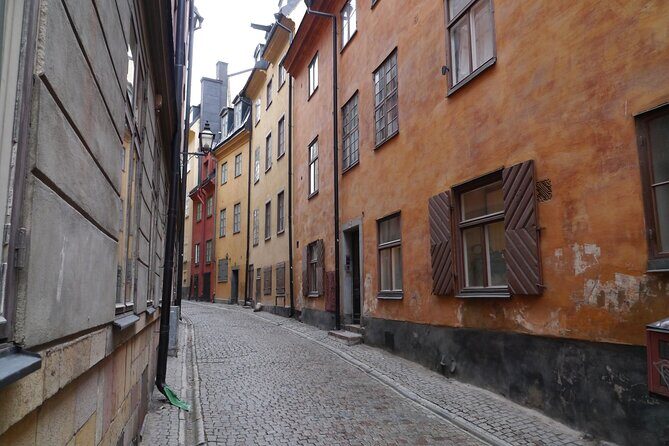
- Prästgatan: you hear about the ally of Hell (Prästgatan) and the history of the executioners of Stockholm.
These are short stops, but they’re not random. They add variety to Old Town sightseeing that often gets stuck on churches and palaces. And because they’re brief, you don’t lose time to long ticketed attractions.
One practical consideration: you’re walking between stops, so if the day is rainy, your pace and photos may be more constrained. Still, the small stops are a good fit for bad weather because you’re not stuck in one place waiting forever.
Storkyrkan (and archaeology): life in ancient Stockholm, explained
There’s a brief stop to explore Storkyrkan, Stockholm’s main church, with stories about life in ancient Stockholm. The tour also ties this to “recent archaeological excavations,” so you get a sense that the past is still being uncovered.
I like stops like this because they make the city feel less like a museum and more like an ongoing project. Even if you only spend minutes here, the guide’s explanation helps you understand why this spot matters.
Riddarholmen and the house of knights: monks, fires, and stories
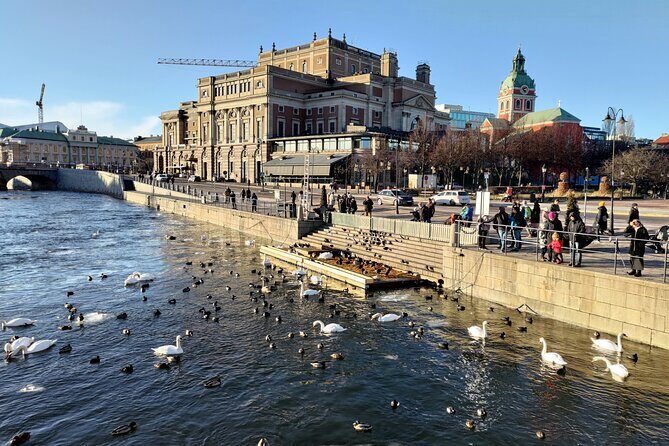
Next you move to Riddarholmen, on the “isle of the Nobels.” You get stories of monks, death, fires and flames, and you pass the house of knights.
That mix is exactly what makes Riddarholmen interesting. It’s not only about the buildings. It’s about the layers of Stockholm’s role as a political center and a city that had to survive disasters.
Järntorget, the German part of Old Town, and trade networks
At Järntorget, the guide focuses on trade networks and the German part of Old Town. This is the economic side of the story, which helps balance all the palace-and-crime drama from earlier stops.
Even if the stop is only around 10 minutes, it’s valuable because it changes how you interpret the streets. You begin to see Old Town as a working system, not just a historic set.
Marten Trotzigs grand: the smallest ally with the biggest tragedy
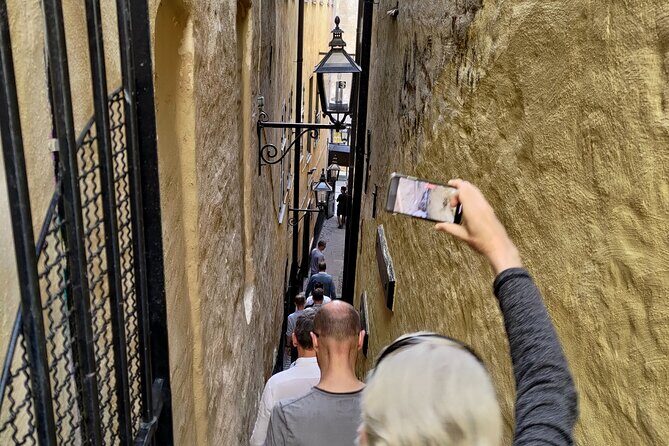
You then walk through Marten Trotzigs grand, described as Stockholm’s smallest ally. You hear the tragic fate of the person the alley is named after.
This is a short moment, but it’s one of those “how did I not notice this?” stops. A narrow alley like this can be easy to miss without a guide pointing out why it matters.
Skeppsbrokajen promenade and the ferry wait: the city’s water logic
Before the ferry, you walk the Skeppsbrokajen promenade, exploring the old harbor and the city’s trade and waterways while waiting for the crossing. This part is smart because Stockholm isn’t only about streets. The water shaped everything: movement, commerce, and defense.
The tour includes a one-way ferry ticket, and you’ll get that classic Stockholm feel of island edges and harbor views. If you’ve mostly been underground in museums or on trains, this ferry step helps reset your eyes.
Statue of St. George: medieval battles without the textbook tone
You pass the statue of St. George and hear tales about famous medieval battles connected to it. This is another “quick hit” stop, but it helps you connect Old Town symbols to actual historical events.
If you enjoy medieval stories and you like to understand what monuments are pointing to, you’ll get something out of this.
Djurgården: from royal hunting grounds to park and museum island
After the ferry ride, you head to Kungliga Djurgården. This is described as the former royal hunting grounds and military navy isle, now transformed into a beautiful park and museum island. The walking part here is shorter, around 20 minutes, which makes it a nice change from the dense Old Town streets.
This stop also sets up your final museum time by giving you a different atmosphere: more open space, more sky, and a calmer feeling than the tight lanes earlier.
Vrak and Viking museums: WWII shelters built to resist bombs
During this Djurgården segment, you pass Vrak and Viking, described as museums hosted in WWII shelters built to withstand airplane bombs. You also hear about modern runestones at the entrance and get a Viking-age connection.
I like this because it shows Stockholm wasn’t only medieval and royal. It also had a 20th-century story shaped by war infrastructure. Even if you don’t go in during this tour, the guide’s explanation can make you want to return.
Galarvarvet and Nordiska Museet pass-by: naval remains and 1500-to-today collecting
You then explore Galarvarvet, focusing on the history and remains of an old naval base moved from here in the 1970s. It’s a short stop, but you get the feeling of a city that keeps adapting the coast line and institutions over time.
After that, there’s a pass-by connected to Nordiska Museet. You hear about the museum’s collection of Nordic history since the 1800s, and how it collects objects connected to Sweden and the Nordic between 1500 and today. Admission is not included.
These pass-by moments work best when you treat them as prompts. On a short tour like this, you won’t have time for every museum. Getting the “why it’s here” explanation helps you choose what’s worth your ticket later.
Vasa Museum: the main event, and why skip-the-line matters
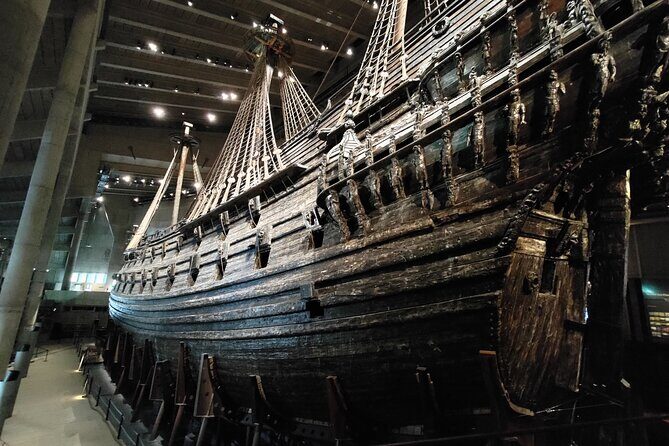
The final stop is the Vasa Museum, and this is the part you should plan around. The tour includes skip-the-line access, but Vasa tickets are not included—so you’ll need to pay for entry separately.
Here’s what the museum experience is built on:
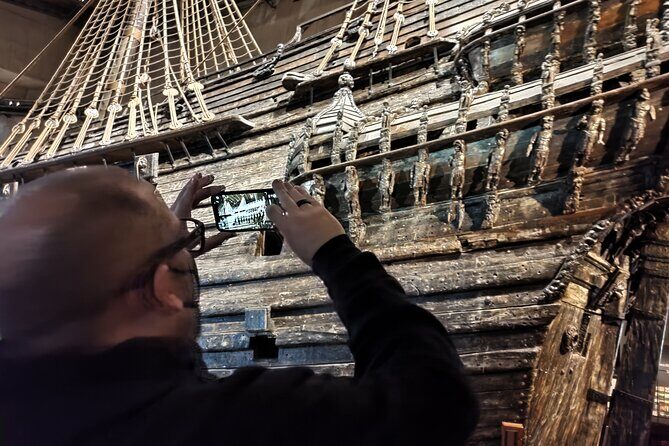
- The ship is described as the Vasa, a world-unique failure sailing about 1200 meters before it sank
- The ship can be experienced inside the museum, with the vessel about 40 meters long
- The display includes 98% complete original wood from the 17th century
That combination is why the museum hits hard even on a first visit. You’re not reading about a ship. You’re standing next to the actual structure that survived. The wooden bulkheads and the scale are hard to forget.
How much time you get is the key question. One review-style caution in this set of experiences is that later departures can mean less time inside, since the museum closes earlier in low season. Based on those accounts, you might get roughly 50 minutes to 1 hour inside on certain departures, which can feel rushed if you like to slow-walk galleries. If Vasa is your top priority, I’d lean toward the earlier departure.
Also, don’t expect a “tour of every exhibit.” This is a guided overview that gets you oriented and excited, then you’re expected to spend your remaining time exploring on your own.
Price and value: what you get for $135.69 and where it can feel tight
At $135.69 per person, you’re paying for:
- A guide-led Old Town route that connects monuments to stories
- A one-way ferry ticket
- Skip-the-line access to Vasa Museum
- A route that covers a lot of ground in about 3 hours
What you are not paying for:
- Vasa Museum admission tickets
- Long indoor time at any one building (the tour uses short stops to fit more sights)
If your goal is “see the main hits and leave with a clear picture of Stockholm,” the price can feel fair. The tour is designed to prevent wasted time and guesswork. But if you’re the type who wants long, slow museum time and deep palace time, you may find the experience a bit compressed.
The guide factor: why the stories are the real product
Across the guide descriptions, there’s a consistent theme: the guide’s storytelling style is a big reason people rate this highly. You’ll see examples of guides who bring humor and historical detail, and at least one mentioned experience is a guide like Peter, described as a retired historian who worked at the Vasa Museum.
In plain terms, that means you’re not just walking by places. You’re getting the “why this matters” layer as you go. And because the stops are short, a guide who can explain quickly and clearly becomes essential.
Who this tour suits best (and who should skip it)
This is a good fit if:
- You’re visiting Stockholm for a first time and want Old Town orientation plus Vasa in one go
- You want a small group experience (max 15)
- You like history stories tied to real places, not a classroom lecture
- You prefer to walk enough to feel the city, but not so much that your legs revolt
You might want a different plan if:
- Vasa is your top priority and you want lots of time to roam without any schedule pressure
- You hate short stops and prefer only ticketed attractions
- You’re expecting a private-style experience where only your party is present every time (this runs as a capped small group)
Should you book Stockholm Must See – Old Town, boat + Vasa Museum 3h small group?
If your schedule is tight and you want to knock out Stockholm’s biggest “I’ve made it” sights, I’d book this. The skip-the-line advantage at Vasa plus the ferry ride makes it feel like more than just another walking tour, and the stop-by-stop story approach helps you connect the dots fast.
If you do book, make your choice based on your tolerance for museum time. For Vasa enthusiasts who want to linger, try to pick the departure that gives you the longer in-museum window. For everyone else, this is an efficient, story-driven way to see the city’s heart in a single afternoon or morning.
FAQ
How long is the tour?
The tour lasts about 3 hours.
How much does it cost?
It costs $135.69 per person.
Is the Vasa Museum ticket included?
No. Vasa Museum admission tickets are not included.
What’s included besides the guided walk?
The tour includes a one-way ferry ticket and skip-the-line access to the Vasa Museum. You’ll also get an Old Town city walk with a local authorized Stockholm City Tour Guide.
Where do I meet the guide?
You meet at Gustav III’s Obelisk, Slottsbacken 1, 111 30 Stockholm.
How big is the group?
The maximum group size is 15 travelers.
Is the tour only in good weather?
No. It operates in all weather conditions, so dress appropriately.
Is the tour in English?
Yes, it’s offered in English.
Can I cancel and get a full refund?
Yes. Free cancellation is available up to 24 hours in advance for a full refund.