REVIEW · STOCKHOLM HIGHLIGHTS & MUST-SEES
Stockholm Must Sees
Book on Viator →Operated by OURWAY Tours - Stockholm · Bookable on Viator
Old Town cobblestones meet a sunken warship.
I love how this tour gives you Gamla Stan context fast, then pivots to the Vasa Museum with guided storytelling that makes the ship feel real. The big plus is that admission and a ferry/public transport connection are handled for you, so you waste less time figuring things out. One possible drawback: with only about 3 hours total, the pace is brisk—if you want to linger slowly, plan extra time on your own after the guided parts.
What makes it click is the flow. You start at the historic center, walk the medieval lanes and landmarks, then take a short public ferry transfer toward Djurgården—an easy way to see Stockholm’s water views without burning your day. Guides such as Kevin, Ebba, Joel, and Katrine are repeatedly praised for clear, friendly delivery and keeping the group moving at a pace that stays manageable for most people.
The practical reality: you’ll be on cobblestones for a good chunk, and the tour is marked as needing moderate physical fitness. If you have mobility issues or hate uneven footing, you may want to consider a more transit-light option. If you’re good with walking and you dress for the weather, this combo is a strong first-day choice.
In This Review
- Key Things I’d Bookmark Before You Go
- A 3-Hour Old Town + Vasa Combo That Actually Saves Time
- From Stortorget to Storkyrkan: Finding Stockholm’s Medieval Center
- Prästgatan and the nickname you’ll remember
- Royal Palace: not just a building, but a working residence
- Storkyrkan church: weddings and a symbol you can spot
- Järnpojken, the Iron Boy, and why tiny things matter
- St. George and the Dragon: history you can see with your eyes
- Mårten Trotzigs grand: a street so narrow it resets your sense of scale
- Skeppsbron 26 Ferry Views: Let the Water Do the Work
- Vasa Museum: Why This Guided Hour Is Worth the Ticket
- Skip the line, then start with the big story
- A guided tour that sets you up to explore afterward
- Price and Logistics: Where the Value Really Comes From
- Pace, Footwear, and What to Do After the Tour
- Who This Tour Fits Best (And Who Might Want a Different Style)
- Should You Book Stockholm Must Sees?
- FAQ
- What’s the duration of the Stockholm Must Sees tour?
- Where does the tour start?
- What time does the tour begin?
- What’s included in the price?
- Does the Vasa Museum part include a guided visit?
- Is the ferry ride included?
- Is the tour only for fair weather days?
- Can I cancel for a full refund?
Key Things I’d Bookmark Before You Go
- Gamla Stan essentials in one pass, including Storkyrkan and the tiny surprises in between
- Ferry transport included, a photo-friendly way to shift from Old Town to Djurgården
- Vasa Museum tickets included plus a guided walkthrough right when you arrive
- A small group size (max 16) that helps the guide keep the tour on track
- Skip-the-line entry at the Vasa Museum, saving you time in a popular spot
A 3-Hour Old Town + Vasa Combo That Actually Saves Time

Stockholm can be a “pick your route” city. This tour removes a chunk of decision-making by pairing two top hits that are a bit far apart on foot: Gamla Stan (the Old Town) and Djurgården (where the Vasa Museum sits). Instead of stitching together multiple tickets and directions, you get a guided route plus transportation support.
The timing also matters. The whole experience runs about 3 hours, with the walking portion focused on key medieval streets and landmarks, then a guided entry and visit at the Vasa Museum. That structure works well if it’s your first day, or if you want a guided foundation before you start roaming on your own.
Other Stockholm highlights and must-see tours


From Stortorget to Storkyrkan: Finding Stockholm’s Medieval Center
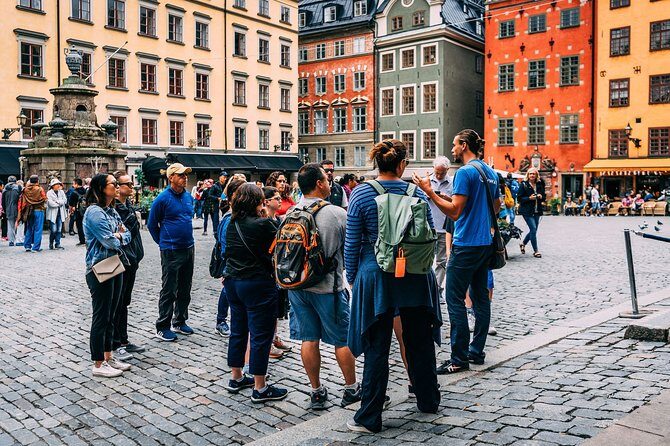
You meet at Stortorget, Stockholm’s oldest town square area—one of those places where the city’s layers are still readable if you know what to look for. It’s also where the Nobel Museum is located, so even if you don’t go inside, it’s a good moment to connect past and present.
From there, you move through Gamla Stan’s narrow medieval streets—think lanes made for feet and horses more than wheels. This is where the tour earns its keep: the guide points out small details that you’d easily miss if you were just taking photos and moving on.
Prästgatan and the nickname you’ll remember
On Prästgatan, the tour includes a story tied to the street’s older name, Helvetsgränd, sometimes associated with Hell’s Alley. The point isn’t shock value; it’s how Stockholm’s religious and civic life shaped the way people referred to spaces long ago. Nearby is Storkyrkan, so this segment smoothly bridges everyday street life to a major church site.
Royal Palace: not just a building, but a working residence
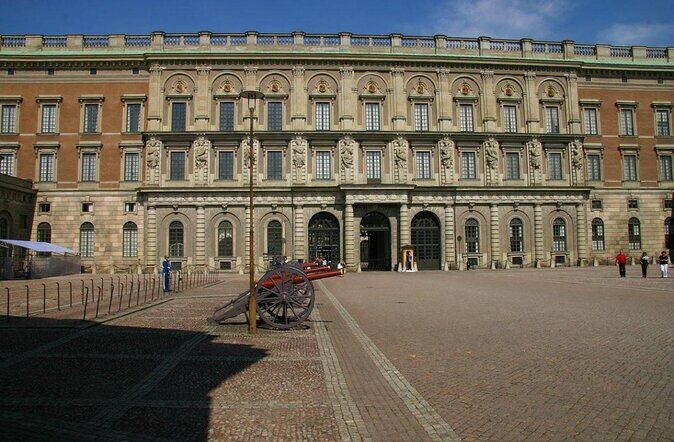
You also get a quick, high-impact look at the Royal Palace area. The palace is Sweden’s royal family home and an official stage for the monarchy, but what I like in the way this tour frames it is the idea that it’s not museum-only. It’s described as an everyday workplace too, which helps you understand why the palace feels so central and active compared to many “palace as relic” stops.
Storkyrkan church: weddings and a symbol you can spot
Storkyrkan (Stockholm Cathedral) is one of the oldest buildings in the area, and the tour highlights it for a reason beyond architecture. You’ll hear about royal weddings held there, including when King Carl XVI Gustav married Queen Silvia and later when Crown Princess Victoria and Prince Daniel said I do in 2010.
Inside the cathedral area, the guide also points you toward the St. George story—because Stockholm uses symbols, and this one shows up as a major theme.





Järnpojken, the Iron Boy, and why tiny things matter
Then comes a fun detour: Järnpojke, the Iron Boy statue. It’s small and cute, but that’s the point. In a tour like this, these short stops keep your brain from going on autopilot, and they give you easy reference points later when you return to the Old Town on your own.
St. George and the Dragon: history you can see with your eyes
You’ll see the statue of St. George and the Dragon outside, explained as a symbol tied to conflicts between Sweden and Denmark in the late 1400s. The tour notes that what you’re looking at is a bronze copy, with the original referenced as being inside Storkyrkan and made of wood. Even if you only get the quick look outdoors, you’ll know what you’re seeing.
Mårten Trotzigs grand: a street so narrow it resets your sense of scale
The walk finishes this Old Town section at Mårten Trotzig, described as the narrowest alley in Stockholm, at about 90 cm at its tightest. The guide also addresses the European narrow-alley bragging rights—because people love to compare and because it’s part of how old cities became legends about themselves. Either way, you’ll feel the scale instantly when you stand there.
Skeppsbron 26 Ferry Views: Let the Water Do the Work

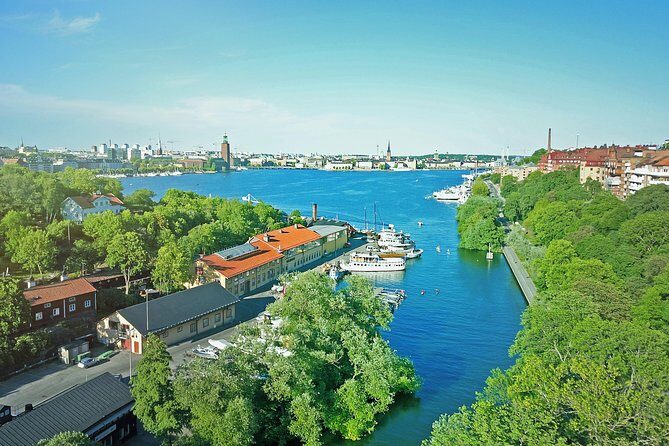
After the Old Town segment, the tour makes the transfer to Djurgården by public ferry. The stop at Skeppsbron 26 is set up for exactly what you want from a city ride: movement, views, and photos without a transit hassle.
You’ll get the ride as part of the plan thanks to the included public transport ticket. And since the ferry is public transport, it also has that everyday Stockholm feel—less tourist theater, more city commuting with a view. Expect a short ride, enough to reset your legs, and then you’ll be ready for the museum.
If you’re the type who likes to take your time at viewpoints, this ferry portion is a nice breath between the cobblestones and a big indoor exhibit.
Vasa Museum: Why This Guided Hour Is Worth the Ticket
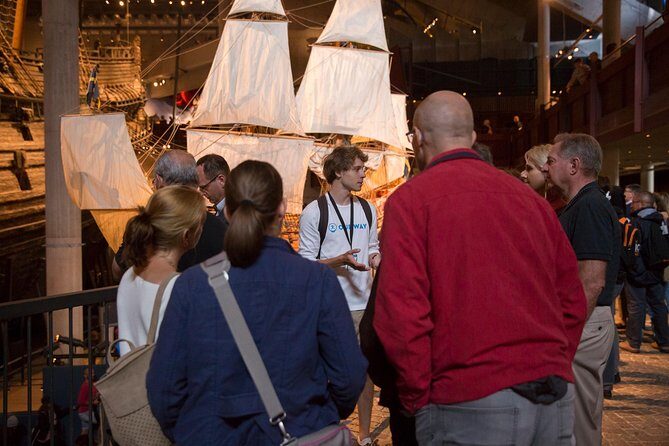
The Vasa Museum is the kind of attraction that can feel overwhelming if you walk in cold. The tour helps because it gives you a guided entry that frames what you’re about to see—before you wander off on your own.
Skip the line, then start with the big story
The tour includes tickets and mentions skipping the line to enter. Once inside, the guide gives you a walkthrough focused on the warship itself and the circumstances around it.
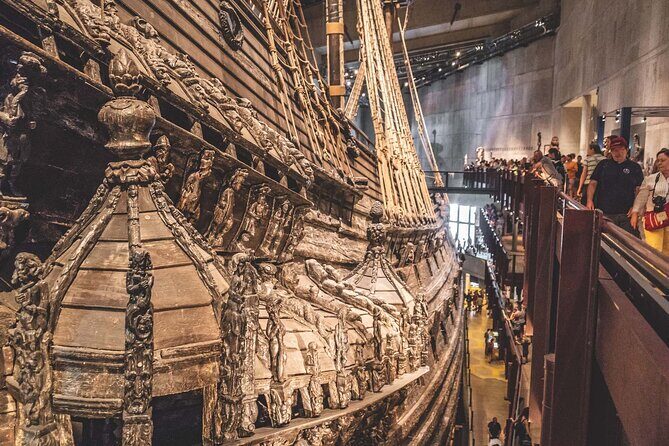
The story, in plain terms: the Vasa was Sweden’s most expensive, richly ornamented naval vessel during the 1600s. On its maiden voyage, it sank, and the tour emphasizes that people were watching from the shore when the disaster happened. Today, the ship is described as about 98% intact, which is one of those details that changes how you feel about the wreck. It’s not a ruined idea. It’s a preserved object you can read with your eyes.
A guided tour that sets you up to explore afterward
The guided part is about 1 hour, and then you finish the tour at the museum so you can continue exploring on your own. I like this structure because you get context first, then freedom after. If you only did this museum on your own, you might spend time trying to figure out what matters most. With a guide up front, you get to make your own choices with better direction.
One thing to plan for: the Vasa Museum is not a quick glance-and-go stop. The guided portion won’t cover everything. If you’re a ship nerd, a history nerd, or just a details person, give yourself extra time after the guide leaves. You’ll thank yourself.
Price and Logistics: Where the Value Really Comes From

At $113.48 per person for about 3 hours, it’s not the cheapest way to see Stockholm. But here’s the math you can feel in your day: you’re paying for a professional guide plus Vasa Museum entrance plus a public transport/ferry connection included in the plan. That reduces both stress and time spent in lines or sorting transit.
There’s also a practical value in the small group size—max 16. Smaller groups tend to move better, and the guide can spend more effort keeping the tour coherent instead of herding everyone.
Booking timing matters too. This experience is typically booked about 37 days in advance, which tells me it’s popular enough that you shouldn’t gamble with last-minute plans—especially if you’re traveling during peak season.
Pace, Footwear, and What to Do After the Tour
This is a walking tour with cobblestones. I’d treat it like a “good shoes day,” not a “fashion sandals and photos” day. Comfortable footwear will make the Old Town portion enjoyable instead of tiring. Also dress for weather—since it runs in all conditions, you’ll want layers and a rain option.
If you’re the kind of traveler who loves a slow museum pace, you’ll likely enjoy the guided Vasa portion but will still want extra time afterward. The tour ends at the Vasa Museum specifically so you can keep going, which is a smart design if you plan to explore beyond the guided hour.
Some guide praise points also hint at what to watch for. Guides like Kevin and Ebba are highlighted for good pace and clear communication. And one note from a less-positive experience reminds me to position yourself where you can hear the guide easily—don’t get stuck far back near the edges.
After Vasa, you can keep exploring nearby museums on your own. For example, the ABBA Museum and the Armory came up as additional options people found once they were in the area.
Who This Tour Fits Best (And Who Might Want a Different Style)

This tour fits best when you want two things at once:
- a guided Old Town overview that explains the landmarks, not just lists them
- a guided start at the Vasa Museum so you leave with clear understanding and a better plan for what to see next
It also works well for adult groups and for people on their first day in Stockholm. Several praised comments focus on the tour helping them “pinpoint places to return to,” which is exactly what a smart intro tour should do.
If you hate walking on cobblestones or you prefer lots of quiet time with minimal movement, you might feel the time pressure. And because the Vasa guided tour is about 1 hour, museum lovers who want to read every label at a slow rate may want to pair this with extra self-guided time.
Should You Book Stockholm Must Sees?

I think you should book this if:
- you want an efficient Gamla Stan highlights route in a single guided package
- you know the Vasa Museum is a must, but you want help understanding what you’re seeing
- you’d rather spend your day walking and learning than coordinating transit and tickets
I’d skip it (or choose a different format) if:
- you want a slow, in-depth pace with lots of unscripted wandering
- you’re sensitive to loud groups or you know you’ll struggle to hear a guide from farther back
- you dislike cobblestones and long outdoor walking segments
For most visitors, this tour is a strong value because it locks in the right stops, includes key tickets and transport, and uses a guided approach at the exact moment it matters—right when you enter the Vasa Museum.
FAQ
What’s the duration of the Stockholm Must Sees tour?
It runs for about 3 hours.
Where does the tour start?
The meeting point is Stortorget 2, 114 44 Stockholm, Sweden.
What time does the tour begin?
The tour starts at 10:00 am.
What’s included in the price?
You get a professional guide, Vasa Museum entrance, and a public transport ticket to the Vasa Museum.
Does the Vasa Museum part include a guided visit?
Yes, there is a guided tour at the Vasa Museum, and then you can continue exploring on your own after the guide leaves.
Is the ferry ride included?
Yes. The tour uses public ferry transport, and the public transport ticket is included.
Is the tour only for fair weather days?
No. It operates in all weather conditions, so dress comfortably and appropriately.
Can I cancel for a full refund?
Yes. You can cancel up to 24 hours in advance for a full refund. If you cancel less than 24 hours before the start time, the amount paid is not refunded.