REVIEW · GAMLA STAN & OLD TOWN TOURS
Gamla Stan: Essential Tour of Stockholm
Book on GetYourGuide →Operated by Rainbow Tours Stockholm · Bookable on GetYourGuide
Gamla Stan reads like a living timeline. This Old Town walking tour ties the past to the present, moving you from the Viking era through the 1520 bloodbath to the rise of Gustav Vasa, all on foot in Gamla Stan. You’ll see how power, faith, and daily life overlap in the tight streets between the big landmarks and the little details.
I especially like the chronological storytelling. It keeps the medieval thread straight, instead of dumping dates at you. And I like the human touch of the guides, with high-energy performances from names like Sophie and Oscar, plus entertaining styles reported by guides such as Gaya and Katherine.
One consideration: it’s a 2.5-hour walking format with guided stops that each get only a short window, so if you want long photo pauses or extended time inside buildings, you may prefer a slower, site-by-site plan. Also, the narrow streets mean good shoes matter on wet or icy days.
In This Review
- Key things to know before you go
- Entering Stockholm’s Old Town with a chronological storyline
- Getting oriented at Gustav Adolfs torg (and why the rainbow umbrella helps)
- Parliament House and Riddarholmen: power and faith on neighboring shores
- Mårten Trotzigs gränd: the narrow street that changes how you see everything
- German Church: how foreign influence becomes part of daily Stockholm
- Stockholm Royal Palace and the St. George stories: authority with a human face
- Stockholm Cathedral and Stortorget: the finish line with context
- Price and value: what $21 gets you for 2.5 hours
- Pace, Q&A, and getting more from the guide
- When to go and what to wear on narrow Old Town streets
- Should you book this Gamla Stan walking tour?
- FAQ
- Where is the meeting point for the tour?
- How long is the Gamla Stan walking tour?
- Is the tour available in English?
- Where does the tour end?
- Is the tour wheelchair accessible?
- What should I do if I’m running late?
- What’s the price and cancellation/payment flexibility?
Key things to know before you go
- Meet at Gustav Adolfs torg with a rainbow umbrella so you can spot the group quickly.
- Chronology from Vikings to Gustav Vasa helps you understand Stockholm without a map full of scribbles.
- You’ll walk the narrowest street in Stockholm at Mårten Trotzigs gränd, and you’ll feel why it matters.
- Churches, palaces, and squares appear in practical sequence: German Church, Royal Palace area, Stockholm Cathedral, then Stortorget.
- Guides use humor and wordplay and invite questions, so you can steer the story toward what you care about.
Entering Stockholm’s Old Town with a chronological storyline
Gamla Stan can feel like an art project: tight lanes, old stone, colorful façades, and postcard views around every corner. The tricky part is sorting which moment in time you’re actually seeing. This tour solves that by telling the city in order, starting with early Nordic roots and moving forward through the medieval era and into the big political turning points.
The most useful thing is how the guide frames each change in rule. You’re not just hearing that Stockholm was influenced by outsiders—you’re getting the cause-and-effect thread. Danish pressure, German links, and power struggles all show up as reasons for why buildings and institutions look the way they do today.
You’ll also get a sense that history isn’t sealed in amber. The tour explicitly connects past events to modern Swedish life, including how locals think and talk about identity. That makes the stories stick, because you’re not memorizing dates for their own sake.
Other Gamla Stan and Old Town tours in Stockholm


Getting oriented at Gustav Adolfs torg (and why the rainbow umbrella helps)
Most walking tours start with a vague hand wave and hope. Here, you meet at Gustav Adolfs torg, and your guide is easy to identify in the middle of the square under a rainbow umbrella. That small detail matters when you’re trying to start on time, especially if you’re arriving from another part of the city.
From there, the tour begins to “set the rules” for how to read Gamla Stan. You’ll learn where to look for symbols of authority, how churches and civic buildings signal social power, and why the street layout matters. It’s a nice way to get your bearings fast without needing to be an architecture expert.
And because the guide is live and in English, you can ask quick questions as they come up. That’s where this format shines: the story adapts to curiosity rather than forcing you to wait until the end.
Parliament House and Riddarholmen: power and faith on neighboring shores
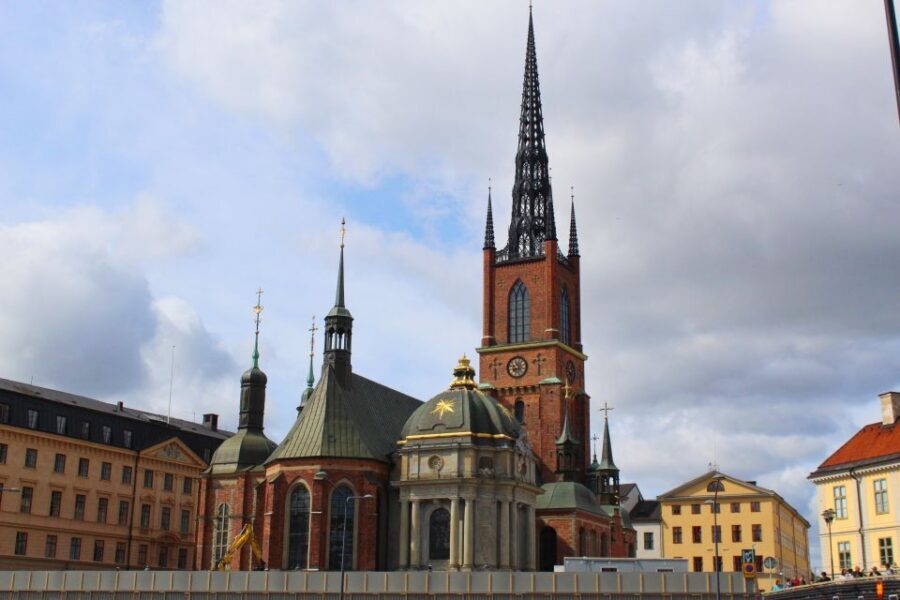
Early stops help you understand the geography of Stockholm in a way that sticks. You pass the Parliament House area for a short guided explanation, then head toward Riddarholmen. Even when each stop is brief, you’re getting a “what it represents” viewpoint instead of a checklist of sights.
Riddarholmen is especially good for learning how Stockholm’s institutions layer over one another. You’ll connect the medieval role of religious sites and royal authority to later governance. The guide also tends to point out contrasts—what used to be about survival and control becomes ceremonial over time.
If you like story-driven sightseeing, this part works well. You’re building a mental model: people needed a place to rule, a place to worship, and a place to convene. Gamla Stan’s island shape made all three tightly connected.
Mårten Trotzigs gränd: the narrow street that changes how you see everything
Then you get the street-level reality check at Mårten Trotzigs gränd, described as the narrowest street in Stockholm. This is one of those stops where you don’t just look—you adjust your body. You slow down, turn your shoulders, and feel the scale of medieval planning.
That physical experience matters. Narrow lanes weren’t made for aesthetics. They were practical: they shaped movement, controlled access, and created dense neighborhoods close to centers of work and power. When the guide ties that to events in the city’s timeline, the street stops being a photo spot and becomes a clue.
You’ll also see how Gamla Stan’s character comes from details that repeat: tight corners, colored façades, and sightlines that constantly redirect your attention. By the time you reach the square later, you’ll notice the way these lanes funnel you toward key civic spaces.
German Church: how foreign influence becomes part of daily Stockholm
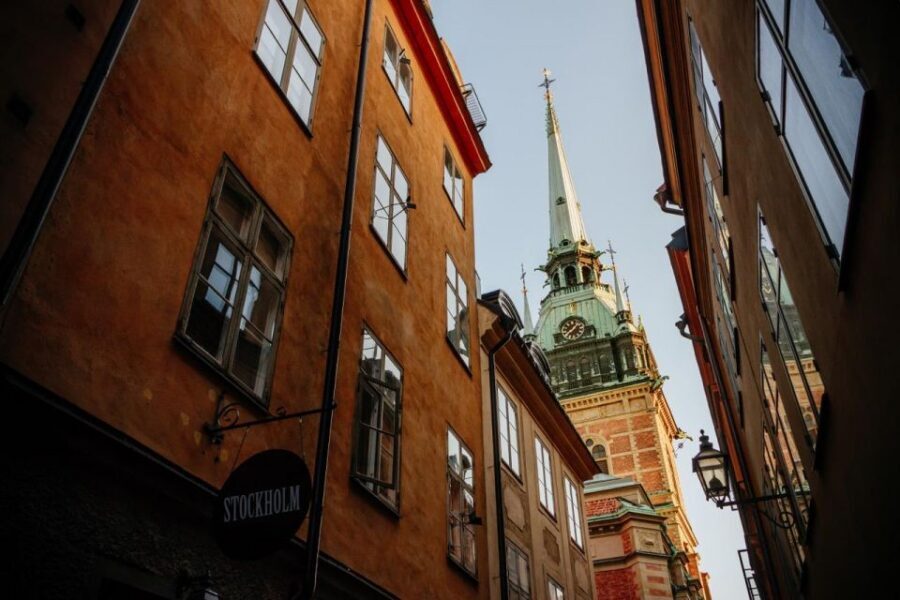
The tour includes the German Church, and that stop is more than a quick look at stonework. It’s a chance to understand why “German influence” wasn’t a vague idea. In a trading city, links spread through communities—merchants, language, worship, and customs.
This is where the chronological format really pays off. You’re not just told there was outside influence; you see it placed inside the broader story. That makes the medieval map of relationships feel real instead of academic.
If you care about how migration and trade shaped cities, this stop hits well. You’ll likely come away thinking differently about Stockholm’s old neighborhoods: they were never isolated. Even centuries ago, the city’s identity was braided with contacts beyond the region.
Other Stockholm highlights and must-see tours






Stockholm Royal Palace and the St. George stories: authority with a human face
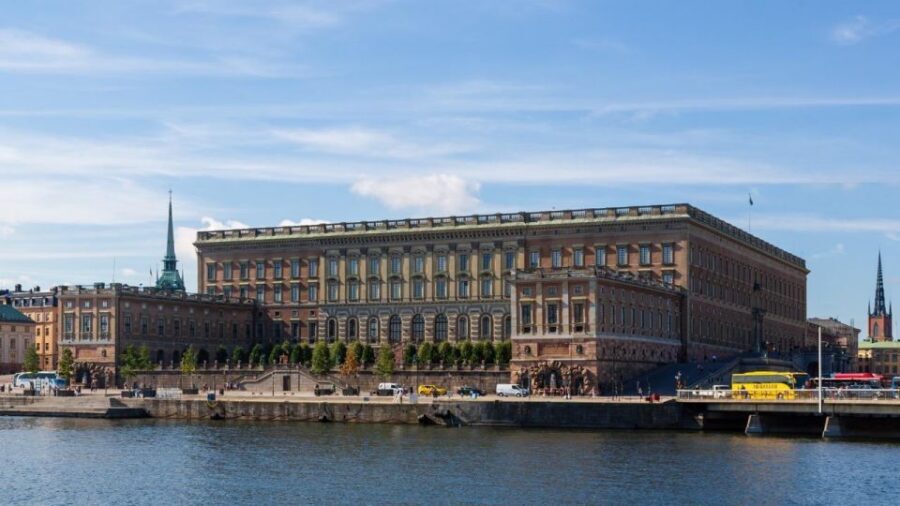
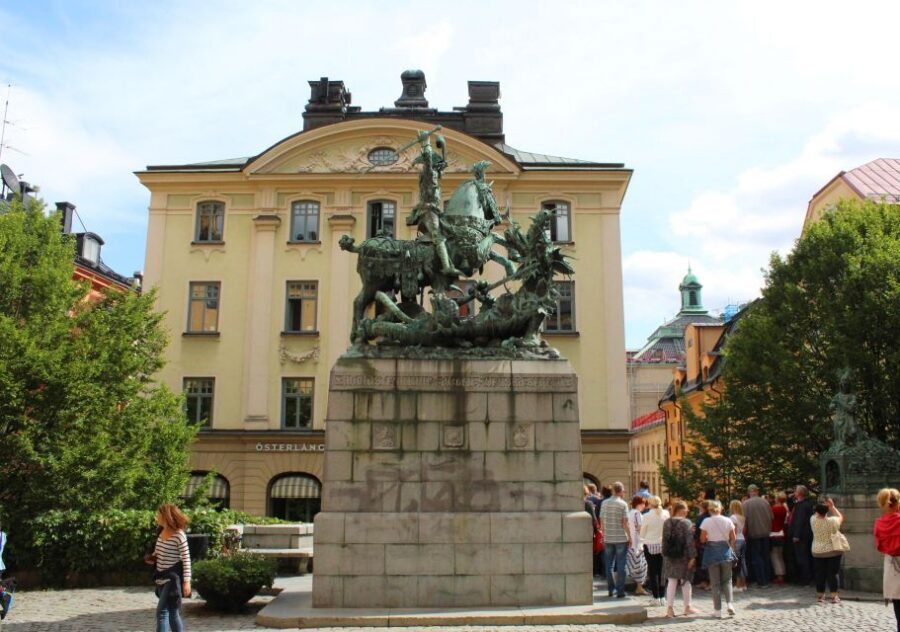
Next you’ll walk through the Royal Palace area and the guide’s attention turns toward kingship, ceremony, and symbolism. The tour also points out the statue of St. George and the Dragon, plus major squares like Stortorget later. Those aren’t random decorations. In Old Town planning, symbols were how the city communicated values.
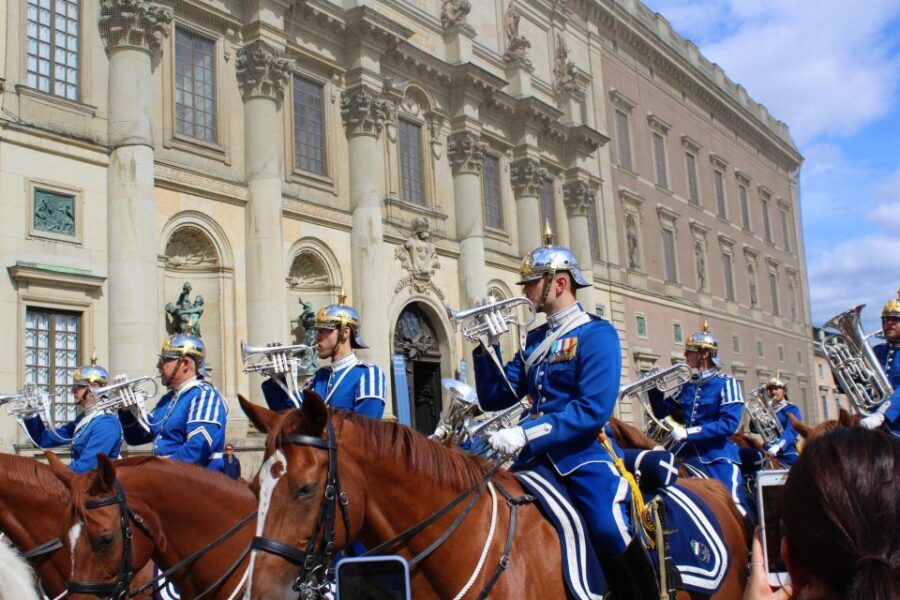
You may even catch the changing of the guard at the palace, since it can include a full marching band at certain times. If it’s happening when you’re there, that’s a fun bonus because it transforms the palace from background scenery into a living ritual.
One reason this part works: the guide doesn’t treat royal power as distant. The story keeps circling back to everyday life—who benefited, who had to adapt, and how public spaces shaped social order. That makes palaces feel less like museums and more like workplaces of politics.
Stockholm Cathedral and Stortorget: the finish line with context
Stockholm Cathedral is another short guided stop, but it helps close the circle. After you’ve seen churches earlier (including the German Church), the cathedral reinforces how faith and civic identity were connected through the centuries.
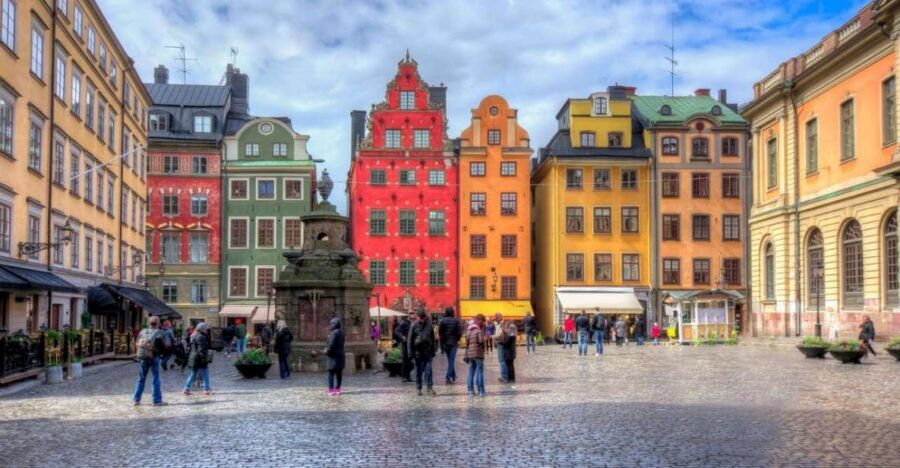
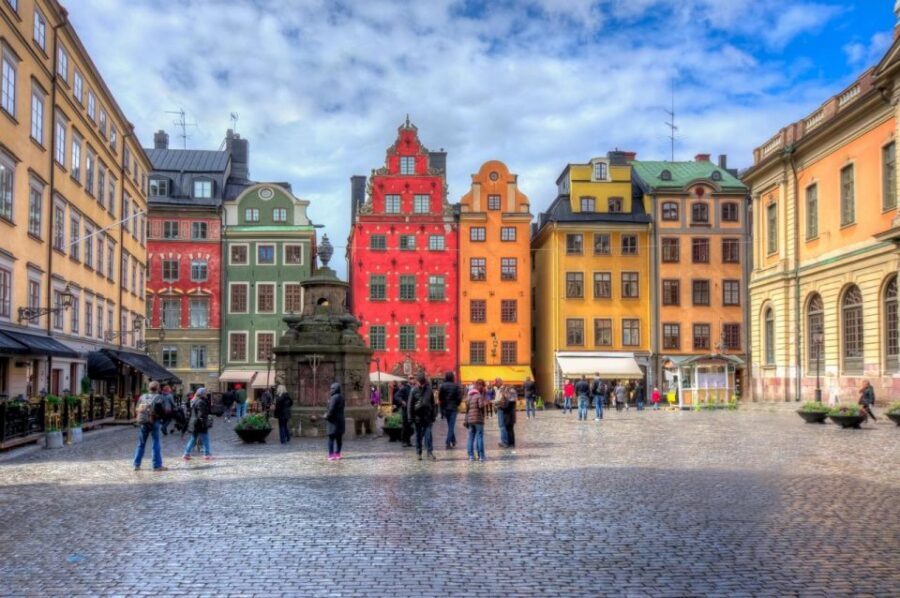
Then you end at Stortorget, the famous main square. This is the right kind of finish because squares are where everything converges: announcements, public gatherings, and the moments when history becomes visible to ordinary people.
By the time you reach Stortorget, you’re prepared to look at the place differently. You’ve already traced the arc—from early eras through the Danish clash that led to the Stockholm bloodbath in 1520, followed by the succession of Gustav Vasa. In other words, you end with the context that makes the buildings and stones feel purposeful rather than random.
Price and value: what $21 gets you for 2.5 hours
At about $21 per person for a 2.5-hour guided walk, this tour is priced like a practical “first-day” activity. You’re paying for more than sightseeing. You’re paying for a guide who connects the dots—Viking roots, German influence, Danish conflict, the 1520 bloodbath, and then Gustav Vasa—so you can understand what you see without homework.
The value also comes from pacing and group size. One strong signal from past participants is that groups are kept to around 15 people. That’s big enough for a lively atmosphere and small enough that you’re not always craning your neck to hear.
If you’ve only got limited time in Stockholm, this is a cost-effective way to get orientation and historical context in one go. If you’re the type who wants to linger at one place for an hour, you may end up wishing you had picked a longer, slower option.
Pace, Q&A, and getting more from the guide
A walking tour is only as good as the interaction. Here, the guides are described as upbeat and professional, and they actively encourage questions so you can personalize the experience. That’s great for travelers who like to ask about modern Swedish culture, not just medieval events.
I’d also note the style element that comes through in past comments: wordplay and humor. When a guide can make history sound like a story instead of a lecture, you remember more. It also helps you handle the inevitable Stockholm weather shifts. When the day turns cold or rainy, a high-energy guide keeps morale up and keeps you moving.
If you want to maximize value, show up with one question in mind. Examples: How did Swedish politics shift after 1520? How did trade communities shape neighborhoods? Then ask it early so the guide can angle the story toward what you care about.
When to go and what to wear on narrow Old Town streets
This is a full walking experience across narrow streets and old surfaces. You’ll want weather-smart clothing: layers you can adjust, and footwear with solid grip. Gamla Stan’s lanes can be slick, and you’ll spend real time on foot rather than hovering in one museum doorway.
Also, timing matters. If you’re late, you should let the local operator know so they can help you reach the tour. That’s a small step that can save you from missing the start, especially since the meeting point is in the middle of the square.
Language is English, and the tour is live-guided, so plan for quick explanation moments rather than long independent wandering. If you arrive ready to walk, you’ll get far more out of the route.
Should you book this Gamla Stan walking tour?
Book it if you want a practical first introduction to Stockholm that makes the Old Town make sense. The strongest reason is the chronological approach: it helps you connect Viking-era foundations, German influence, the Danish clash, the 1520 Stockholm bloodbath, and Gustav Vasa without getting lost in a list of facts.
Skip or consider an alternative if you prefer slow, detailed time at a single site, or if you’re sensitive to lots of walking in tight spaces. This tour is designed to cover key areas efficiently, not to replace a full day of museum time.
If you’re short on time and want an organized, story-led way to see Gamla Stan’s icons—Mårten Trotzigs gränd, the German Church, Royal Palace area, Stockholm Cathedral, and Stortorget—this is a smart fit.
FAQ
Where is the meeting point for the tour?
You meet at Gustav Adolfs torg, in the middle of the square, and the guide will be holding a rainbow colored umbrella.
How long is the Gamla Stan walking tour?
The duration is 2.5 hours. Starting times vary, so you’ll want to check availability.
Is the tour available in English?
Yes. The live tour guide speaks English.
Where does the tour end?
The tour finishes at Stortorget, the main square in Gamla Stan.
Is the tour wheelchair accessible?
Yes, the activity is listed as wheelchair accessible.
What should I do if I’m running late?
If you’re going to be late, contact the local operator in advance so they can help you reach the tour.
What’s the price and cancellation/payment flexibility?
It’s priced at $21 per person. There is free cancellation up to 24 hours in advance for a full refund, and you can reserve now and pay later.