REVIEW · HIKING & NATIONAL PARK TOURS
Snowshoe Winter Hike from Stockholm
Book on Viator →Operated by The Green Trails · Bookable on Viator
Ice underfoot, forests ahead.
This Stockholm snowshoe winter hike is built for real time outside: you get a short kit lesson, then head into a nearby national park or nature reserve for a full day of winter walking, wildlife spotting, and guide-led forest know-how. I especially like the small group size (max 8), which keeps the pace comfortable and the help close by when conditions get slick.
Two other big wins for me are the practical skill focus and the coziness payoff. You learn how to use snowshoes or ice cleats, how to use binoculars, and basic forest etiquette before you start hiking, so you’re not just following tracks. The day ends with a campfire lunch and warm Swedish fika snacks, including soup that’s a standout if lakes are frozen and you work up a proper appetite.
One consideration: it’s an active winter excursion, and the cold can make even an easy hike feel tougher—especially if you’re not dressed for waterproof, insulated walking. Also, there’s no snow guarantee; snow level decides whether you wear snowshoes or switch to ice grip cleats.
In This Review
- Key highlights you’ll feel right away
- Getting started: the Tideliusgatan meeting point and your 9:00am start
- Gear check that actually helps: snowshoes, ice cleats, poles, and waterproof boots
- The minibus ride: how the route adapts to snow and weather
- First steps: the tutorial on snowshoes/cleats, binoculars, and forest etiquette
- A comfortable pace hike where the guide teaches what you’re walking through
- Wildlife in winter: what you’re really paying for
- Frozen lakes and campfire lunch: the moment the day turns cozy
- The return to base: leaving recharged, not exhausted
- Price and value: what $191.34 buys you in Stockholm winter
- Who should book this snowshoe winter hike?
- FAQ
- FAQ
- What’s included in the snowshoe winter hike?
- What should I wear for this tour?
- Is there guaranteed snow in Stockholm?
- Do we use snowshoes or ice cleats?
- Can the tour cross frozen lakes?
- How long is the hike?
- What language is the tour in?
- Should you book the Snowshoe Winter Hike from Stockholm?
Key highlights you’ll feel right away
- Max 8 travelers means you actually get attention when you need it
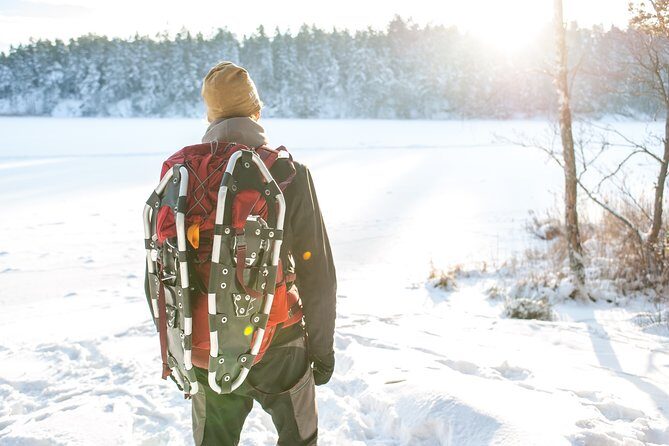
- Snowshoes/ice cleats plus poles and a backpack are included, so you travel lighter
- Binoculars + wildlife info turns a walk into real winter seeing
- Forest etiquette, navigation, and bushcrafting tips give the day meaning
- Possible frozen-lake crossing under guide supervision (with lots of patience)
- Campfire lunch + Swedish fika snacks makes the effort feel worth it
Getting started: the Tideliusgatan meeting point and your 9:00am start
You meet at Tideliusgatan 62, 118 69 Stockholm, and the day starts at 9:00am. From there, you’ll get to the base area and then ride by minibus to the chosen hiking spot, which could be a national park or a nature reserve. That matters because Stockholm winter can vary a lot week to week, and the operation adjusts to what the land is offering that day.
The tour also uses a mobile ticket, which is handy if you’re juggling transport and tickets across the rest of your trip. Since it’s near public transportation, it’s easy to slot into a day without needing a complicated plan.
Other hiking and national park tours in Stockholm
Gear check that actually helps: snowshoes, ice cleats, poles, and waterproof boots
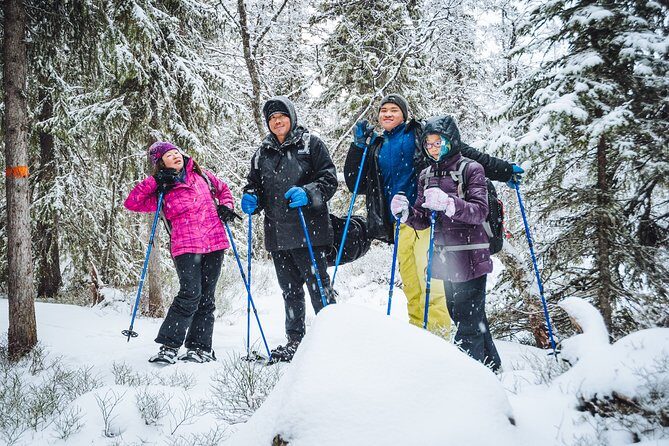
The best part of this outing is that you don’t need to guess what to rent. All equipment is included—snowshoes (if needed), hiking poles, and a backpack. But the real learning starts before you walk far.
Depending on conditions, you’ll use either:
- Snowshoes when snow depth requires them
- Ice grip cleats over your boots when snow is not the main factor
You’ll also get a quick tutorial on how to use what you’re wearing, plus guidance on how to walk safely on winter surfaces. This is one of those small touches that pays off fast: it helps beginners avoid the wobbly-feeling stage where confidence drops.
What you bring matters, and it’s not optional. Plan for waterproof clothing and footwear that can handle snow and slush. In the cold, comfort is safety. If you show up in regular sneakers, you’ll spend the day thinking about your feet instead of the forest.
The minibus ride: how the route adapts to snow and weather
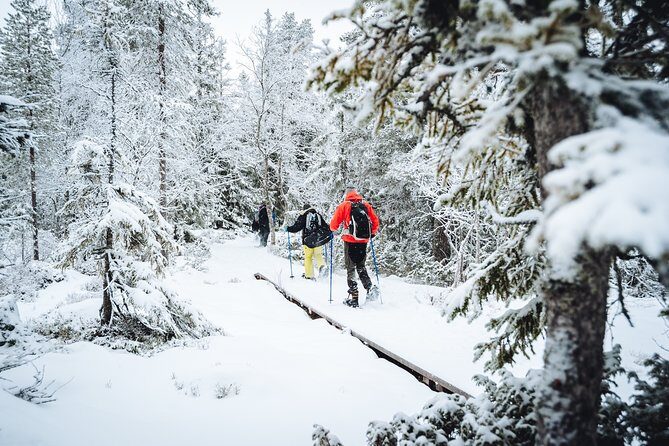
Once you’re geared up, you head out together by minibus to one of Stockholm’s winter walking areas. The exact location depends on snow and weather conditions, which is a big deal when you’re traveling in winter and hoping to experience the classic “quiet snow forest” look.
The operator is clear about one thing: there’s no snow guarantee. Still, the previous winter season (January to March 2024) had only one excursion without snow, so odds are good you’ll get a true winter setting.
Translation for you: don’t plan a second outdoor activity the same day unless you like flexibility. This hike works best when you’re prepared to let the weather set the tone.
First steps: the tutorial on snowshoes/cleats, binoculars, and forest etiquette
Before you move deep into the woods, you’ll get a brief training session. This includes how to use your snowshoes or ice cleats, how to handle and use binoculars, and basic forest etiquette.
That might sound like “pre-hike homework,” but it’s actually what makes the day smooth. Learning how to walk your first few minutes in the right way reduces slips and keeps your energy for the later part of the route—especially if there’s icy crust under fresh snow.
Binoculars also change what you notice. Winter days are full of movement, but it can be hard to see from the trail. When you understand what to look for (and where), you start spotting wildlife rather than just admiring trees.
A comfortable pace hike where the guide teaches what you’re walking through
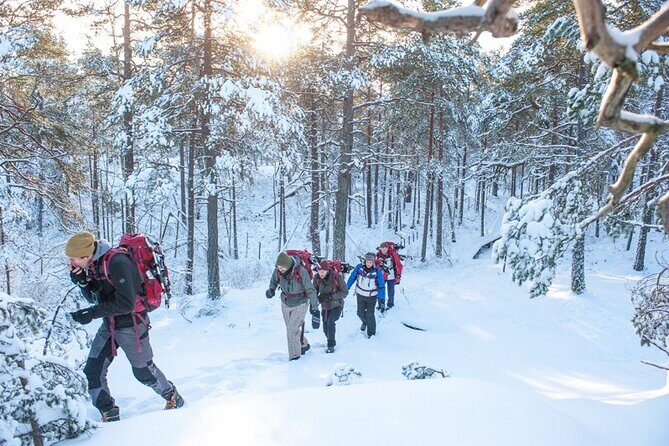
Now you’re off: a winter hike through Swedish scenery at a comfortable pace. You’ll hear stories and practical insights about local flora and fauna, plus tips connected to bushcrafting and navigation techniques.
This is the kind of guiding that makes the walk feel personal. Instead of a “tourist facts dump,” the information connects to what you can actually see in front of you: winter plant signs, animal behavior patterns, and how people used to read the land with simple tools and instincts.
Small group size helps again here. Questions don’t get lost in a crowd, and the guide can adjust when someone needs a slower rhythm or a quick reminder about footing.
Other hiking tours in Stockholm
Wildlife in winter: what you’re really paying for

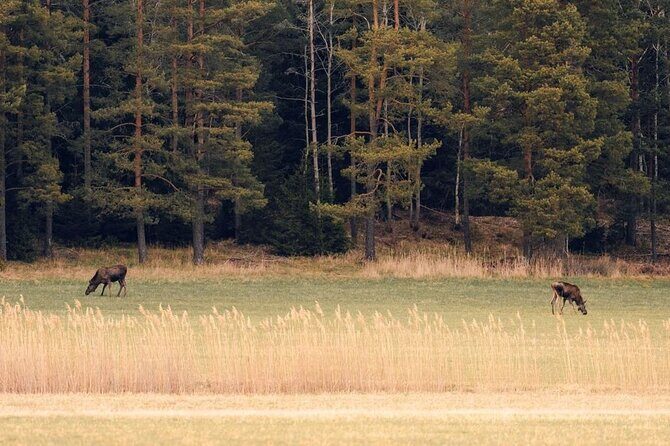
You’re here for a day away from city noise, but the stronger reason to go is what winter makes possible. The forest is quieter, tracks are more visible, and animals don’t blend in as easily when the world is stripped down by snow.
The tour’s goal is to help you see native wildlife in their natural environment, and the binocular lesson makes that more realistic. Even if you don’t have a dramatic sighting every hour, you’ll still leave with a better sense of what’s going on around you—because you’re not just walking blind.
One extra benefit: your guide’s local knowledge. In the reviews, guests highlighted that the guide lived locally to the forest and knew the area well. That kind of familiarity matters in winter, where the best route is often the one you don’t notice on a map.
Frozen lakes and campfire lunch: the moment the day turns cozy
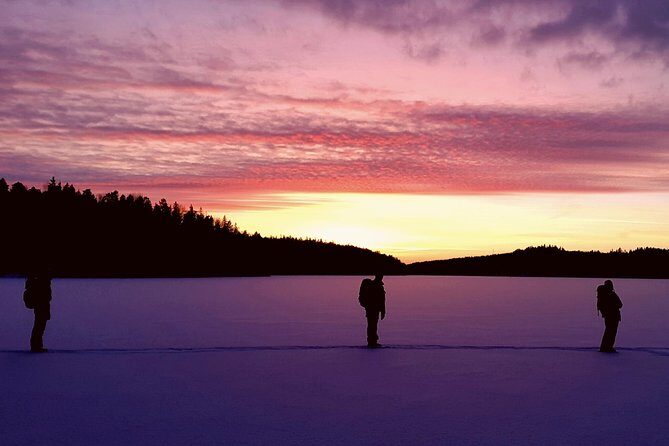
If the lakes are frozen, there’s a chance you’ll cross them under the guide’s supervision. This is the part of the experience that can feel a little intense at first, especially if you’re not used to walking on ice.
But this is where the guide makes the difference. In one review, guests described how the guide helped everyone manage the lake crossing and even took pictures and videos while they did it. That’s the calm, confidence-building support you want when something feels unfamiliar.
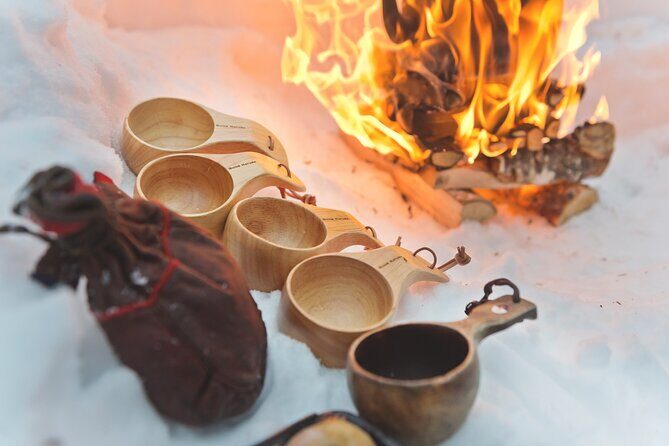
After the walking, you’ll build and light a campfire and warm up with a tasty lunch. The inclusion of lunch is a smart value piece: it prevents the “we’ll eat later” stress, and it keeps you fueled for the rest of the hike and return trip.
Swedish fika snacks are also included, so you’re not just drinking cold water and hoping for a dessert stop. One guest specifically called out the soup as delicious, which makes sense—this is the kind of hearty meal that fits winter effort.
The return to base: leaving recharged, not exhausted
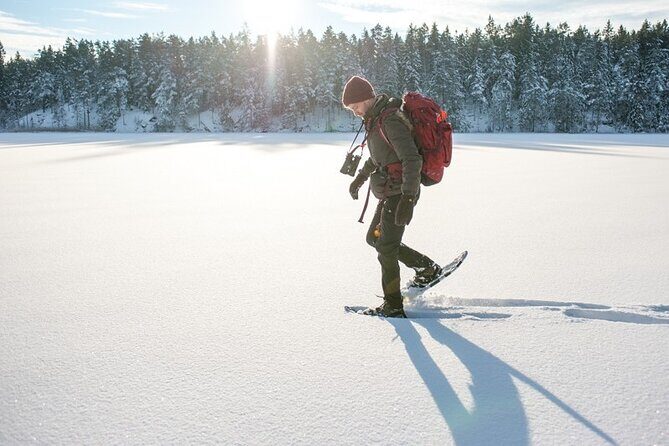
By the end of the day, you head back to the meeting point area, ending where you started. The tour is about 8 hours total, including gear-up, transport, walking, and the campfire pause.
If you’re an active traveler, this is a solid day outdoors without turning into a marathon. If you’re not, the “comfortable pace” promise is real—especially with a small group and a guide who can slow down for first-timers.
You do still need to treat it as an active excursion. Dress right, and you’ll feel the payoff. Dress poorly, and the cold becomes the main story.
Price and value: what $191.34 buys you in Stockholm winter
At $191.34 per person for about 8 hours, this isn’t a cheap casual outing—but it’s also not just “someone walks you around.” Your money goes into the things that actually cost time and expertise in winter:
- Included equipment (snowshoes/cleats, poles, backpack)
- A local guide focused on safety, wildlife spotting, and practical winter skills
- Transport by minibus to the best conditions for that day
- A real meal at a campfire (lunch plus snacks/fika)
Value-wise, the key is that you avoid rental hassle and avoid showing up underprepared. You also get guided learning, not only scenery. That’s why the ratings are so high and why the experience tends to stick in memory—especially for people trying snowshoe hiking for the first time.
Who should book this snowshoe winter hike?
This outing is designed for broad comfort levels. It’s described as ideal for families, all ages, and all skill levels, with an emphasis on an easygoing pace and friendly, professional guidance.
You’ll especially like it if:
- You’re visiting Stockholm and want one full day that feels like Sweden’s winter, not just photos
- You want more than a walk—binoculars, etiquette, and navigation basics give structure
- You’re traveling with kids or mixed-experience groups and want a small, supportive guide setup
- You enjoy wildlife spotting and want help doing it well
If you’re someone who hates getting cold or dislikes active excursions, take that seriously and dress for the worst. Winter hikes can be short on “distance” but long on “chill.”
FAQ
FAQ
What’s included in the snowshoe winter hike?
You get all equipment (snowshoes if needed, hiking poles, and a backpack), a local guide, lunch, snacks with Swedish fika, and transport to and from the meeting point area by minibus.
What should I wear for this tour?
Dress for winter hiking with waterproof and warm clothing. Footwear should be appropriate for snow and cold, such as boots or waterproof sneakers. The tour notes it’s an active excursion, so plan for cold and wet conditions.
Is there guaranteed snow in Stockholm?
No. Snow levels aren’t guaranteed, so the tour will use snowshoes if needed. Last winter (January to March 2024), there was only one excursion without snow.
Do we use snowshoes or ice cleats?
That depends on conditions. If snow level demands it, you use snowshoes. Otherwise, you’ll use ice grip cleats on your boots.
Can the tour cross frozen lakes?
It’s possible if lakes are frozen, and any crossing is done under the guide’s supervision.
How long is the hike?
The experience runs for about 8 hours.
What language is the tour in?
It’s offered in English.
Should you book the Snowshoe Winter Hike from Stockholm?
If you want a winter day that feels meaningful—wildlife spotting, practical snow walking skills, and a campfire lunch—this is a strong choice. I’d book it if your group includes beginners or mixed ages, because the max 8 setup and guide support make the learning curve manageable.
Just be honest about the weather reality and your comfort with cold. If you dress waterproof and bring the right footwear, you’ll likely enjoy the day’s rhythm: tutorial, trail time, a possible lake crossing, then warm food and fika. If you’re hoping for a purely relaxed, non-active stroll, look for something else. For an outdoor winter experience with real guidance, this one delivers.