REVIEW · CITY TOURS
Walking Tour of Stockholm’s City Center
Book on Viator →Operated by NORDIC FREEDOM TOURS · Bookable on Viator
Stockholm clicks into place fast. This 2-hour city-center walking tour shows you modern Sweden in plain sight, from Central Station landmarks to government buildings and major arts venues. You’re out on the streets the whole time, so you get a real feel for how the city flows between history and everyday life.
I especially like two things. First, the route stays outside and practical, so you’re not stuck waiting on tickets for indoor museums. Second, the guide work tends to be strong and organized, with multiple named guides like Stefan, Amon, Sophia, Karl, and Cim showing up in the mix and earning high praise for clarity and answering questions.
One thing to keep in mind: it’s a public group (max 27), and city noise can make hearing the guide a bit tricky at times. On some days, glare on a guide’s tablet screen or mic volume issues can also affect what you catch, so plan to stay close to the front when you can.
In This Review
- Key things to know before you go
- Two Hours to Get Your Bearings in Stockholm’s Center
- Price and Value: Why $3.55 Feels Easy to Say Yes To
- Public Tour Logistics: Mobile Ticket, Group Size, and Where You Start
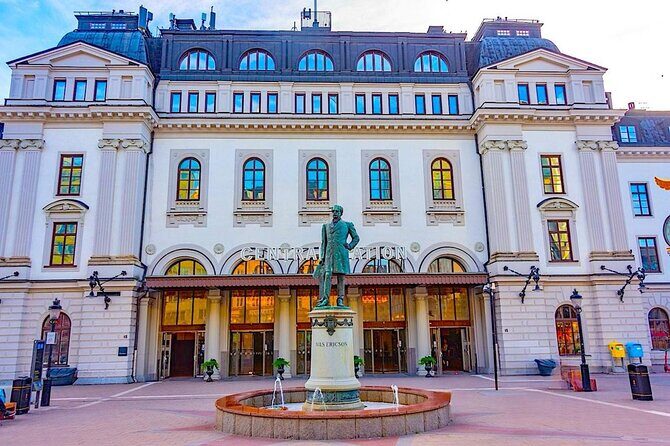
- The Central Station Start: Nils Ericson and the Idea of Progress
- Stockholm City Hall: Red Brick, Three Crowns, and What the Tower Signals
- Drottninggatan: The Pedestrian Shopping Street as a Living City Map
- Parliament on Helgeandsholmen: Riksdagshuset and Democracy in Stone
- Gustav II Adolf: A Military Statue With a Geopolitical Backstory
- Royal Swedish Opera and the Arts Corridor: What the Buildings Say
- Sankt Jacobs Kyrka: A Lutheran Church With Visual Presence
- Berzelii Park: Green Break in the Middle of Town
- Royal Stables: Royal Carriages and Why Horses Still Matter Here
- Kungsträdgården and Karl XII’s Square: Music, Meeting Points, and Memory
- Royal Dramatic Theatre (Dramaten): A Strong Ending Spot
- What I’d Pay Attention To During the Walk
- Weather, Noise, and Sound: The Main Practical Tradeoff
- How Fit Needs to Be: Comfortable Shoes Matter
- Should You Book This Stockholm City Walk?
- FAQ
- How long is the Stockholm City Center walking tour?
- Where does the tour start and where do we end?
- What is the price per person?
- Is this tour private or public?
- How big is the group?
- What’s included in the tour?
- Are indoor visits included?
- Do I need a ticket on my phone?
- Is free cancellation available?
- Are service animals allowed?
Key things to know before you go
- A short, high-impact route: about 2 hours through central landmarks, built for orientation.
- Outdoor-only format: you’ll learn a lot without paying for many indoor entries.
- Public group energy: shared guide time with a limited group size.
- Culture through institutions: city government, parliament, and major opera and theatre spaces.
- Good value for the money: $3.55 is mostly about the guide and structure, not museums.
Two Hours to Get Your Bearings in Stockholm’s Center
If you want Stockholm to feel navigable, this is a smart place to start. The walk focuses on the parts of town most first-timers struggle with: the area around Stockholm Central Station, the stretch of shops and streets leading toward the government district, then onward to the big cultural venues around the opera and theatre zones.
It’s paced like an orientation walk, not like a museum crawl. You’ll spend time at landmarks where you can actually look around, take photos, and understand how the buildings connect. That matters in Stockholm, where the city can feel spread out and the water/streets add extra turns to your mental map.
Other walking tours we've reviewed in Stockholm

Price and Value: Why $3.55 Feels Easy to Say Yes To

At $3.55 per person, you’re not really buying a ticket to a building. You’re paying for an English-speaking guide who ties the stops together and gives you context you’d otherwise miss while wandering on your own.
That price also helps you take the tour early in your trip. If you learn where the major sites sit relative to each other, you can plan your remaining days better. I’d treat this as your “setup move” for the rest of Stockholm, not as a one-and-done sightseeing checkbox.
And because it uses a mobile ticket, you can keep your planning simple. No hunting for paper passes makes a difference when you’re moving through busy central streets.
Public Tour Logistics: Mobile Ticket, Group Size, and Where You Start
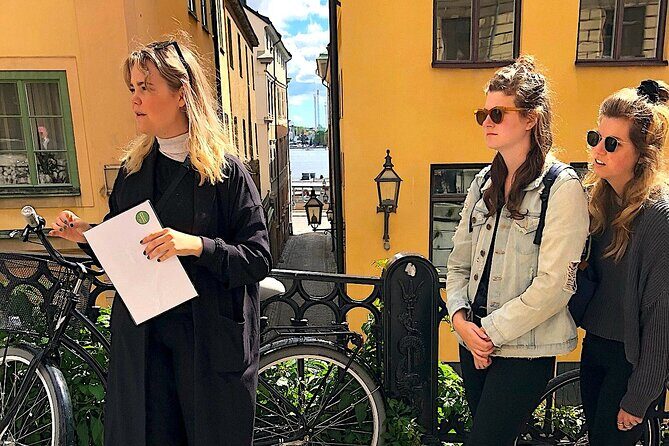
This is a public walking tour, not private. There will be other participants, and the group is limited to a maximum of 27 people. In practice, that’s usually the sweet spot for a guided walk: big enough to meet people, small enough that the guide can still manage the group.
You start at Centralplan 15, 111 20 Stockholm, and the walk ends near the Royal Dramatic Theatre (Dramaten), Nybroplan, 111 47 Stockholm. Starting near the central station area is convenient. Ending near Dramaten is also handy because it drops you right into a major cultural zone where it’s easy to keep exploring after the tour ends.
The tour also runs with a fixed start time: 11:00 am. If you’re traveling with a tight schedule, that predictable timing is helpful.
The Central Station Start: Nils Ericson and the Idea of Progress
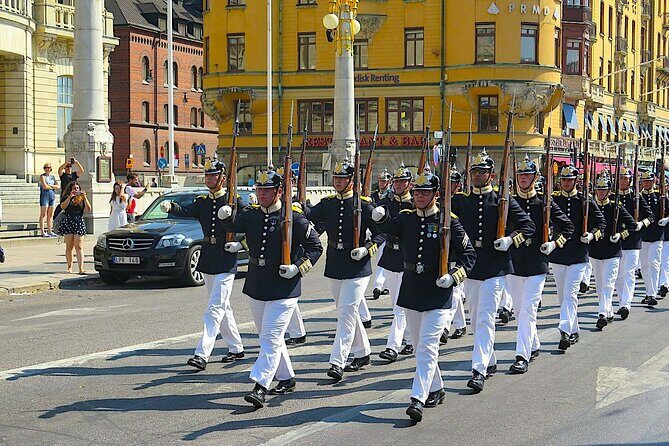
The first stop sets the tone with the Statue of Nils Ericson, standing outside Stockholm Central Station. It’s a bronze tribute to the Swedish engineer known for modernizing railways and canals. You might think of Stockholm as a pretty walking city. This stop nudges you to see it as a place built by systems: transport, infrastructure, and planning.
It’s a short pause, but the value is context. When you later see the government and civic buildings, you’ll understand the through-line: modern Sweden isn’t just about fashion and design. It’s also about building and maintaining the practical backbone that keeps the country moving.
Stockholm City Hall: Red Brick, Three Crowns, and What the Tower Signals
Next comes Stockholm City Hall, with its instantly recognizable red-brick look and the golden Three Crowns spire. Completed in 1923, it’s tied to high-profile civic moments, including the Nobel Prize banquet.
Even if you’re not going inside, the tour’s angle here is smart: you learn about the famous interior rooms like the Blue Hall and Golden Hall, plus the mosaics and the building’s role in official events. Then you can stand back outside and understand why the architecture matters.
You’ll also get the tower perspective context. City Hall towers are a Stockholm thing, and the guide helps you see why height and visibility feel symbolic in this city.
Other city tours we've reviewed in Stockholm






Drottninggatan: The Pedestrian Shopping Street as a Living City Map
Then you shift from big civic symbols to everyday city life on Drottninggatan, Stockholm’s pedestrian shopping street. This stretch runs from the Gamla Stan side toward Observatorielunden, lined with shops, cafes, and restaurants.
What I like here is the “real city” reset. After staring at monumental buildings, you get a street you can actually use. You can walk it later on your own too, and you’ll recognize the shapes and junctions because the guide points out how the street links neighborhoods.
It’s also a practical stop for planning a coffee break, a snack run, or just a slower wander when the rest of your day is packed.
Parliament on Helgeandsholmen: Riksdagshuset and Democracy in Stone
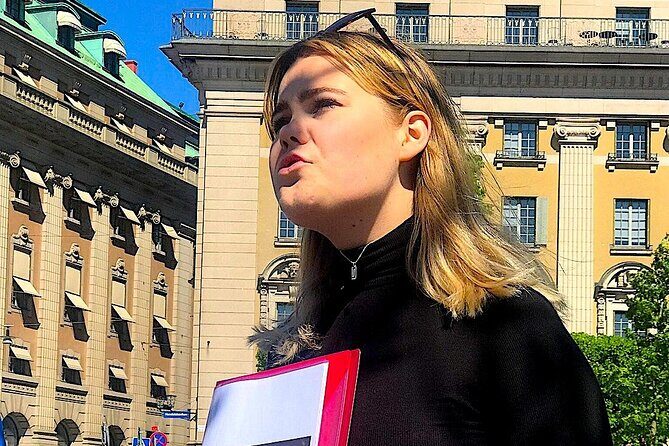
At Riksdagshuset (the Parliament Building), you’re stepping into Sweden’s democratic core. The building is neo-Gothic and monumental, on Helgeandsholmen Island in central Stockholm, built between 1897 and 1905.
The guide’s focus matters here: it’s not just about aesthetics. You learn what the place represents and how the building’s blend of historical design and functional purpose mirrors the country’s approach to governance.
One note for expectations: admission isn’t included for this stop. And because the tour is outdoor-only, you should plan to view it from the outside and absorb the story rather than count on interior access.
Gustav II Adolf: A Military Statue With a Geopolitical Backstory
A quick photo-and-facts stop brings you to the Gustav II Adolf Statue at Gustav Adolfs Torg. This is Sweden’s “Lion of the North,” tied to the Thirty Years’ War and changes in military leadership in Europe. The statue was unveiled in 1796 and shows the king in a commanding pose.
It’s a short stop, but it helps you read Swedish public space. Statues here aren’t decorations; they’re political memory made visible. Once you understand that, you’ll start noticing what other cities hide in museums.
Royal Swedish Opera and the Arts Corridor: What the Buildings Say
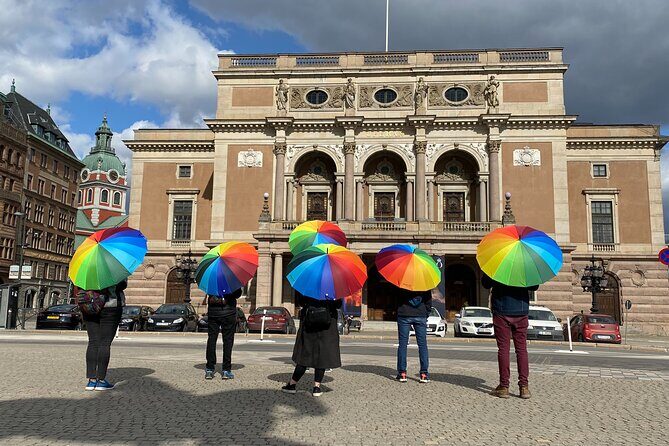
After the statue, you head toward the Royal Swedish Opera, one of Sweden’s top opera stages. The current building was inaugurated in 1898, replacing an earlier 18th-century structure. It mixes neo-classical design with French Baroque influence.
The tour keeps it mostly exterior and conversational. You’ll learn why it became a cultural anchor and how it fits into the city’s long-running performance tradition. The big caveat: admission isn’t included, so don’t plan on going inside as part of this walk.
Then you move along toward other performance landmarks, where the theme shifts from opera as an institution to spoken drama and the stage as a national identity.
Sankt Jacobs Kyrka: A Lutheran Church With Visual Presence
Near Kungsträdgården you’ll stop at S:t Jacobs Kyrka (Saint James’s Church). It has a striking red facade and a mix of Gothic and Renaissance architecture. It’s associated with the Saint James theme, and the church dates back to the 1600s.
The tour’s value here is atmosphere and contrast. After government and grand arts buildings, a historic city church brings the human-scale feeling back. It’s a reminder that the city’s landmark map isn’t only political power and performance. It’s also faith, community, and long-term continuity.
Admission is free for this stop, and again, because the tour doesn’t include indoor visits, think of it as an outdoor orientation plus storytelling.
Berzelii Park: Green Break in the Middle of Town
You also get a break at Berzelii Park, established in 1853 and named after the chemist Jöns Jacob Berzelius. It’s the kind of place that helps your legs and your brain. You’ll walk from buildings and institutions into something calmer, with statues and a more relaxed pace.
It’s also located close to major districts, adjacent to the Norrmalm area and near the Royal Dramatic Theatre zone. That proximity matters. It’s part of why the tour ends where it does; the route is designed to put you near multiple options afterward.
Royal Stables: Royal Carriages and Why Horses Still Matter Here
The stop at The Royal Stables (H.M. Konungens Hovstall) adds a surprising flavor: Sweden’s royal equestrian traditions. The stables preserve royal carriages and ceremonial harnesses, and horses are used for state occasions.
Just keep your expectation grounded: this is an outdoor-focused walking tour. Admission is listed as free for the stop itself, but you should still plan on using this moment for context and quick viewing, not a full museum experience inside.
If you’re a transport-history fan, this stop is a fun reminder that “old world” can still show up in official events without becoming purely decorative.
Kungsträdgården and Karl XII’s Square: Music, Meeting Points, and Memory
Next comes the Kungsträdgården Opera area and Kungsträdgården itself. This zone connects you to Sweden’s musical heritage through major performance venues and public gathering space. It’s a reminder that Stockholm doesn’t separate culture from daily life.
Then you reach Karl XII’s statue and Square, named after King Charles XII. The square became a prominent meeting spot and hosts public events. The central statue was erected in 1868 and symbolizes the king’s military legacy.
This part of the walk is useful because it helps you read the city like a local. People gather in squares for a reason: shade, visibility, transit access, and easy routes on foot. Stockholm’s planning shows up in these spaces.
Royal Dramatic Theatre (Dramaten): A Strong Ending Spot
The walk finishes near the Royal Dramatic Theatre, Sweden’s premier stage for spoken drama. It was established in 1788, and the current Art Nouveau building was completed in 1908.
Admission for the stop itself isn’t included, but ending here makes sense. Dramaten is a landmark you can spot, and it’s in the right zone to continue exploring with momentum rather than starting a long walk back.
It also gives you a clean closing mental image: Stockholm ends the tour in theatre and public culture, after you’ve already seen government and opera.
What I’d Pay Attention To During the Walk
To get the most from a 2-hour format, I’d watch these details:
- Listen for the connections: the guide links infrastructure, civic institutions, and cultural buildings so the city feels coherent.
- Stay near the front if you’re hard of hearing. Some guides used devices or dealt with street noise, so being closer helps.
- Bring water. Even a short walk can feel warm, especially on a sunny day.
- Expect a brisk, focused pace. Some guides keep conversation limited so they can fit everything in.
Also, because this is outdoor-only, you should treat photo stops as real moments. It’s easy to snap pictures and miss the story. Slow down for a minute at each landmark, even if you’re itching to move on.
Weather, Noise, and Sound: The Main Practical Tradeoff
The main downside isn’t the stops. It’s the setting. Stockholm’s center streets can be noisy, and if the guide’s mic volume is inconsistent, you might miss parts. On some days, glare can make it harder to see visuals if the guide relies on a screen.
So if you know you struggle with audio in crowds, you may want to position yourself early and keep your phone put away. You’ll get more out of the guide than out of constant filming.
How Fit Needs to Be: Comfortable Shoes Matter
Most travelers can participate, but this is still a walking tour. Some people found it tiring, so if you have mobility limitations, plan carefully.
The good news is that it’s only about 2 hours. The route covers central areas with short stops, so it’s not a full-day endurance hike. Still, wear shoes you trust, and don’t assume you can coast through on light sneakers.
Should You Book This Stockholm City Walk?
Yes, if you want a fast, practical way to get oriented and learn how Stockholm works as a modern city with strong civic and cultural institutions. The price is low, the format is simple, and it ends in a great spot for continuing your day near Dramaten.
I’d think twice if you need quiet, you struggle with hearing in street noise, or you expect lots of indoor entry time. This isn’t designed as a museum ticket package. It’s built for outdoor storytelling and city bearings.
If you’re visiting for the first time and you like walking with a plan, this one is an easy “do it early” choice.
FAQ
How long is the Stockholm City Center walking tour?
It runs about 2 hours.
Where does the tour start and where do we end?
It starts at Centralplan 15, 111 20 Stockholm, and ends near the Royal Dramatic Theatre (Dramaten), Nybroplan, 111 47 Stockholm.
What is the price per person?
The listed price is $3.55 per person.
Is this tour private or public?
It is a public tour, with other participants in the group.
How big is the group?
The maximum group size is 27 travelers.
What’s included in the tour?
An English-speaking guide is tailored specifically for your group.
Are indoor visits included?
No. The tour does not include indoor visits.
Do I need a ticket on my phone?
Yes. You get a mobile ticket.
Is free cancellation available?
Yes. You can cancel up to 24 hours in advance for a full refund.
Are service animals allowed?
Yes, service animals are allowed.