REVIEW · CITY TOURS
City Sightseeing Stockholm Hop-On Hop-Off Bus
Book on Viator →Operated by City Sightseeing Ltd - Europe · Bookable on Viator
Stockholm’s best quick-and-easy city lesson is a bus loop. This hop-on hop-off ride lets you string together your own day, with on-board commentary and straightforward stops for the big sights. I like the freedom to hop off when something grabs me (then hop back on when I’m done), and I also like the 11-language audio with free headphones.
The main thing to plan for is that the audio experience can be inconsistent, with occasional issues like low volume, missing narration, or timing that doesn’t match the view perfectly. Still, when it’s working well, it’s a simple way to get your bearings fast.
If you’ve got limited time, a busy itinerary, or you want a calm start before walking the city, this bus fits. It’s especially handy for first-timers and cruise-day schedules.
In This Review
- Key things to know before you ride
- Why this red-and-green bus fits Stockholm (even if you like walking)
- Price and value: what $40.85 buys you (and what it doesn’t)
- Tickets and timing: how long the loop really takes
- Where the ride starts: Karl XII:s torg and the Royal Opera area
- Stop-by-stop: what you’ll see from the Royal Opera to Old Town
- Kungsträdgården, Strandvägen, and the waterfront vibe
- Vasa Museum and Nordiska: the stop that makes the trip feel real
- ABBA The Museum, Grona Lund, and Skansen: why Djurgården is the crowd magnet
- Back toward the city: Karlaplan, Stureplan, and Hotorget market energy
- Ice Bar and City Hall: quirky stops that work for short attention spans
- Cruise-day routing: how the loop changes when ships dock
- Common annoyances to plan around (so you don’t waste your day)
- Should you book this hop-on hop-off bus?
- FAQ
- How long is the loop on this hop-on hop-off tour?
- What ticket option should I choose: 24 hours or 72 hours?
- What time do the buses start and finish at the main start stop?
- How often do buses run?
- Do I need to buy separate tickets for attractions?
- Can I use a mobile ticket at the stops?
- Is there free cancellation?
Key things to know before you ride
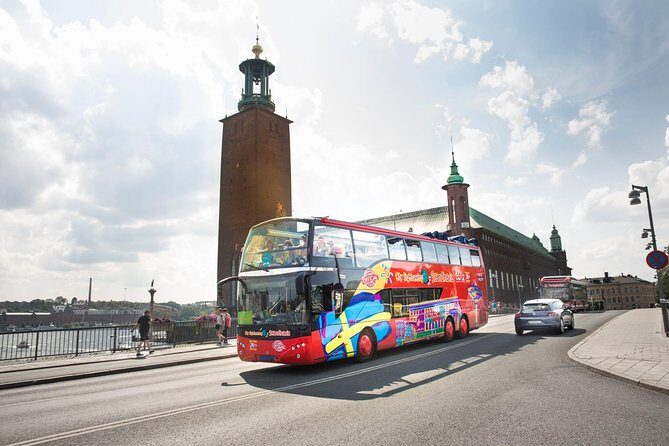
- 24- or 72-hour tickets let you pace your day instead of forcing a strict timetable
- Wheelchair-accessible buses and free Wi‑Fi make it easier to stay comfortable
- Stops cluster around major hits like Gamla Stan, the Royal Palace, and the Vasa Museum area
- A cruise-day variant exists, with extra routing to ship terminals and a longer total loop
- Buses run about every 30 minutes, but you still want to watch the day’s last departure time
- Red and green buses can confuse first-time riders, so keep an eye on the right operator stop signage
Why this red-and-green bus fits Stockholm (even if you like walking)
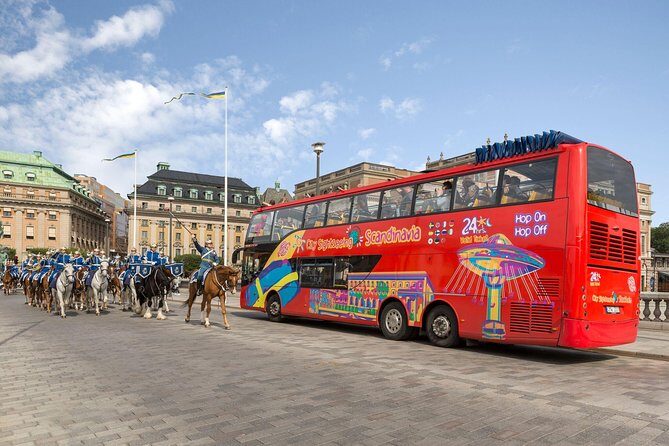
Stockholm can feel like a puzzle at first: islands, waterfronts, and neighborhoods that all look beautiful from the water. This hop-on hop-off loop helps you solve that puzzle quickly. You’re not committing to one museum or one neighborhood—you’re building a plan from the views as you go.
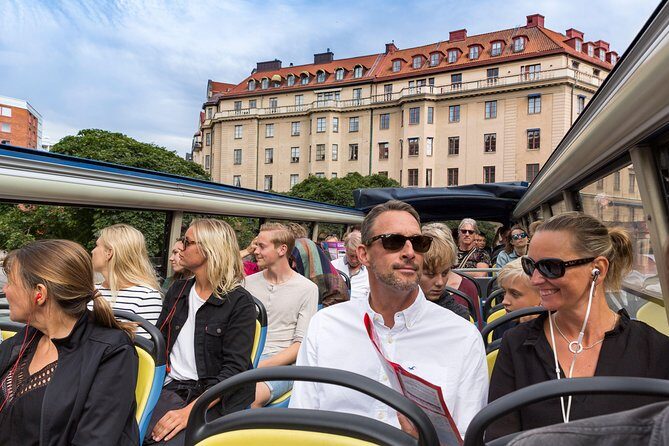
I also like the practical rhythm. You can stay on top (upper deck) for city panoramas, then step off when it’s time for photos or museum time. The format is ideal if you’re arriving with jet lag or you want a low-effort “first look” before committing to longer walks.
One more plus: you get informative audio commentary that aims to connect Viking-era Stockholm with the capital’s modern life. That context matters because Stockholm’s past is everywhere—just not always labeled in a way you’d notice while walking fast.
Other hop-on hop-off tours in Stockholm



Price and value: what $40.85 buys you (and what it doesn’t)
At about $40.85 per person, this isn’t a bargain in the “cheapest thing in town” sense. But it can be good value because you’re paying for three things you’d otherwise spend time (and sometimes money) on:
- Transportation around the central sights without having to figure out routes or transfers
- Stops near major attractions, including the Old Town area and the Djurgården museum zone
- Audio context, so you’re not just seeing buildings—you’re getting story threads for what you’re looking at
What it doesn’t include is just as important: entry to attractions and food/drinks are not included. In practice, this means you’ll still pay separate ticket prices for museums like Vasa (unless you’re planning only exterior walks). Still, the bus works as a time-saving “connector” between paid attractions.
If you’re only in Stockholm for a few hours, this can be a smarter spend than hopping between taxis or trying to map out multiple far-apart areas on your own.
Tickets and timing: how long the loop really takes

You can choose a 24- or 72-hour ticket, which is the real reason this works for different travel styles. If you want one solid day, 24 hours is usually enough. If you’re moving slowly, adding museums on different days, or waiting out weather, the 72-hour option gives you breathing room.
The basic loop is about 60 minutes. On cruise dock days, the route can stretch to about 90–120 minutes, depending on whether the bus is stopping at the cruise terminals (Frihamnen Cruise Terminal or Stadsgarden Cruise Terminal, or both).
Here’s the operational detail that affects your plans: the first departure from Stop 1 is 10:00, and the last departure is 17:00 from that starting point. Buses run roughly every 30 minutes, but you should still be mindful of that last departure time if you want a full loop plus museum time.
Where the ride starts: Karl XII:s torg and the Royal Opera area
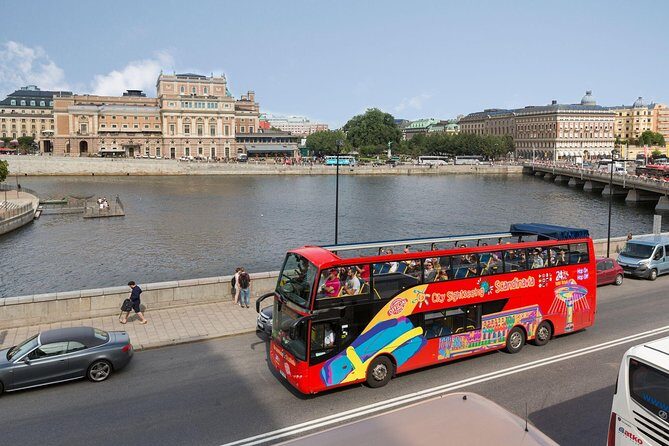
Your loop begins at Karl XII:s torg, along Stromgatan / The Royal Opera. This is a good launch pad. You get a central, recognizable reference point, and from here the route starts feeding you directly into Stockholm’s most visit-worthy zones.
Practical tip: plan to arrive a few minutes early at the stop. A handful of riders have reported buses not stopping where they expected, so it’s worth double-checking the exact stop name and standing in the right pick-up position.
Also note the color detail: buses are red and green. If you’re standing at the wrong stop for the wrong color service, you can lose time fast in a city where streets and stops can look similar at a glance.
Stop-by-stop: what you’ll see from the Royal Opera to Old Town
The first stretch is all about “Stockholm at a glance,” and it lines up well with the way most people want to experience the city.
Stop 1: Karl XII:s torg / Stromgatan (The Royal Opera)
You’re in a central spot that helps orient you right away. From this area, Stockholm’s mix of water, grand streets, and cultural landmarks starts to make sense.
Stop 2: Lovely Cruises / The Royal Palace
This is where you get your Royal Palace views from the bus. Even if you don’t plan to go inside, the exterior perspective is part of the sightseeing win.
Stop 3: Stockholm Slussen kajen / Old Town (Gamla Stan)
Gamla Stan is the one stop where you can’t really fake it. When you hop off here, you’re set up for wandering narrow streets, searching out viewpoints, and doing the classic “first photo, then longer walk” routine.
How to use these stops well: If you only hop off once early, I’d do it at Gamla Stan. It’s the most straightforward payoff for your walking time, and it helps you connect what you learned from the audio to real streets.
Other city tours we've reviewed in Stockholm




Kungsträdgården, Strandvägen, and the waterfront vibe
After the Old Town hit, the bus shifts you toward neighborhoods where Stockholm starts feeling more modern and more “local.”
Stop 4: Kungsträdgårdsgatan 13 / Kungsträdgarden
This is a central park-and-street area. It’s useful when you want a break from museum queues or you’re just trying to stretch your legs.
Stop 5: Styrmansgatan / Strandvagen
Strandvägen is one of those Stockholm streets where the water views do most of the work. Even if you stay seated, this stop can help you understand why Stockholm looks the way it does.
Small drawback to watch for: Some riders have noted that photo angles can be tricky if you’re on a single side of the bus. If you care about pictures, sit up top and choose your side before the scenic stretches.
Vasa Museum and Nordiska: the stop that makes the trip feel real
If you’re doing one paid attraction in Stockholm, this area is often the reason people book a hop-on bus in the first place. The bus brings you straight into the museum cluster.
Stop 6: Djurgårdsvägen 13 / The Vasa Museum / Nordiska Museum
You’re headed for Djurgården, the island that’s built for museum time and easy day trips.
Stops 10 and 10’s repeat: Nordiska museet/Vasamuseet / The Vasa Museum / Nordiska Museum
You’ll see the route come back around to this same museum zone. That repetition is handy. If you miss your timing, or you step off, eat, then decide you want more museum time, you’re not stuck trying to cross the city.
How to use this zone:
- If you’re museum-heavy, plan to hop off here for serious time at Vasa Museum and/or Nordiska.
- If you’re not sure, you can still hop off just to walk the area, then decide once you’re there.
Either way, Djurgården tends to be the point where the bus stops feel less like “tour stops” and more like a real destination.
ABBA The Museum, Grona Lund, and Skansen: why Djurgården is the crowd magnet
This is the fun part of the loop. It’s also the part where you’ll see why the tour is popular with families and people with limited time.
Stop 7: ABBA The Museum / Grona Lund Tivoli
You can use this as a quick hit if you want something pop-culture and easy to understand. Even if you skip the museum, the area gives you that lively Djurgården energy.
Stop 8: Djurgårdsslätten 78 / Skansen
Skansen is more than just a stop—it’s a whole “Sweden in miniature” style experience. If you want a cultural snapshot without doing hours of planning, it’s one of the most direct choices.
Stop 9: Liljevalchs/Gröna Lund / ABBA The Museum / Grona Lund Tivoli
The route loops back through this same neighborhood. That’s a practical design choice: it reduces the stress of choosing one exact stop location when lines, entrances, and traffic can be a moving target.
One watch-out from the field: Some riders report audio volume and headphone issues at points. If you’re relying on the narration to decide where to hop next, keep a close eye on the stop names on the screen and confirm with staff if anything seems off.
Back toward the city: Karlaplan, Stureplan, and Hotorget market energy
Now the bus moves through Stockholm’s everyday scenes—parks, nightlife streets, and a market-style stop.
Stop 11: Karlaplan
This is a good “get your bearings” stop as you transition from island attractions back toward the core neighborhoods.
Stop 12: Stureplan / Stureplan Entertainment District
If you want to feel Stockholm’s nightlife and busy streets, this is the area. Even if you’re not going out, it’s useful for understanding how the city’s energy shifts by evening.
Stop 13: Hötorget / Kungsgatan / Hotorget Market
This is a practical stop. If you need a snack break, people-watch, or just grab something easy, markets and squares are where Stockholm feels lived-in.
Ice Bar and City Hall: quirky stops that work for short attention spans
Two stops can make your day feel different: one is for “only-in-Stockholm” fun, and one is for a classic city landmark.
Stop 14: Hangövägen 29 / Ice Bar
This is a signature, themed stop. The bus is how you get there without planning a separate route.
Stop 15: Stadshuset (City Hall)
City Hall is the kind of landmark that looks impressive from the street. If you’re trying to close your day with something iconic, this fits.
How long should you stay on these stops? If you’re tight on time, plan for short hops: hop off, get the key photos, then either head back toward the museum zone or end your day depending on how your energy holds up.
Cruise-day routing: how the loop changes when ships dock
If you’re traveling by cruise ship, this is where the tour earns a special note. The route includes additional cruise-terminal stops only when ships are docked.
Stops 16–18 (cruise days only):
- Frihamnen Cruise Terminal 634
- Frihamnen Cruise Terminal 638
- Stadsgarden Cruise Terminal (Viking Line)
When these are included, expect the loop to take longer—about 90 to 120 minutes instead of 60. That affects your planning more than you’d think. If you’re coming from a ship, you may have less time than you assume, and a longer loop means fewer “off-bus” blocks unless you start early.
Common annoyances to plan around (so you don’t waste your day)
This tour is popular for a reason: it’s an easy overview and it saves walking. But Stockholm tour days have moving parts, and a few problems show up often enough to take seriously.
Audio can be minimal or not perfectly synced
Some riders report the narration being low, not matching the exact moment you pass a landmark, or not playing at all. If that happens, try another headphone, move away from noisy areas on the bus, and don’t be afraid to ask staff what to do. If you need story context to choose your next hop, you want the audio working.
Headphone jacks can be hit-or-miss
Free headphones are great, but a few people have said connections don’t work properly on certain buses. Bringing a small adapter or having a phone-ready backup audio plan can reduce stress.
Photo timing can be tricky
If you’re on the upper deck for photos, your side matters. Stockholm’s best views aren’t always equally good from both sides of a moving bus.
End times can strand you if you’re late
Buses are not a 24/7 service. Since the last departure from Stop 1 is 17:00, plan your day so you’re not relying on a last-minute full loop that may not fit.
Should you book this hop-on hop-off bus?
Book it if:
- You want a fast overview before you commit to walking neighborhoods.
- You’re mixing museums and street wandering and want flexibility.
- You’re on a short schedule or doing a cruise day and want terminal-linked stops.
Skip it or swap your plan if:
- You only want one or two attractions and you hate “tour bus overhead.” In that case, you might spend the day more efficiently with point-to-point transit.
- You’re extremely sensitive to audio quality. Since narration can be inconsistent at times, you may not get the smooth “guided tour” feel you expect.
My honest take: this is a strong first-day tool in Stockholm. It helps you understand the city quickly, then lets you choose what’s worth deeper time. Just treat it like a navigation aid and a quick orientation tool, not like a flawless museum guide.
FAQ
How long is the loop on this hop-on hop-off tour?
The full tour loop is about 60 minutes. If the bus includes cruise-terminal stops on dock days, the ride can run around 90–120 minutes.
What ticket option should I choose: 24 hours or 72 hours?
You can pick either a 24-hour or 72-hour ticket based on your schedule. The longer option makes sense if you want to spread museum time across more than one day.
What time do the buses start and finish at the main start stop?
The first departure from Stop 1 (Karl XII:s torg) is at 10:00 and the last departure is at 17:00.
How often do buses run?
Buses run about every 30 minutes.
Do I need to buy separate tickets for attractions?
Yes. Entry to attractions is not included. The bus stops give you access nearby, but you’ll still pay for museum admission separately.
Can I use a mobile ticket at the stops?
Yes. Mobile and printed paper vouchers are both accepted, and you can redeem them at any of the stops along the route.
Is there free cancellation?
Yes. Free cancellation is available up to 24 hours in advance for a full refund. If you cancel less than 24 hours before the experience’s start time, the amount paid is not refunded.