REVIEW · 3-HOUR EXPERIENCES
Classic Stockholm Small Group Walking Tour | 3 Hours
Book on Viator →Operated by Adding:tours · Bookable on Viator
Your Stockholm story starts at street level. This Classic Stockholm Small Group Walk packs street-level stops into three hours, with guides like Kenneth and Rachel mixing history with real personal memories and answering questions as you go. I love the way they connect places to people and events, and I love the food and café tips you get right at the end. The only catch: you do not enter the sites on this walk, so if you want interior time at the Royal Palace or other museums, you’ll need separate tickets.
You’ll start at Götgatan 1 and finish at Stockholm City Hall, with a leisurely pace and plenty of pauses for photos and explanations. It’s a good fit if you have moderate walking stamina, since there are cobblestones and at least one short climb.
In This Review
- Key highlights I’d plan around
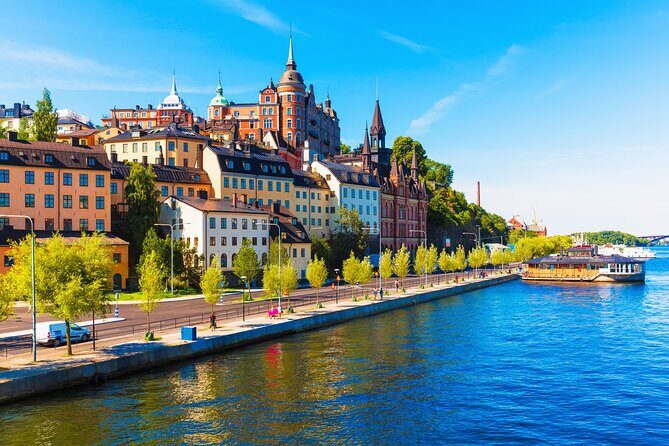
- First steps in Stockholm: Götgatan 1 and the Södermalmstorg start
- Stop 1: Södermalmstorg
- Slussen to Old Town: the lock area and why the city is always changing
- Stop 2: Slussen
- Järntorget, a poet, and climbing 36 steps in Mårten Trotzigs Gränd
- Stop 3: Järntorget
- Stop 4: Mårten Trotzigs Gränd
- German and Finnish churches: different communities, shared geography
- Stop 5: S:ta Gertrud, Tyska kyrkan
- Stop 6: Runsten (Rune Stone U 53)
- Nobel-era Stockholm at Stortorget: square power and famous details
- Stop 7: Nobel Prize Museum area and Stortorget
- Stop 8: St. George & The Dragon statue
- Stop 9: Jarnpojken (The Iron Boy)
- Two more churches, then royal power: Finnish Church and the palace exterior
- Stop 10: Finnish Church (Finska kyrkan)
- Stop 11: Royal Palace
- Riddarholmen and the House of Nobility: legal power and monastery roots
- Stop 12: Riddarholmen
- Stop 13: Riddarhuset (House of Nobility)
- Stop 14: Bonde Palace
- Helgeandsholmen politics walk: Riksdagshuset to Rosenbad
- Stop 15: Parliament Building (Riksdagshuset)
- Stop 16: Rosenbad
- Ending at City Hall: why the finale feels right
- Stop 17: Stockholm City Hall
- Price and value: what you get for $66.52
- Tips so your walk goes smoothly
- Should you book this Stockholm Classic walk?
- FAQ
- How long is the Classic Stockholm Small Group Walking Tour?
- What is the price per person?
- Is the tour offered in English?
- Where do we meet the guide?
- Where does the tour end?
- Are museum and attraction entrances included?
- Is there a limit on group size?
- Can I cancel and get a full refund?
- Are service animals allowed?
Key highlights I’d plan around

- Real-time Q&A with local guides: Kenneth and Rachel both focus on answering questions during the walk, not just at the end.
- A route that covers politics, religion, and street life: you go from churches and rune stones to Nobel-era Stockholm and Swedish government buildings.
- City views you can photograph without rushing: the route is built for seeing details, not racing between stops.
- Photo-friendly guide moves: the guide will help you spot good photo angles, and they’re happy to take pictures if you ask.
- A smart “first day” overview: it’s an efficient way to learn what to prioritize later.
First steps in Stockholm: Götgatan 1 and the Södermalmstorg start
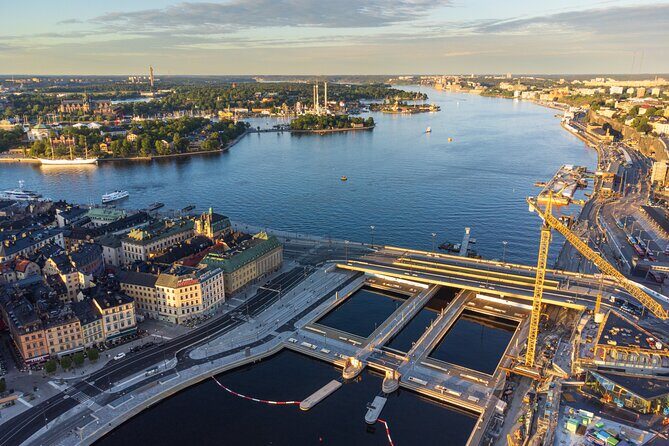
The meeting point is on Götgatan 1 (116 46 Stockholm). On the day, you’ll check in near the east entrance of the Stockholm City Museum (Stockholms Stadsmuseum). Before the tour, you should get an email with exact directions and a phone number for help if you’re lost, which is a nice safety net on a first day.
I like that this tour doesn’t pretend you’ll “master” Stockholm in three hours. Instead, it gives you a map of stories: how the city grew, why certain squares matter, and what you’re looking at when you turn a corner.
Other walking tours we've reviewed in Stockholm
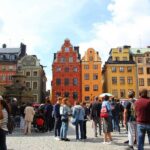
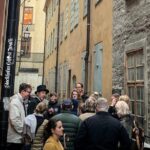
Stop 1: Södermalmstorg
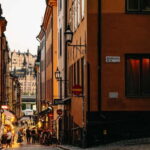
You begin at Södermalmstorg, with the guide setting the tone and framing the route. Admission isn’t part of this stop, so you’re mostly listening and orienting while the group gathers.
Practical tip: wear shoes with grip. Stockholm looks beautiful on stone streets, but cobbles can be slick.
Slussen to Old Town: the lock area and why the city is always changing
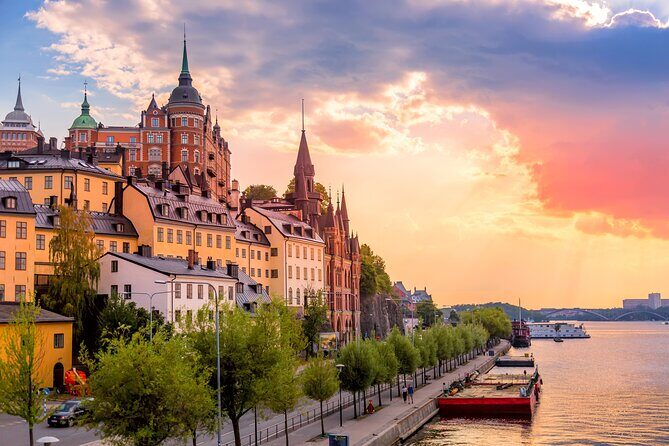
From Södermalmstorg, you head toward Slussen, literally the lock. This is one of those spots where “current projects” actually matter to how Stockholm functions, not just how it looks.
Stop 2: Slussen
Slussen is discussed as a key piece of Stockholm’s past and present development. Your guide points out notable structures and talks through what’s happening as part of project Slussen (2016–2025). You get a sense that Stockholm is not frozen in time. It’s under constant redesign, and the street corners reflect those decisions.
A small downside: if you’re hoping for long viewing time at one landmark, this portion moves at a steady walking pace. The payoff is that you reach the Old Town areas quickly.
Järntorget, a poet, and climbing 36 steps in Mårten Trotzigs Gränd
After Slussen, the walk shifts into tighter streets and squares that feel made for slow wandering. This is where you start seeing Stockholm’s layers: trade, language communities, and the everyday geometry of the city.
A few more Stockholm tours and experiences worth a look
Stop 3: Järntorget
Järntorget means Iron Square, and the guide connects that name to earlier iron processing and trade. You’ll also hear how this square became a place for other kinds of power over time, including banking and cultural landmarks. One of the best parts here is the introduction to a particularly important poet, which adds a human anchor to the architecture.
Stop 4: Mårten Trotzigs Gränd
Then comes the alley everyone talks about: Mårten Trotzigs Gränd. It’s narrow, historic, and it includes a climb of 36 steps. You’re not just viewing an alleyway. You’re feeling what it’s like to move through older Stockholm, where space is tight and buildings line up differently than in modern streets.
Consideration: if stairs are hard for you, this is the one stop to flag early. The rest of the walk is mostly level, but the alley climb is real.
German and Finnish churches: different communities, shared geography
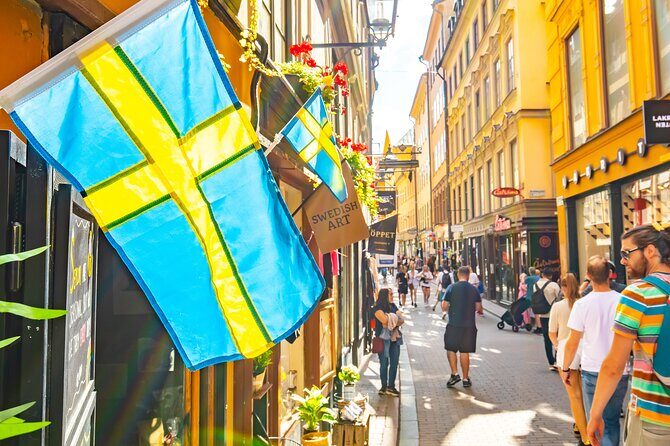
Stockholm’s church history is also city history. As you move toward the Old Town core, the guide explains how language communities shaped where worship happened.
Stop 5: S:ta Gertrud, Tyska kyrkan
This is S:ta Gertrud’s parish, tied to a German-speaking congregation outside Germany. You’ll hear the key dates: in 1571, King Johan III granted the Germans the right to form their congregation. By 1607, Germans got exclusive rights to the original church cottage that had been shared previously.
What I like here is that it’s not only religious history. It’s also about settlement patterns and how cities handle minority communities.
Stop 6: Runsten (Rune Stone U 53)
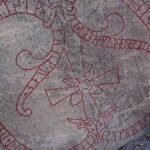
Next is Runsten, a preserved rune stone (U 53) that links modern Stockholm to Viking-era roots. It’s quick, but it lands well after the church stops because it shows the same theme: layers. New communities, older artifacts, and the city reusing space across centuries.
Nobel-era Stockholm at Stortorget: square power and famous details
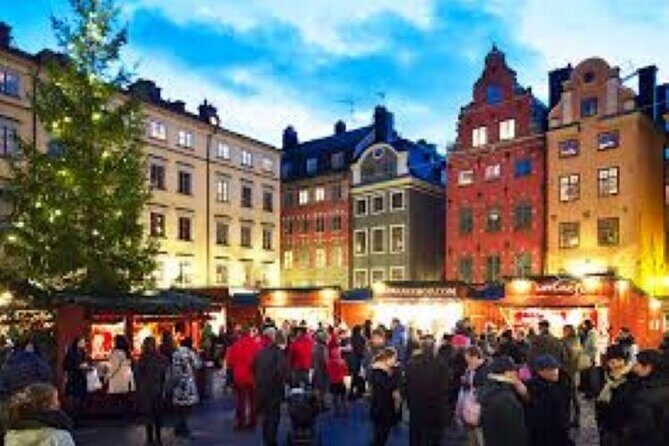
As you move toward Nobel Prize Museum territory, the walk becomes more “grand,” but still grounded in street-level specifics.
Stop 7: Nobel Prize Museum area and Stortorget
You pass the Nobel Prize Museum in the historic Stock Exchange Building, inaugurated in 2001 for the Nobel centenary. The guide then zooms out to Stortorget, Stockholm’s oldest square—where the notorious Stockholm Bloodbath took place in November 1520.
This stop also gives you architecture and side-stories: Runestone House, Schantzska House, Seyfridtzska House, Scharenbergsska House, and the Grillska House. Even the nearby restaurant at Stortorgs Källaren gets a story tied to a cannonball.
One of the most fun details is the fountain connection: a famous ABBA photograph was taken there in 1976. It’s the kind of fact you can use later when you’re sharing what you saw with friends.
Stop 8: St. George & The Dragon statue
Then you move into medieval art territory with Saint George and the Dragon at Stockholm Cathedral (Storkyrkan). The guide shares the story behind the original wooden sculpture placed there in 1489, and how art historians connect it to Sten Sture the Elder and victory commemorations after the Battle of Brunkeberg in 1471.
This is a stop where listening helps. From the sidewalk, it can look like “just a statue.” With context, it becomes a symbol with a reason to exist.
Stop 9: Jarnpojken (The Iron Boy)
Jarnpojken is small, but it has an outsized reputation. People leave coins, pat the head, and even knit winter garments. It’s a very Stockholm kind of tradition: playful respect for something modest.
If you want a quick break from heavier history, this is it. It also makes a good photo moment without needing any ticket.
Two more churches, then royal power: Finnish Church and the palace exterior
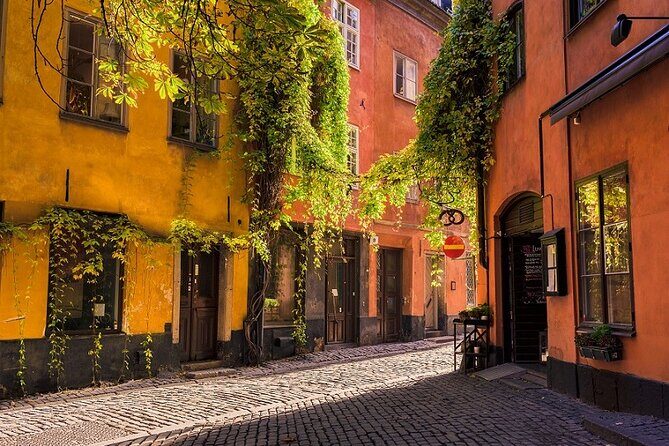
The walk keeps threading religion and identity through Stockholm’s urban fabric, then moves you toward the seats of authority.
Stop 10: Finnish Church (Finska kyrkan)
The Finnish Church story is framed as a community adapting over time, with an origin tied to a royal tennis court before becoming a place of worship. The guide also notes how it compares in grandeur to the German Church, but it’s still treated as deeply meaningful to the community.
Stop 11: Royal Palace
Next you reach the Royal Palace area. The guide gives a quick architectural and historical overview, including the palace’s roots in the medieval complex Tre Kronor (Three Crowns). You’ll also hear about interior highlights such as the Hall of State, the Royal Chapel, and Gustav III’s Museum of Antiquities.
Two big practical points here:
- You don’t enter on this walk, so you’re seeing the palace from outside.
- Royal Palace admission is not included, so plan a separate visit if you want interiors.
You also get statue stories as you walk, including references to Karl XIV Johan, Gustav III, Olaus Petri (Master Olof), and Kristina Gyllenstjerna (Nilsdotter). And there’s a useful modern note: in 1981, the royal family moved to Drottningholm Palace for private residence.
Riddarholmen and the House of Nobility: legal power and monastery roots
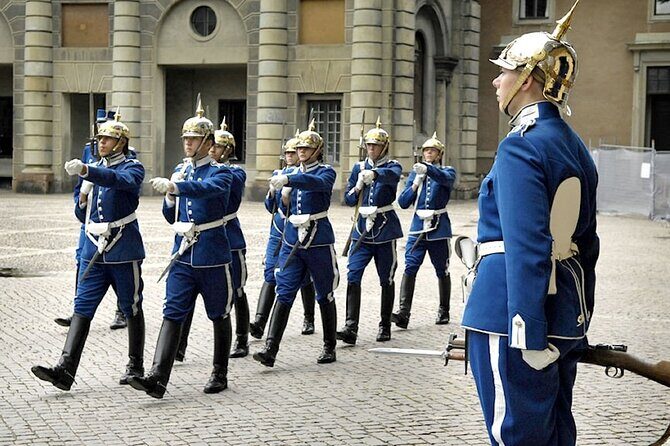
From here, the walk leans into islands and institutions. The sights aren’t just pretty. They’re tied to how Stockholm governed itself.
Stop 12: Riddarholmen
Riddarholmen starts with the Grey Friars Monastery and later shifts after the Tre Kronor castle fire in 1697, when state agencies and courts took over the island. You’ll hear how the area evolved into a legal and administrative hub.
The guide also points you toward the Riddarholm Church and an Evert Taube statue, making sure you connect the landscape with people.
Stop 13: Riddarhuset (House of Nobility)
Riddarhuset is the House of Nobility’s Palace, built between 1641 and 1674. The guide explains that it’s owned and managed by Sweden’s knighthood and nobility, and why that continuity matters for understanding Swedish social structure.
Stop 14: Bonde Palace
Then comes Bondeska Palace, home to the Supreme Court. It’s a short stop, but it reinforces a theme you’ve been building: Stockholm layers civic order on top of old buildings and old islands.
Helgeandsholmen politics walk: Riksdagshuset to Rosenbad
Now you’re in the Swedish government zone. This section is ideal if you want context for what you see later on your own, especially if you like understanding how countries actually function.
Stop 15: Parliament Building (Riksdagshuset)
You’ll see Riksdagshuset, constructed between 1895 and 1904. The guide explains the change from bicameral to unicameral in 1971, and how parts of the former bank section were repurposed for the new plenary.
Two extra details you’ll likely remember:
- The statue called The Homeless Fox.
- The Prime Minister’s official residence at Sergerska Palatset since 1995.
Stop 16: Rosenbad
Rosenbad is described as the seat of the Swedish government. The point isn’t only what it is today, but what it signals: where decisions get shaped.
This isn’t a museum stop. It’s more like a “sense of place” moment, and that’s why it works after all the churches and squares.
Ending at City Hall: why the finale feels right
The tour wraps at Stockholm City Hall, a standout building with Italian Renaissance and Nordic Gothic influences and National Romantic style. You’ll hear why the City Hall is tied to major events like the Nobel Banquet.
Stop 17: Stockholm City Hall
You spend the final stretch getting the big picture on how architectural styles shifted and how Stockholm’s leaders wanted the city to look and represent itself. In my view, ending here helps you remember the walk as one story: from Viking-era traces and medieval symbols to modern political power and global recognition.
You also get the practical support that makes a tour like this worth it beyond the walk. The guides share local advice for good cafés and restaurants, and since the tour ends at a different location, they help you orient for what comes next.
Price and value: what you get for $66.52
At $66.52 per person for about three hours, this is priced for people who want a smart introduction without paying museum fees. That last part matters. The tour prices do not include entry fees for museums or special sites, and the walk is built around seeing sights from the outside.
So here’s how I think about value:
- If you want inside access and long museum time, this won’t be enough by itself.
- If you want context fast, with a local guide who answers questions and helps you pick what to do next, it’s a strong deal.
A few small details also help the value feel real: mobile ticket, English availability, and a route that hits major neighborhoods without requiring you to plan every turn. On top of that, many reviews highlight that guides like Kenneth and Rachel are friendly and flexible, and that they’ll steer the walk toward your interests when possible.
Tips so your walk goes smoothly
If you’re aiming for an easy three hours, these are the main things I’d watch:
- Bring good shoes for cobblestones and the 36-step climb at Mårten Trotzigs Gränd.
- If you care about interior visits (Royal Palace, Nobel Prize Museum), plan those separately, since stops are not entered.
- For photos, ask the guide to help you find good angles. The guides are used to it and are happy to take pictures.
- Book early if you can. This tour is often reserved around 42 days in advance on average, which tells you it’s popular for first-day orientation.
Should you book this Stockholm Classic walk?
Book it if you want a guided route that makes Stockholm make sense fast. You’ll get a clean overview of Södermalm-to-Old-Town streets, the church and community timeline, rune and art highlights, Nobel-era symbolism at Stortorget, and the government zone at Riksdagshuset and Rosenbad, all wrapped up with an ending at City Hall.
Skip it or pair it with other plans if you mainly want indoor museum time. This one is built for street-level seeing and storytelling, not for paying ticket prices on the spot.
If you’re traveling on a first visit, I’d treat it as your foundation day. After you finish, you’ll know where to go back, what to skip, and what you’ll want to look at twice.
FAQ
How long is the Classic Stockholm Small Group Walking Tour?
It lasts about 3 hours.
What is the price per person?
The price is $66.52 per person.
Is the tour offered in English?
Yes, it’s offered in English.
Where do we meet the guide?
The meeting point is Götgatan 1, 116 46 Stockholm, Sweden (at the east entrance of the Stockholm City Museum).
Where does the tour end?
The tour ends in a different location at the end point details shown with the activity (it concludes at Stockholm City Hall).
Are museum and attraction entrances included?
No. Attractions are not being entered, and entry fees are not included.
Is there a limit on group size?
Yes. The tour has a maximum of 100 travelers.
Can I cancel and get a full refund?
Yes. You can cancel up to 24 hours in advance for a full refund.
Are service animals allowed?
Yes, service animals are allowed.