REVIEW · GAMLA STAN & OLD TOWN TOURS
Stockholm: Old Town Self-Guided Tour Learn and solve Puzzles
Book on GetYourGuide →Operated by Curiosa · Bookable on GetYourGuide
Old Town feels like a game here. Curiosa turns Gamla Stan into a self-guided puzzle walk on your phone, with history bits tied to places you’d otherwise breeze past. You start in the Outer Courtyard of the Royal Palace and follow prompts on iOS or Android at your own pace.
I like the freedom most. You can walk whenever you want and pause the experience whenever life interrupts. I also like how the challenges point you toward specific sights like the Royal Palace, Stortorget (the Grand Square), and Saint George and the Dragon, plus small historical curios like a cannonball stuck in a wall and a runestone set into a building base.
One thing to plan for: the puzzles can feel more like a mission than a side quest. A few people note the enigmas can be complex, and if you skip or don’t solve them, you might not get the answer afterward. Plus, this setup is not suitable for visually impaired people, and you’ll want a charged smartphone before you start.
In This Review
- Key things to know before you go
- Getting oriented at the Royal Palace outer courtyard
- How the Curiosa app keeps the tour moving
- The first minutes: Royal Palace stories and early clues
- Stortorget and the Grand Square feel
- Saint George and the Dragon: more than a name
- The German Church clock tower puzzle
- Cannonball in a wall and a runestone on the base
- Timing and pacing: how long this walk really takes
- Who should choose this puzzle walk
- A quick accessibility reality check
- Price and value: is $11 a good deal?
- Common friction points before you start
- Should you book this Curiosa Old Town puzzle tour?
- FAQ
- Where does the self-guided tour start?
- How long is the walking tour?
- What do I need to start the experience on my phone?
- What languages are available?
- Can I pause and resume the tour?
- Is it suitable for wheelchair users or visually impaired people?
Key things to know before you go

- Start point is the Royal Palace Outer Courtyard in Stockholm Old Town, so you get going fast.
- Puzzles and stories run 1.5 to 2 hours for most people, even though the code stays valid longer.
- Multiple languages are built in: Swedish, English, German, and French.
- You control the timing with a start/stop feature, which helps if you want breaks or photos.
- Some puzzles may feel complex, and hints/answers aren’t guaranteed.
- App access uses a confirmation code (valid for 90 days from purchase) and works on your own phone.
Getting oriented at the Royal Palace outer courtyard

If you like starting points that make sense, you’re in luck. This adventure begins in the Outer Courtyard of the Royal Palace, which means you’re already in the heart of the action before your phone even gets involved. The rest of the walk stays in the Old Town area where you can keep your feet moving without figuring out transit.
Before you head out, make sure your phone is charged. Curiosa is a smartphone-based experience, and the activity’s requirement is simple: bring a charged device. If your battery usually dies halfway through a sightseeing day, this is your heads-up to carry a small power bank.
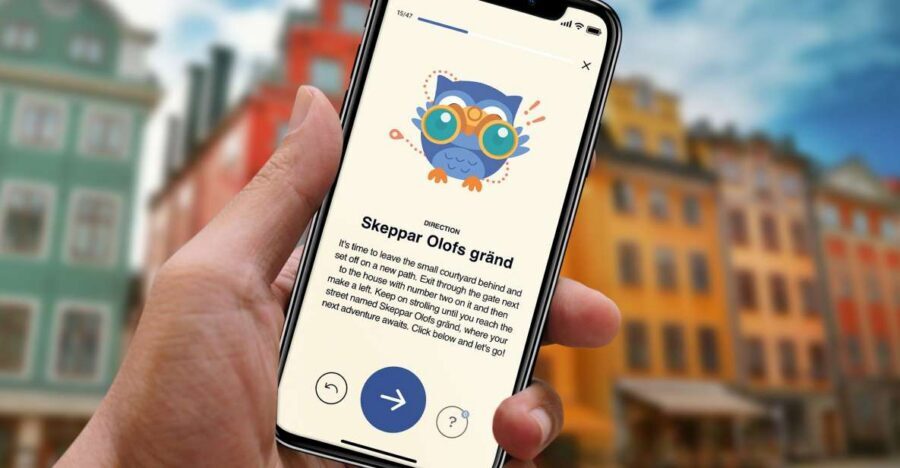
When you arrive, you’ll use the app to begin. After purchase, you download Curiosa from the App Store or Google Play, open it, and step through the introductory screens to reach the start page. Then you choose the option for a code (or scroll to the bottom) and enter your GetYourGuide confirmation code (it looks like GYGxxxxxxxxx). After that, you can start and pause at any time after the confirmation email, as long as the code is still valid.
Other Gamla Stan and Old Town tours in Stockholm



How the Curiosa app keeps the tour moving
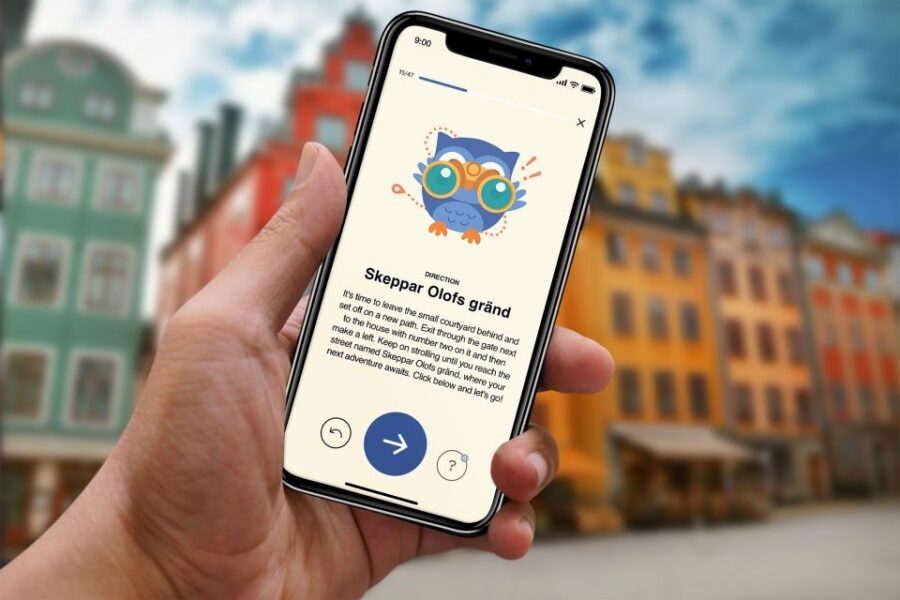
Curiosa is basically a walking tour plus a game layer. Instead of a guide talking at you, the app delivers stories and prompts you to look for details and solve small challenges as you go.
That structure has two big benefits for your day. First, it naturally slows you down in the right places. Old Town can look similar block to block; the app forces you to actually notice what’s around you. Second, it gives you control. You’re not stuck with a rigid group schedule.
The tradeoff is also clear: you’re relying on your phone experience. If you’re the type who prefers a purely spoken audio guide with minimal interaction, puzzles may feel like extra work. If you’re the type who likes games and learning at the same time, you’ll probably find the interaction keeps you engaged.
Language support is another practical win. The experience is offered in Swedish, English, German, and French, so you don’t have to compromise on understanding when you’re tired.
The first minutes: Royal Palace stories and early clues
The Outer Courtyard start matters. It’s a good place to launch a self-guided tour because the surroundings set the tone right away: royal power, classic stone architecture, and lots of historical context to frame your clues.
From there, the experience pushes you into the palace area and onward into the old streets. You’ll encounter the Royal Palace as one of the landmark anchors, and the app uses that setting to tell you why certain details matter. Expect the tour to mix straightforward explanations with challenges that demand attention to small visual cues.
You’re also testing your own pacing early. In a self-guided format, a “quick read” can turn into a slow puzzle, especially if you stop for photos. If you want the experience to feel like a walk first, treat the first challenge as a warm-up and move on quickly when needed.
Stortorget and the Grand Square feel
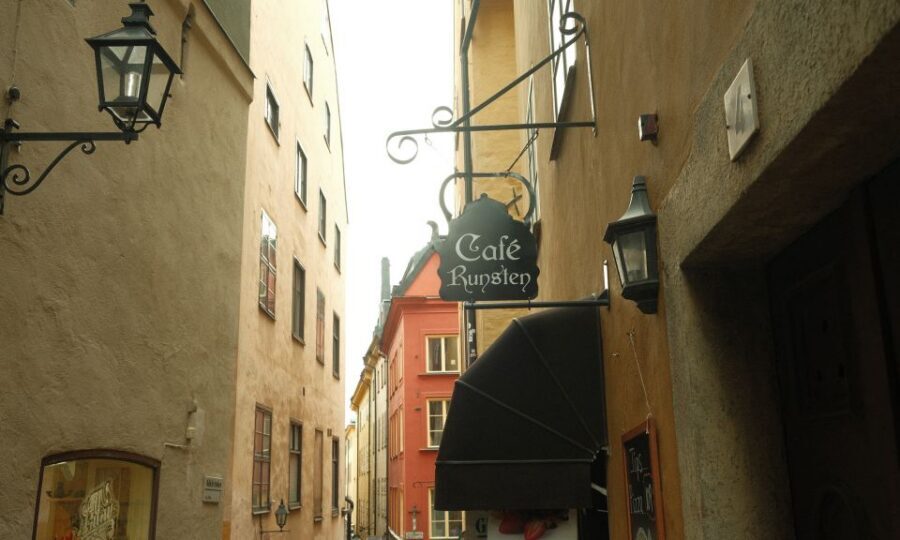
As you continue, the route highlights Stortorget, Stockholm’s Grand Square. This is the kind of place that can swallow you up visually, because it’s central, historic, and full of sight lines.
Here’s why Stortorget works well inside a puzzle tour: it’s a place where buildings and surfaces hold layered meanings. Instead of just saying this is an important square, the app encourages you to connect stories with physical features. That’s how you end up learning more than the “big facts” and start noticing the texture of the place.
This part of the walk is also where you might start thinking about how the challenges treat you. The experience is designed for a range of ages, and that usually means the difficulty can vary from one spot to the next. Some puzzles feel like you can figure them out with careful looking; others can take more time.
A bonus: even when you don’t fully solve something, the stories themselves can still help you see the square differently. One reason I like this style is that you don’t just tick off landmarks—you start asking why a place has the features it has.
Saint George and the Dragon: more than a name
One of the landmarks called out during the walk is Saint George and the Dragon. In Stockholm Old Town, this is one of those famous church-name sights that many visitors notice without absorbing the context.
In this experience, the Saint George and the Dragon stop gives you a clearer sense of what makes the site historic and memorable. The app isn’t only about pointing you somewhere; it’s about giving you a reason to care. That’s the difference between hearing a fact and understanding why that fact sticks.
You can expect a mix of narrative and challenge here, with the app pushing you to keep attention on your surroundings rather than just the main building in front of you. If you’re traveling with someone who doesn’t love puzzles, this portion may still feel rewarding because the storytelling is aimed at keeping you engaged even when the challenge takes longer.
Other guided tours in Stockholm





The German Church clock tower puzzle
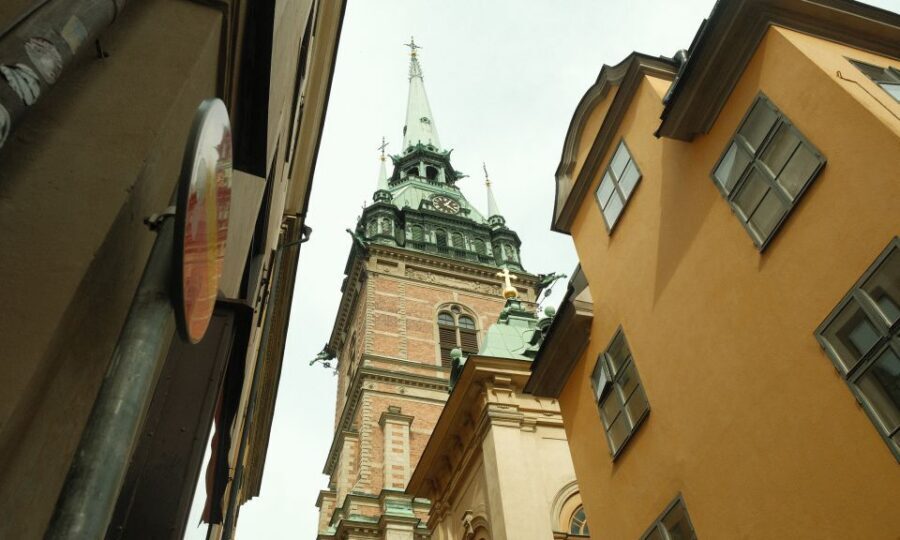
A standout detail in the experience is a puzzle tied to the German Church and its clock tower. One person specifically called out the clock tower challenge and implied it’s the kind of puzzle that can stick in your memory.
That’s useful for you because it sets expectations. The app doesn’t treat every stop as the same type of interaction. Some puzzles feel more visual and observation-based; the clock tower is likely to reward careful reading and looking up at details rather than guessing.
If you’re the kind of solver who likes clarity, you might want to be ready for the possibility that hints are limited. A couple of comments suggest the experience may not hand you multiple clue levels, so if you get stuck, you’ll need patience.
Still, this is one of the points where the game logic pays off. When a puzzle is tied to a specific landmark feature, you don’t just pass by—you pay attention long enough to actually learn something.
Cannonball in a wall and a runestone on the base
Two of the most intriguing elements mentioned as part of the experience are the story of a cannonball stuck in a wall and a runestone lodged into the base of a building. These details are the kind of historical oddities that make Old Town feel alive.
In a self-guided puzzle tour, these moments do two things for you. They make the walking more fun, because you’re hunting for clues like a detective. And they make the learning stick, because the story is attached to a physical object you can see again later.
You don’t need to be an expert on Swedish history to enjoy these stops. The experience is set up so you can learn as you walk. If you like the feeling of discovering something slightly weird and wonderful in the middle of a normal street, you’ll probably have a good time here.
Timing and pacing: how long this walk really takes
The digital walking tour is designed for about 1.5 to 2 hours of walking with the app running. That time window is important because it’s short enough to fit into a sightseeing day but long enough to feel like you’re not just doing a few quick stops.
One practical note from user experiences: the puzzle time can shift. Some people describe it as fairly fast, while others say it felt longer once the puzzles got complicated. So think of the time estimate as a baseline, not a promise.
The biggest advantage is the pause/start feature. You can stop to rest, grab a coffee, or take photos and then resume. That flexibility is the main reason this kind of tour works well for independent travelers.
Also remember that it’s meant for different ages—young and mature—so the tone is approachable. It’s not a lecture. It’s more like walking with story prompts and occasional challenges.
Who should choose this puzzle walk
This is a strong match if you want Old Town sightseeing with a learning angle and a bit of interactive fun. I’d particularly recommend it if you:
- Like turning landmarks into a game
- Enjoy solving small challenges rather than just reading signs
- Want control over your pace and time
- Prefer a self-guided format over joining a group tour
It may feel less ideal if you:
- Want a totally hands-off walking tour with no puzzles
- Dislike being slowed down by enigmas
- Need very strong accessibility support (see the note below)
A quick accessibility reality check
The activity information includes wheelchair accessibility language in one place, but it also lists not suitable for wheelchair users and not suitable for visually impaired people. Because that’s mixed, I strongly suggest you contact the provider before assuming it will work for your needs. Plan with that in mind.
Price and value: is $11 a good deal?
At $11 per person, this sits in the “cheap enough to try” category for a technology-based city experience. What you’re really paying for isn’t a guide’s time—it’s the convenience of an interactive storyline built into your walk.
The value case gets stronger because:
- You can use it at your own pace
- It’s available in several languages
- The code is valid for 90 days from purchase, so you aren’t locked into one single day
- It includes the self-guided tour plus a city exploration game on your phone
However, consider what can affect value for you personally: puzzle frustration. If you dislike puzzles, you might end up feeling like you paid for extra friction. And if you get stuck on a question, you may not get the answer you hoped for. One comment notes that when they moved past an unsolved enigma, the response wasn’t given afterward. That’s the kind of detail that can shift the experience from fun to annoying.
Also pay attention to how your group handles phone use. One review described confusion about how many phones each participant needed, and that the activity seemed to play on each phone. That suggests you should confirm how many codes you need and how the experience appears when multiple people are starting from different devices.
Common friction points before you start
If you want the smoothest start, watch for these likely problem spots.
First, read the app’s flow at the beginning. One user said they expected audio but found themselves in a reading-heavy mode, and it created frustration. You don’t need to guess what happens next—just start, look at what the app is presenting, and adjust your approach.
Second, be ready for puzzle difficulty. Some people found the challenges complex and wished for more hints. Others said puzzles might not be mandatory in practice, so your own experience could vary depending on how you choose to progress. Still, if you hate ambiguity, the app’s guidance style may not be your favorite.
Third, consider skipping versus solving. If you decide to move past a puzzle you can’t figure out, you might not get a clean explanation afterward. If you want closure, budget time to stick with challenges longer.
Finally, don’t underestimate the phone requirement. A charged smartphone is not a “nice to have” here. It’s part of the deal.
Should you book this Curiosa Old Town puzzle tour?
Book it if you want a self-guided Stockholm Old Town experience that pushes you to look closer. If you like learning through stories and enjoy puzzles tied to real landmarks, this format is a good fit. The Royal Palace courtyard start is easy to find, the time window is manageable, and the multiple-language support keeps it practical.
Skip or reconsider if puzzles drain your energy. If you prefer walking tours with a clear, complete narrative and no game-style friction, you might find the challenge layer takes over. And if accessibility is a concern, the mixed information about wheelchair suitability means you should verify with the provider before committing.
If you do book it, treat it like a short quest through Gamla Stan, not a museum lecture. Bring a charged phone, give yourself enough time for the clock tower and other landmark puzzles, and don’t rush. The payoff is in noticing what you’d normally miss.
FAQ
Where does the self-guided tour start?
It starts in the Outer Courtyard of the Royal Palace in Stockholm Old Town.
How long is the walking tour?
The digital walking tour is about 1.5 to 2 hours.
What do I need to start the experience on my phone?
You need a charged smartphone and you’ll download the Curiosa app. After that, you enter your GetYourGuide confirmation code in the app.
What languages are available?
The experience is available in Swedish, English, German, and French.
Can I pause and resume the tour?
Yes. After you receive the confirmation email and start the experience, you can start and pause it at any time.
Is it suitable for wheelchair users or visually impaired people?
The information provided lists it as not suitable for visually impaired people and also says not suitable for wheelchair users. At the same time, another line in the activity details mentions wheelchair accessibility, so you should contact the provider to confirm what’s workable for you.