REVIEW · CITY TOURS
Stockholm: Modern City Walking Tour with Local Guide
Book on GetYourGuide →Operated by NORDIC FREEDOM TOURS · Bookable on GetYourGuide
City Hall to the opera in two hours. This tour is interesting because it blends modern architecture with old-school landmarks, all led by a local English guide. I love the way the route stays focused on big-picture city life, and I also like that the operator caps the group for a more personal feel. One thing to consider: it’s a public walk, so if the group runs larger, you may wish the guide’s audio had a bit more support.
I also appreciate the clear start location—meet near Central Station, and the guide carries an official NORDIC FREEDOM TOURS sign. If you’re using transit to get oriented, don’t rely on signage like it’s foolproof; one review noted metro directions in the Gamla Stan area can be confusing if you’re looking for labels like Old Town.
For a flat $14 price, you’re paying for a structured route, English commentary, and a walk that ends at a major cultural site instead of fizzling out somewhere random. The stop lengths are short photo breaks, so this is a “learn fast, walk smart” style of tour—not one where you linger inside museums.
In This Review
- Key things to know before you walk
- Why this modern city walk makes sense in Stockholm
- Meeting at Stockholm Centralstation: find NORDIC FREEDOM TOURS fast
- City Hall and Parliament House: civic Stockholm in quick photo stops
- Rosenbad, Queen Street, and Gustav Adolfs torg: where the city feels real
- Royal Swedish Opera and St. James’s Church: art and architecture side by side
- Berzelii Park, New Bridge Square, and the music legacy
- King’s Garden and the Swedish royal-cultural zone
- Raoul Wallenberg Square, Shore Road, and China Theatre
- Ending at King’s Royal Stable and the Royal Dramatic Theatre
- Group size and pacing: how to make this tour feel personal
- Price and value: is $14 worth two hours?
- Sustainable tourism on foot: what you’ll actually experience
- Who should book this walk?
- Should you book this Stockholm Modern City Walking Tour?
- FAQ
- FAQ
- Where does the tour start?
- How long is the walking tour?
- Is this tour private?
- What language is the guide?
- What is the total price?
- Where does the tour end?
Key things to know before you walk
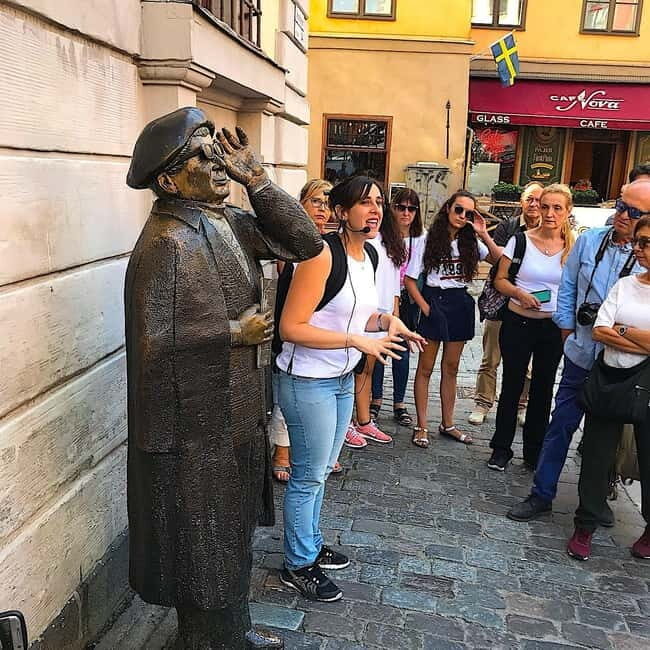
- Modern + historical mix: you’ll connect new Stockholm design energy to classic landmarks.
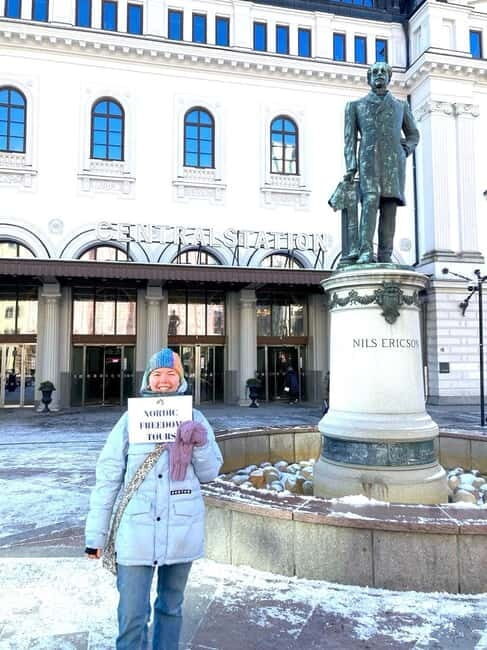
- Central meeting point: start by the Nils Ericson statue area outside Stockholm Central Station.
- Small-group intent: group size is strictly limited for a more engaging pace.
- Photo-stop rhythm: most stops are quick, so keep your camera ready and your shoes comfortable.
- Stops you’ll recognize quickly: City Hall, Parliament House, the Royal Swedish Opera, and the Royal Dramatic Theatre are all on the route.
- Public tour, shared sidewalks: it’s not private, so expect other people on the same path.
Why this modern city walk makes sense in Stockholm
Stockholm can feel like two cities at once: the postcard look, and the city that’s still actively building, governing, performing, and living. This tour is built to help you see both sides without turning your day into a zigzag marathon.
I like that it keeps things practical. You start at Stockholm Central Station, then move through recognizable civic and cultural anchors. You’re not forced into long indoor waits or complicated ticketing. It’s a walking route designed for a clean 2-hour hit.
The other reason I’d recommend it is the operator’s consistency. The company has been running this type of guided experience since 2015, and that usually means the route and timing are tested enough to work on foot. Also, they say they focus on sustainable tourism practices, which, in a walking tour context, largely translates to keeping it efficient and low-impact.
Other walking tours we've reviewed in Stockholm

Meeting at Stockholm Centralstation: find NORDIC FREEDOM TOURS fast
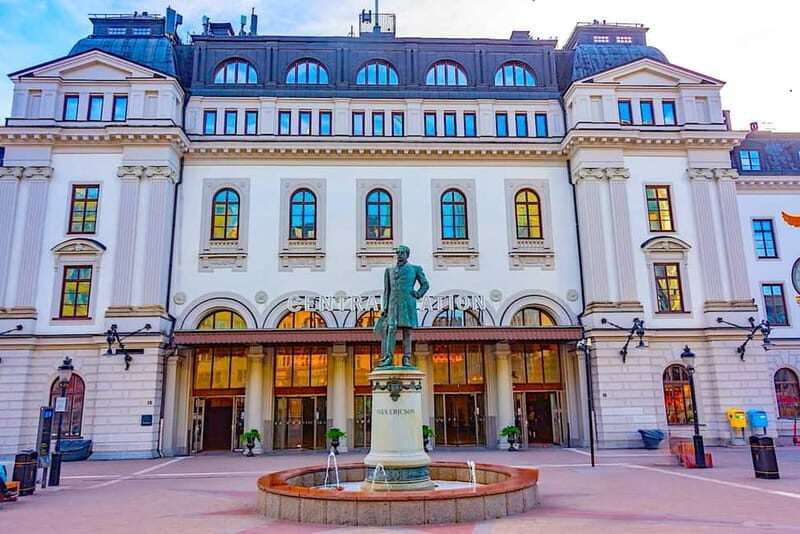
Your biggest “logistics win” here is that the start point is not vague. You meet near the statue of Nils Ericson, directly opposite the entrance to the rear of Stockholm Central Station. The guide holds an official sign for NORDIC FREEDOM TOURS.
Here’s how to avoid the classic travel problem: stand where you can see the rear entrance and the statue area. If you try to meet “near Central Station” without a visual landmark, you’ll burn time.
Also note the tour ends back at the same meeting area. That matters because it saves you from the last-minute question of how you’ll get to transport after a short walk.
City Hall and Parliament House: civic Stockholm in quick photo stops
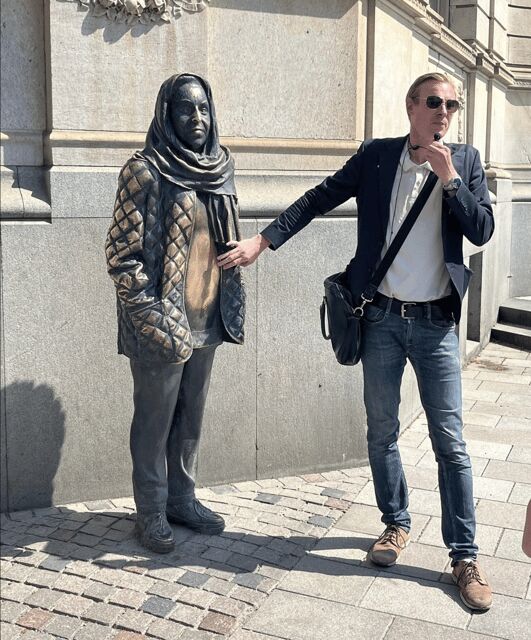
The tour’s early stops are all about giving you Stockholm’s governing face fast.
First up is Stockholm City Hall, where you get a dedicated photo stop (about 10 minutes). The tour frames this as part of Stockholm’s legacy of progress and innovation. Even if you don’t go deep on dates, the building is a strong starting point because it anchors your walk in the idea of city identity—what Stockholm uses to show itself to the world.
Next comes Parliament House, Sweden for another photo stop (around 10 minutes). Again, the point is less “lecture” and more “orientation.” In a short 2-hour tour, those early stops do the heavy lifting: they teach your eyes what to look for as you move from landmark to landmark.
Potential drawback to watch for: these photo stops are time-boxed. If you’re the type who likes to study architecture for a while, you’ll need to be selective. Use the time for one or two good angles, not a photo marathon.
Rosenbad, Queen Street, and Gustav Adolfs torg: where the city feels real
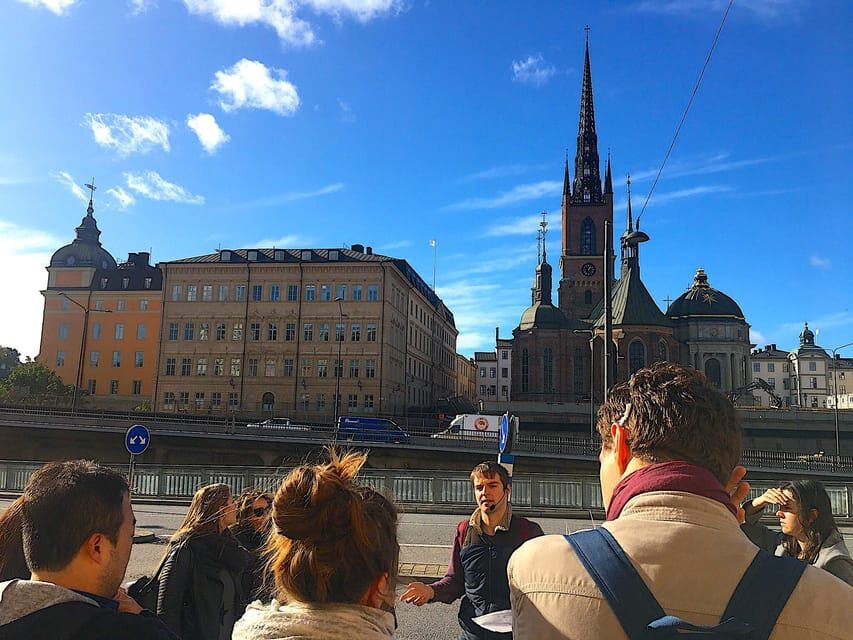
After the civic core, the tour shifts to the city’s working rhythm.
You’ll pass government offices at Rosenbad and stroll along Queen Street, described as a hub of urban activity. This is useful because it places the landmarks in context: Stockholm isn’t just monuments. It’s also commuting, services, shopping streets, and everyday movement.
Then you hit Gustav Adolfs torg (Gustaf Adolfs torg, Stockholm) for a photo stop. In a short tour, this type of square works like a reset button. You get a wider view of the street layout and the flow of people, which makes the next cultural stops easier to understand.
If you prefer “quiet Stockholm,” this segment might not be for you. It’s not designed to be a hushed garden walk. It’s designed to show you how the city operates around the landmark zones.
Royal Swedish Opera and St. James’s Church: art and architecture side by side
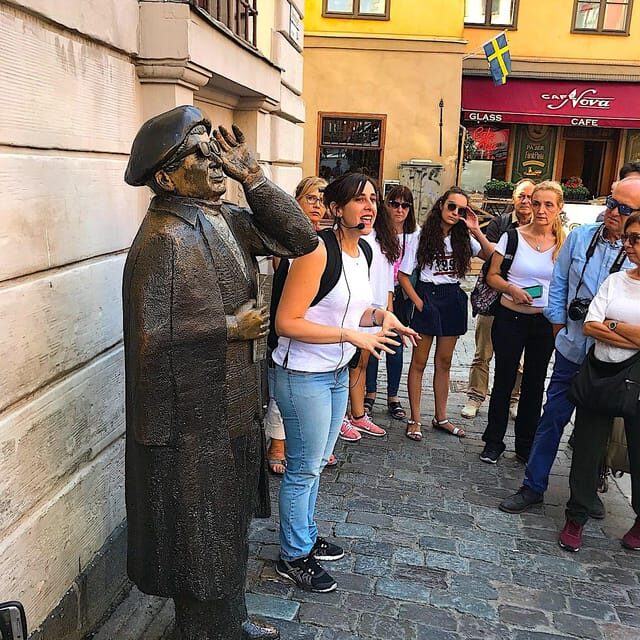
Now you move into cultural Stockholm, and the variety here is the payoff.
The Royal Swedish Opera is the next landmark, again with a photo stop (about 10 minutes). The tour places it alongside the busy city streets you just walked, so you get a clear contrast: performance institutions in the middle of real urban life.
Then you visit St. James’s Church for another photo stop. This is where the tour’s “modern + historical” idea starts to feel more tangible. You’re not only walking past buildings—you’re seeing how different eras share the same city blocks.
A practical tip: if you plan to do extra photos on your own afterward, stay mindful of how quickly the group is moving. The tour keeps the momentum, so don’t lag at every corner. If you’re going to stop, stop with intention.
Other guided tours in Stockholm





Berzelii Park, New Bridge Square, and the music legacy
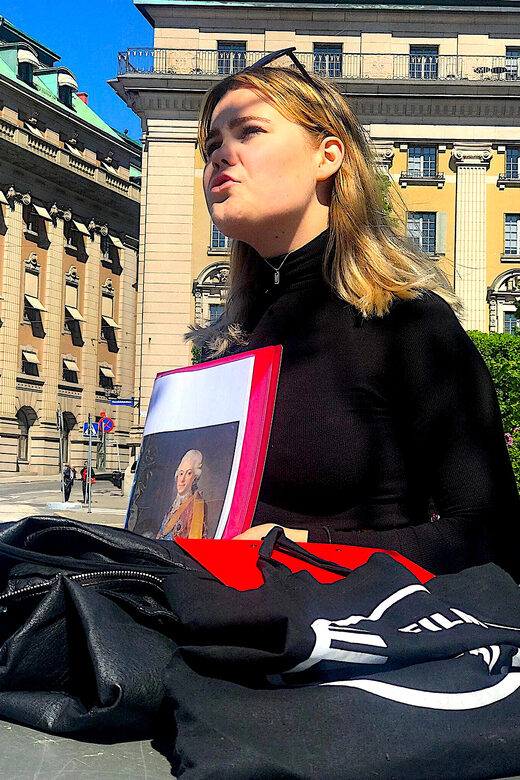
A key part of this walking route is that it doesn’t only focus on government and big theatres. It also threads in the arts and education vibe.
You’ll spend time around Berzelii Park (photo stop around 10 minutes). Parks like this are worth including because they give your eyes a breather. They also help you understand Stockholm’s planning logic: green space isn’t an afterthought; it’s part of how the city is shaped.
The tour also highlights the Royal Swedish Academy of Music and includes time around New Bridge Square. The commentary here is framed as the Academy’s legacy, which makes sense for a walk that’s trying to connect institutions to the city’s identity. Even if you don’t go in anywhere, you’re learning what cultural organizations matter in Stockholm and where to find them.
What you should know: some segments are short photo pauses. That’s not a flaw—it’s a design choice. It keeps the tour at 2 hours without turning your day into a calendar puzzle.
King’s Garden and the Swedish royal-cultural zone
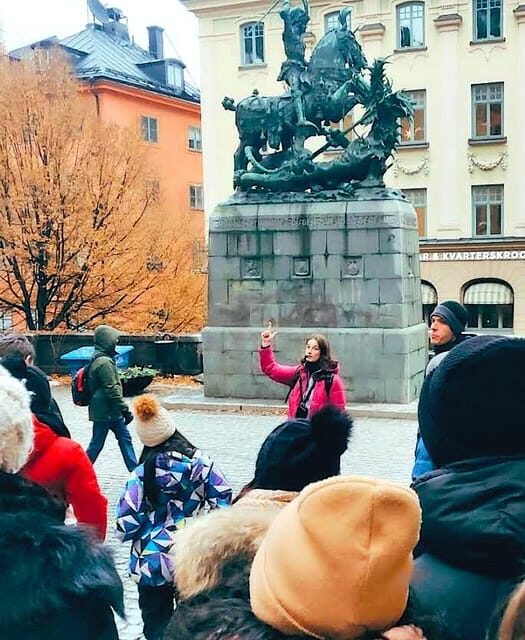
After the opera and church area, the route brings you toward King’s Garden, described as a beloved city oasis. This is a nice change of pace because it interrupts the heavy landmark density with something more restful.
The tour also references the elegant feel of New Bridge Square and the cultural focus near the Royal Swedish Academy of Music. Taken together, these stops help you see Stockholm’s “royal culture corridor” without requiring a separate day.
A small drawback: if you’re traveling during a busy tourist window, garden time can still feel like public space (not a private break). Still, the tour’s time-boxing helps. You’re getting a taste, not a commitment.
Raoul Wallenberg Square, Shore Road, and China Theatre
This is where the tour adds emotion and variety.
You’ll reach Raoul Wallenberg Square, where the tour frames the moment as history meeting reflection. Even with just a photo stop, this kind of place adds weight to the walk. It helps you feel that Stockholm isn’t only about scenery; it’s also about memory and meaning.
Then you head toward Shore Road. With waterfront routes, the main value is viewpoint. You’ll get a different angle on the city than you have from street-level squares. Even if the time is short, being near the water changes how you read the city.
Finally, the route includes the China Theatre. The tour calls it renowned, and the fact that it’s included tells you something important: Stockholm’s cultural map isn’t limited to the most formal government buildings. It includes venues that represent different artistic identities and neighborhoods.
Ending at King’s Royal Stable and the Royal Dramatic Theatre
Most walks end “somewhere near.” This one ends at a real anchor.
You finish at King’s Royal Stable and then at the Royal Dramatic Theatre near Stureplan. That ending location is practical because Stureplan is a major hub, so you’re not stuck wondering how to move on.
The Royal Dramatic Theatre also serves as a final theme match. After civic buildings, churches, parks, and cultural institutions, you end at a stage-ready landmark—the city’s cultural heartbeat, right there on the map.
If you like to plan your evening, this is a smart landing point. You’re near a recognizable zone where it’s easy to keep exploring or grab food afterward.
Group size and pacing: how to make this tour feel personal
This is a public walking tour with a strictly limited number of participants. That cap is the difference between a guide who can actually connect with the group and one who only survives by speed.
Still, one review flagged a real-world scenario: a group that ended up around 20–30 people. The guest noted the group felt too large for one guide without a microphone, even though the tour still covered highlights and helped them learn a lot quickly.
So here’s how you can hedge your experience:
- Arrive a few minutes early and stand close to the guide when the group moves.
- If you’re sensitive to audio, position yourself where you can clearly hear instructions and stop explanations.
- Expect short breaks. This tour is designed for quick orientation, not lingering.
Even with those considerations, the positive reviews point to a guide who can project clearly. One guide named Carl was praised for speaking loudly, which is exactly what you want on an outdoor walking route.
Price and value: is $14 worth two hours?
At $14 per person, the price is low enough that it feels like a “budget-friendly orientation walk,” not a premium guided experience. The value comes from what’s included.
You’re paying for:
- an English-speaking guide,
- a structured 2-hour route through major landmarks and specific stops,
- a price that is final with no need for you to personally add extra tips.
For many visitors, that last detail matters. Knowing the total upfront reduces decision fatigue. You can just focus on the walk instead of doing mental math at checkout time.
Could it be “too quick” for some people? Yes. Photo stops are built into the timing, and that means you’ll probably move on before you’ve fully soaked in every detail. If you’re the type who wants deep storytelling at each corner, you might want a longer tour or one with longer stops. But if you want a high-coverage overview with good city context, this price-to-time ratio makes sense.
Sustainable tourism on foot: what you’ll actually experience
The tour says it focuses on sustainable tourism practices. You don’t need a lecture to see what that means in practice here.
It’s walking-heavy, which is inherently lower-impact than hopping from site to site by car or bus. And because the group size is capped, you’re not adding a huge crowd to each landmark zone for long periods.
The other “sustainability” angle is behavioral: quick stops and a tight route often mean less looping around the same blocks. That keeps your tour efficient for everyone—guide, group, and locals sharing the streets.
Who should book this walk?
I think this tour fits best if you want:
- a fast way to get your bearings in central Stockholm,
- a mix of civic sites and major cultural venues,
- an English guide, with an emphasis on seeing the city’s modern and historical layers together.
It’s also a decent first activity of the day (or early in your trip). Starting at Central Station and ending at a major theatre zone makes it easy to connect to your next plan.
This tour may not be your best match if you want lots of museum time or quiet, slow pacing. Also, it’s not a party-group type of activity, since alcohol and drugs are not allowed and party groups are excluded.
Should you book this Stockholm Modern City Walking Tour?
If you’re looking for a simple, well-structured way to see Stockholm’s key anchors in two hours, I’d say yes—especially at $14. The route hits major photo-friendly landmarks like City Hall, Parliament House, the Royal Swedish Opera, St. James’s Church, and finishes at the Royal Dramatic Theatre near Stureplan. That’s strong coverage for the time.
Book it with eyes open on two points: it’s a public group walk, and the stop lengths are intentionally short. If you like photo stops and orientation, you’ll feel satisfied. If you prefer slower storytelling at each site, consider adding extra time on your own after the tour.
FAQ
FAQ
Where does the tour start?
The tour starts near the statue of Nils Ericson, directly opposite the entrance to the rear of Stockholm Central Station. Look for the guide holding the official sign for NORDIC FREEDOM TOURS.
How long is the walking tour?
It lasts about 2 hours.
Is this tour private?
No. It’s a public walking tour with other participants present, and the number of participants is strictly limited.
What language is the guide?
The guide speaks English.
What is the total price?
The price is $14 per person and is stated as final. No additional payments are required of you personally.
Where does the tour end?
The tour ends at the Royal Dramatic Theatre area near Stureplan, and the activity finishes back at the meeting point area.