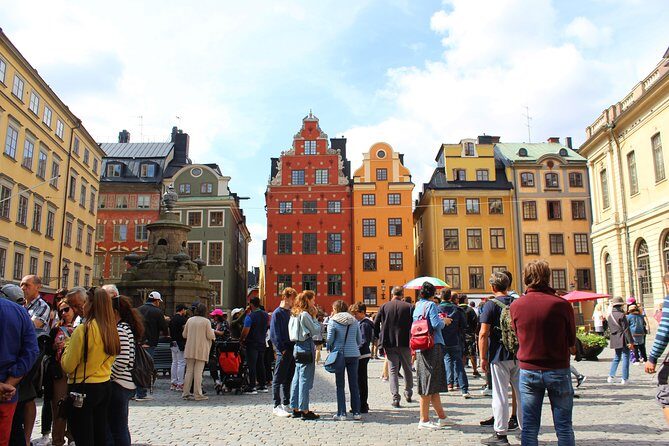
REVIEW · STOCKHOLM
CityQuest in Stockholm – To See Stockholm and Die
Book on Viator →Operated by ARDI · Bookable on Viator
Stockholm turns detective when you start this quest. In CityQuest Stockholm: To See Stockholm and Die, you play investigator for 2.5 hours, guided by a phone app and a set of evidence clues that lead you toward a final answer.
I like the mix of outdoor sightseeing and puzzle work, because it makes you actually notice what’s around you instead of just passing by. I also like the story setup around a mysterious murder, which gives the walk a clear reason to keep moving.
One drawback to consider is that the experience depends on your phone and access to the web app, so you’ll want a working smartphone and a way to get online during the game.
In This Review
- Key things to know before you play
- A detective walk you control with puzzles
- Price and value: $20.31 for a 2.5-hour game
- Before you go: phone, internet, and weather matter
- Start near Centralstation: getting your evidence and instructions
- Royal Swedish Opera: the first big clue stop
- Royal Academy of Fine Arts: puzzles that reward attention
- Kungsträdgården and the Karl XII statue: turning squares into clue maps
- Statue of Nils Ericson to Sergels Torg: keep the pace to beat the clock
- The app and criminal journal: how the story actually plays
- Timing and route rhythm: why 2.5 hours feels just right
- Team-building friendly, not just for puzzle pros
- Potential snag: when instructions and links don’t arrive
- Should you book CityQuest Stockholm: To See Stockholm and Die?
- FAQ
- How long is the CityQuest Stockholm game?
- How much does it cost?
- Where does the quest start?
- Where does it end?
- What do I get at the start of the game?
- Do I need internet or a smartphone?
- Is this a group activity or private?
- Do I need to bring anything besides my phone?
- Is it suitable for most travelers?
- Is it outdoors, and does weather matter?
Key things to know before you play

- 2.5-hour mystery route through central Stockholm, built around real public spaces and monuments you can walk to
- Evidence packet up front so you start quickly and know what you’re looking for
- Criminal journal web app that supports your investigation as you go
- Phone-app guided clues that keep the pace and reduce the need for map-reading
- Team-friendly format that rewards cooperation and sharing answers
- Watch for tech hiccups since access instructions and links have occasionally failed
A detective walk you control with puzzles
This is not a sit-and-listen walking tour. You take on the role of a detective agency and investigate a murder tied to a Russian scientist visiting Stockholm. The structure is simple: you’re given evidence at the start, you follow the app and the case material, and you answer questions as you move through town.
The big value here is how the game turns city time into “work” you can enjoy. You’re walking anyway, so the smart move is to make that walking do something. This quest does that by turning each stop into a problem to solve, not just a photo opportunity.
And since the goal is to answer as many questions as possible before time runs out, you get a natural rhythm. You won’t feel lost staring at a map all afternoon.
If you're still narrowing it down, here are other tours in Stockholm we've reviewed.



Price and value: $20.31 for a 2.5-hour game

At $20.31 per person for about 2 hours 30 minutes, the value depends on your style. If you like scavenger hunts, escape-room logic, or anything detective-themed, you’ll probably feel like you’re getting a lot of “activity time” for the price.
You’re also not paying just for the route. You’re paying for the case materials: an evidence set plus access to a criminal journal through a web application. That’s what turns normal landmarks into clues.
If you’re the type who prefers cultural context over puzzles, the price can feel less obvious. But if you want an engaging way to move across central Stockholm, the cost-to-duration ratio is strong for a self-guided experience with a built-in story.
Before you go: phone, internet, and weather matter

This CityQuest is phone-based, and it’s explicit about what it does and doesn’t provide. Your phone is not included, and internet connection is not included. That means you should plan to have a working smartphone and enough mobile data to access the app and web journal during the quest.
Also, this experience requires good weather. Since you’ll be outdoors walking between stops, pack for the conditions. Think layers and comfortable shoes.
One more practical point: the tour is described as available almost all day (it lists a wide daily window). That makes it easier to slot into your itinerary, but you should still arrive with time to get started so you don’t lose your game clock.
Start near Centralstation: getting your evidence and instructions
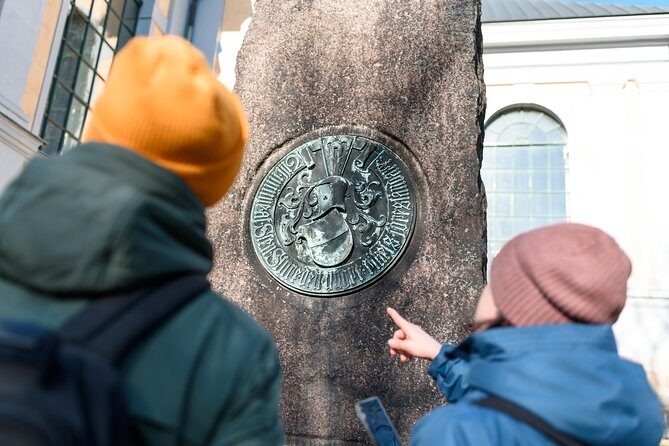
The quest starts in the Centralstation area at Centralplan 15, 111 20 Stockholm. Your opening stage matters because it sets the tone for the whole run: you receive a set of evidence and simple instructions, then you begin playing.
In practice, you’ll want to treat the start like gear-up time. Read what you’re given, open the web app and the game content on your phone, and make sure you’re ready before you step out into the route. A few minutes of setup can save you from feeling behind later.
This is also the moment where you’ll learn how the questions work in your group. If you’re with friends, decide early who’s scanning the clue prompts and who’s answering questions so nobody gets stuck waiting.
Royal Swedish Opera: the first big clue stop

The route includes the Royal Swedish Opera as Stop 1. Even without needing deep background on the site, this works well as a first stop because it’s a recognizable landmark area where you can orient quickly.
In the game, your job at each location is to use the case materials to answer questions and progress the story. So at the opera stop, expect to spend a short stretch figuring out what the evidence is pointing you toward and how the app wants you to respond.
A good mindset here: slow down just long enough to read every prompt carefully. The quest doesn’t rely on “trick your brain” puzzles only. It also rewards noticing details and following the storyline logic.



Royal Academy of Fine Arts: puzzles that reward attention
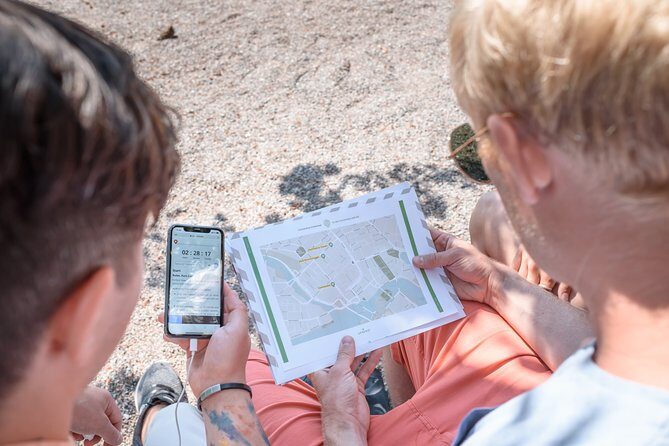
Next up is the Royal Academy of Fine Arts. This is where the quest starts to feel like a proper “detective workflow”: you’re no longer just moving to a landmark, you’re moving to information.
If you like “escape room, but outside,” this is the point where you’ll feel the game’s structure. The prompts in the app and the criminal journal work together, and you’ll likely find that answers come from connecting small bits of evidence.
One realistic drawback for some people: there’s no mention of physically “finding” major real-world objects like bags or coded papers. The evidence is provided at the start, and the rest is handled through the web app and phone guidance. If you want hands-on props, you may be slightly less thrilled.
Kungsträdgården and the Karl XII statue: turning squares into clue maps
Your route moves into Kungsträdgården, then specifically to the Karl XII statue in Kungsträdgården. These stops are a perfect fit for a city quest because they’re open spaces where a group can gather, compare ideas, and check the next clue without getting in each other’s way.
This is also one of the places where the game’s time pressure starts to feel real. The story expects you to keep pace, not linger forever on one question.
What I’d do in your shoes: at each square or monument stop, assign one person to lead the reading of the clue prompts while the others scan for what’s being asked. That keeps the group from splitting into confusion.
And if you’re traveling with people who don’t love puzzles, this is where you can keep them engaged by giving them a job. Let one person focus on the journal links, for example, while another focuses on the app question.
Statue of Nils Ericson to Sergels Torg: keep the pace to beat the clock

The itinerary then includes the Statue of Nils Ericson, followed by Sergels Torg. By this stage, you’re likely about halfway to most of the way through the quest length, depending on how quickly your group solves.
This matters because the game’s goal is to answer as many questions as possible before the time runs out. Sergels Torg is a major city-center stop in the route, and it’s a good “end stretch” area for staying focused on the last set of clues.
If your group tends to be slow decision-makers, you’ll want to speed up slightly here. Not because the quest is unfair, but because time pressure is part of the fun. The best approach is to make fast guesses, then verify using the journal or the evidence provided.
The app and criminal journal: how the story actually plays
The core experience is your investigation through the phone. At the start, you receive evidence and instructions. During the game, you use a cellphone app to access the case’s criminal journal as you explore.
This setup is what makes the quest different from “walk and read signs.” You don’t just look at a monument and then move on. The app prompts you to interpret, answer, and connect.
One helpful detail: there’s a stated lack of dependence on taking pictures. A participant note specifically said no pictures were involved, which can make the quest feel easier if you’re traveling without the habit of documenting everything.
Also, one person pointed out that social-media elements are used in the game. That doesn’t replace the puzzle logic, but it tells you the experience is designed to feel modern and interactive, not like a traditional scavenger hunt with static PDFs.
Timing and route rhythm: why 2.5 hours feels just right
This quest is built to fit a half-day or a late afternoon plan. Around 2 hours 30 minutes is long enough for a real story arc, but short enough that you’re not stuck in puzzle fatigue all day.
The story is set up like an investigation mission, and you’ll finish with a summary that compares what happened to your answers. That summary matters because it turns “we solved some questions” into “we learned what the case outcome was.”
If you’re planning your day, keep your next commitment flexible. You’ll be walking between stops, answering questions, and reading prompts at each location. It’s easy to underestimate how quickly a city center walk can become full of small decisions.
Team-building friendly, not just for puzzle pros
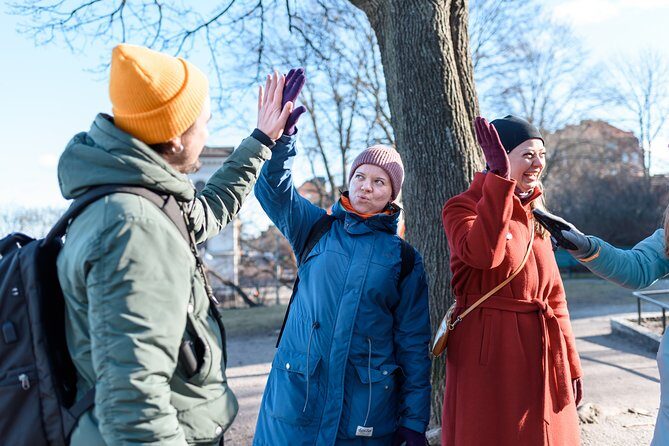
CityQuest is the kind of activity that works well with friends and groups. The format is collaborative because questions are easier with multiple brains, and the evidence/journal material benefits from people splitting tasks.
In the field, this kind of game creates natural teamwork. You’ll likely hear discussions like: did we interpret this clue right, what does the journal suggest, and who should check the next prompt. That’s how it becomes fun instead of stressful.
If you’re traveling solo, it can still work, since the quest is mobile and your role as detective doesn’t require a large party. But if you want the best energy, I’d pair up with at least one other person who likes problem-solving.
Potential snag: when instructions and links don’t arrive
Here’s the honest part: there have been real support and delivery problems reported. One situation involved a no-show experience because follow-up instructions never arrived, and the contact number on the confirmation email was disconnected. The result was lost time while trying to get help, and the operator eventually offered to reschedule after a late response.
Another response from the provider described a technical issue where the game link didn’t get sent, and they noted that a phone number had been outdated after ownership changes (it was said to be corrected). They also mentioned they were upgrading their platform to reduce these issues.
So my practical advice is simple:
- Screenshot your confirmation and booking details before you leave home
- Have a backup plan for contact, since tech delivery can fail
- Give yourself buffer time at the start, so a slow setup doesn’t wreck your whole run
This doesn’t mean the quest is unreliable every time. It means you should treat your start like an appointment that deserves a quick check.
Should you book CityQuest Stockholm: To See Stockholm and Die?
If you want a fun, challenging way to sightsee that keeps you engaged through puzzles and story, I think this is a strong pick. The pricing makes sense for a structured 2.5-hour activity, and the app + criminal journal setup helps you feel like you’re doing real detective work rather than just walking between landmarks.
Book it if:
- You like escape-room style logic and detective stories
- You’re traveling with friends and want an activity that naturally sparks teamwork
- You prefer an outdoor city walk that still feels purposeful
Skip it (or rethink) if:
- You’re traveling without reliable mobile data or you hate anything phone-dependent
- You want lots of physical “hands-on” evidence at each location
- You’re the type who gets stressed by time pressure and app-based instructions
If you show up with a working phone and a calm detective mindset, this is the kind of Stockholm activity that turns the city center into a real puzzle map.
FAQ
How long is the CityQuest Stockholm game?
It runs for about 2 hours 30 minutes.
How much does it cost?
The price is listed as $20.31 per person.
Where does the quest start?
It starts at Centralplan 15, 111 20 Stockholm, Sweden.
Where does it end?
The information says the activity ends back at the meeting point, and the story overview also notes finishing next to the Royal Opera area. You’ll want to follow the exact instructions you receive before playing.
What do I get at the start of the game?
You receive a set of evidence and simple instructions to help you navigate and solve the case.
Do I need internet or a smartphone?
Yes. A mobile phone and internet connection are not included, and the experience uses a cellphone app and a web application (criminal journal).
Is this a group activity or private?
It’s private, meaning only your group participates.
Do I need to bring anything besides my phone?
Besides your phone, you’ll want to be ready to access the app/web journal during the walk. The materials at the start are provided as evidence.
Is it suitable for most travelers?
The info says most travelers can participate.
Is it outdoors, and does weather matter?
The experience requires good weather, and the route is built around walking between central stops.