REVIEW · STOCKHOLM
Stockholm: Underground Metro Art Ride with a Local
Book on Viator →Operated by LocalBini - The go-to platform for Experiences by Locals in Europe · Bookable on Viator
Subway art feels like a museum sprint. This small-group underground metro art ride strings together major works you might otherwise miss, with subway tickets included and an English-speaking local guiding the pace. You’ll hop between focused stops for about 90 minutes, with the route adjusting to weather and what your group wants to linger on.
I love how the format stays personal: you get direct attention on what you’re seeing, not a lecture from a distance. Guides like Dan are praised for turning quick station stops into real appreciation of station details, and Fayez is singled out for explaining metro history in a way that gives you confidence to use the system for the rest of your trip.
My main caution is practical: you’ll only see a selection of stations, and there can be several steps. If you have knee trouble or limited mobility, the walking style may be tough, and the tour is not recommended for impaired mobility.
In This Review
- Key things you’ll notice on this Stockholm underground art ride
- Why this is more than a quick metro ride
- Price and what you’re truly paying for
- Meeting at T-Centralen and ending at Tekniska högskolan
- Stop 1: Art works by Ultvedt, Persson-Melin, and Österlin
- Stop 2: Ulrik Samuelson’s underground garden
- Stop 3: Siri Derkert and why her work hits differently
- Stop 4: A homage to the Olympic Games
- Stop 5: The four elements surprise
- Getting the most out of the guide you’re assigned
- Accessibility and comfort: the honest planning checklist
- Is it worth it for you?
- Should you book this Stockholm underground metro art ride?
- FAQ
- How long is the Stockholm underground metro art ride?
- What is the price per person?
- How many people are in the group?
- Is the tour offered in English?
- Are subway tickets included?
- Where does the tour start and end?
- Do I need to bring museum or monument entry tickets?
- Is the tour accessible for guests with mobility issues?
- What is the cancellation policy?
Key things you’ll notice on this Stockholm underground art ride
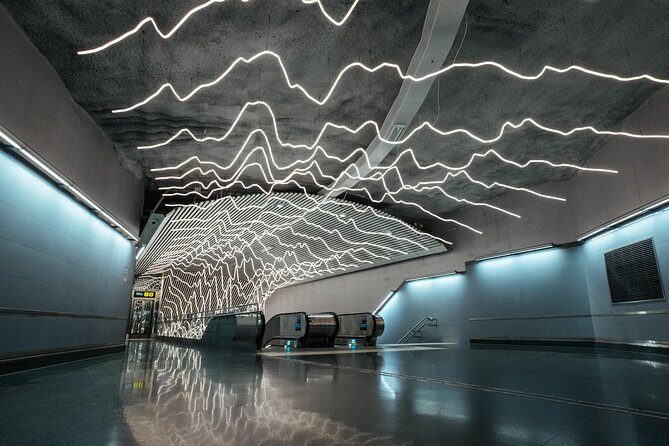
- Small group up to 8: easier questions, better pacing, and more chances to look closely
- Subway ticket included: you’re not doing mental math on transit during your art time
- Station-by-station spotlight on named artists: Per Olof Ultvedt, Signe Persson-Melin, Anders Österlin
- Underground garden stop: the Ulrik Samuelson garden is built into the route as a set piece
- Siri Derkert and Olympic homage: the art theme shifts from personal design to big public ideas
- Four-elements finale: a themed closer that helps you remember what you saw (and why)
Why this is more than a quick metro ride
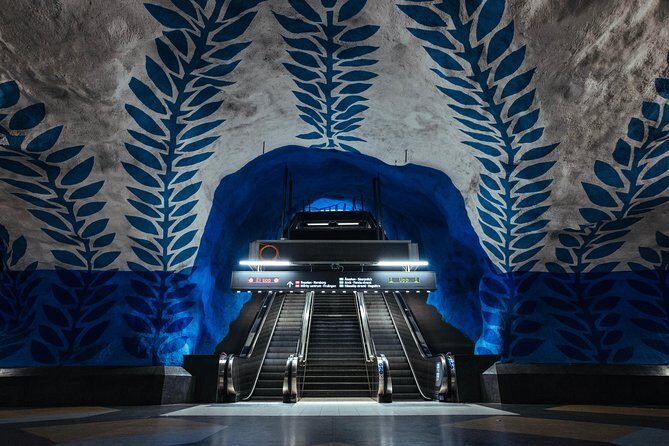
This is built for one simple goal: help you notice what’s in the Stockholm subway besides the fastest way to get from point A to point B. In 90 minutes, you move station to station like you’re sightseeing, but you’re also learning how to read the space—art style, placement, and the mood each stop creates.
I like that the tour doesn’t pretend the subway is just a backdrop. It treats each selected station as a chapter, with time for questions and for slowing down when something catches your eye. That’s where the small-group size matters; when you’re not packed in, you can step to the side, look longer, and actually see details.
The other thing I really value is the practical support built into the experience: you leave with a subway ride under your belt. A guide explaining metro basics makes the rest of your trip easier, even if you’re already comfortable using public transit.
If you're still narrowing it down, here are other tours in Stockholm we've reviewed.



Price and what you’re truly paying for
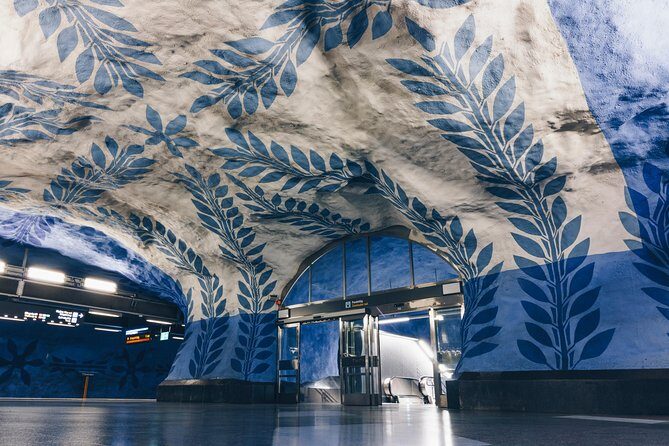
At $131.12 per person, this isn’t a “cheap add-on.” The value depends on what you want from Stockholm: if you care about art, design, and learning how the metro experience works, this price can feel fair. You’re paying for a local host, a small group (max 8), and subway tickets so you’re not juggling additional transit costs mid-ride.
It also helps that the tour is offered in English and uses a mobile ticket, which is one less thing to handle once you arrive. The route is about 1 hour 30 minutes, so you’re buying time plus interpretation—how to look, what to pay attention to, and how each stop connects to the larger theme of the ride.
One thing to keep straight: the subway ticket is included, but entry tickets for museums and monuments are excluded. If you’re expecting this tour to cover paid attractions beyond the stations, it won’t. Personal expenses aren’t included either, which is standard, but worth remembering when you plan your day.
Meeting at T-Centralen and ending at Tekniska högskolan
Logistics here are simple on paper: you start at T-Centralen (111 20 Stockholm) and end at Tekniska högskolan (114 28 Stockholm). That matters because you’re not doing a round-trip walk back to the original spot. For planning, think of it as a “one-way experience” inside the metro network.
The tour also positions itself as near public transportation, which fits the reality of a subway-based route. You’ll want to arrive with a little buffer so you can locate your group and settle before moving through the stations.
One practical note from the walking style: expect that there may be several steps. The tour isn’t recommended for guests with impaired mobility, and if you use a cane or have knee limitations, this could be uncomfortable. If your mobility is flexible, you’ll likely manage fine; if not, plan an alternate way to see the art.
Stop 1: Art works by Ultvedt, Persson-Melin, and Österlin
The ride kicks off with focused attention on works by Per Olof Ultvedt, Signe Persson-Melin, and Anders Österlin. Even without station names, the key is that the guide points out what’s easy to miss when you’re just passing through. This is exactly where a local matters: you’re not hunting alone, and you’re not left guessing what you’re looking at.
This first stop functions like a warm-up. It trains your eyes on what the guide considers important—materials, placement, and how the art fits the station environment. It also sets expectations for the rest of the tour: you’ll see more themed works afterward, but you’ll be better prepared to notice differences instead of treating each station like a random photo stop.
From the feedback pattern, one standout strength is how guides turn short station time into real appreciation. Dan is praised for explaining each station and pointing out details so the art lands more clearly than a quick glance ever would. That’s what you’re looking for if you book this: interpretation that helps you see.
Stop 2: Ulrik Samuelson’s underground garden
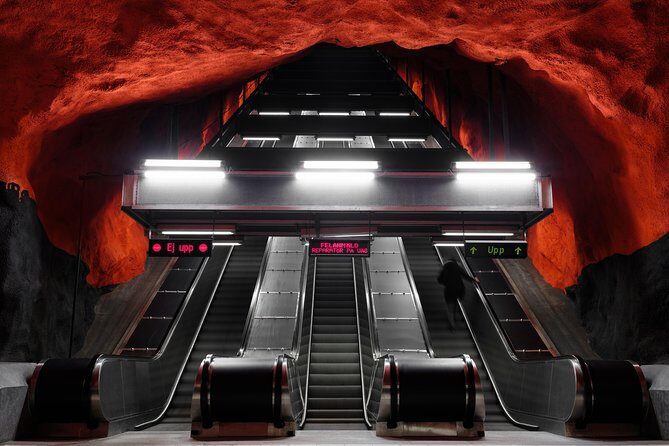
Then you hit a very specific kind of surprise: an underground garden by Ulrik Samuelson. The word underground is doing a lot of work here. Instead of art that looks like it belongs in open air, you’re dealing with something that has to live inside a transit setting, where people are moving through fast.
This stop is worth treating like a breather. Even if your legs are moving, you’ll want a moment to slow down and let your eyes adjust. The garden concept makes you look at the station differently—less like a hallway and more like a designed environment meant for lingering.
In a tour like this, the value isn’t just the subject. It’s how your guide helps you notice the garden’s role in the route: how it changes the mood, how it contrasts with other stops, and why it stands out as a deliberate change of pace.



Stop 3: Siri Derkert and why her work hits differently
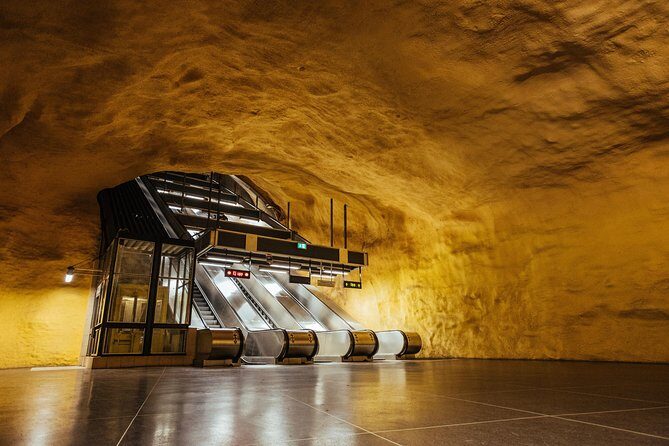
Next up is Siri Derkert, described as Sweden’s famous artist. That’s a strong clue that the guide will frame her work with more context than a basic description. In a practical sense, this part of the tour can help you make sense of scale—how a known artist’s work can shape how you experience a station.
If you enjoy art for more than color or “cool factor,” this stop is likely your kind of moment. The guide’s job is to connect what you see to a bigger idea, not just a name. And the ride format helps because you’re not learning everything at once—you’re absorbing it through a sequence of stations.
There’s also a benefit for photographers (even if you don’t care about photos): people often assume they can learn from pictures later. But the experience is designed for in-person looking, when details and textures make more sense.
Stop 4: A homage to the Olympic Games
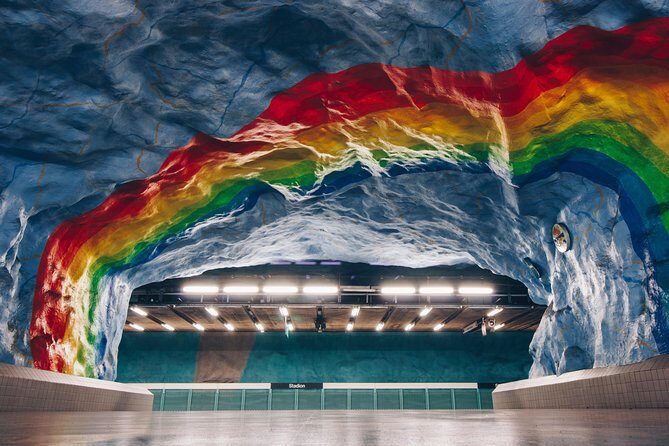
After that, the tour shifts tone with an homage to the Olympic Games. This is a big cultural theme, and it’s a nice change from the more personal, artist-focused stops. It also gives you a structure to compare: you’ve seen individual artists and a garden-like concept, and now you get a station that points at ideas about competition, sport, and public imagination.
The benefit of having a theme here is memory. When you leave, you’re not just remembering a bunch of random artworks. You can recall a storyline: artists → environment/garden → a famous artist → public event theme.
This part of the ride is a great example of why the tour is designed as a group walk instead of a self-guided scavenger hunt. A local guide can help you connect the dots quickly while you’re still standing in front of the work.
Stop 5: The four elements surprise
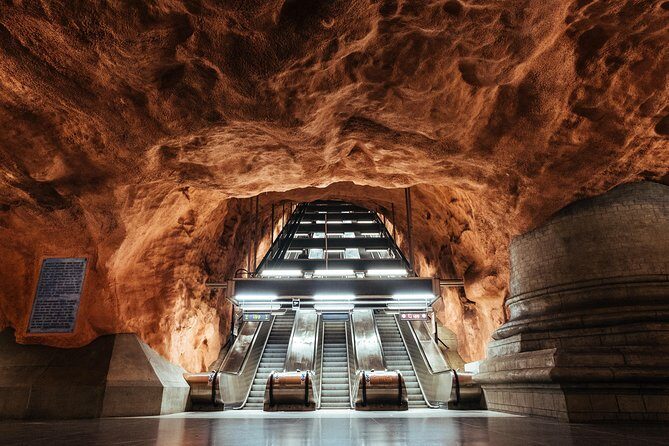
The final stop is built around the four elements, and it’s meant to end on a bit of a conceptual twist. The four-elements idea is useful because it gives you a lens. Instead of only thinking about what the art looks like, you start paying attention to how it might relate to earth, water, air, and fire themes—at least in the way the guide frames what you’re seeing.
Even if you don’t fully master the symbolism, the theme helps you remember. You’ll likely walk away with a clearer sense of how the art route is organized, and why these stops were selected together.
This is also a good “exit moment” for the tour. Once the last theme lands, you can re-enter normal metro life with less confusion. You’ve learned how to spot meaningful details without turning the entire trip into a museum-style marathon.
Getting the most out of the guide you’re assigned
One big factor in the overall experience is guide quality. In the positive examples, Dan and Fayez come up for station-by-station explanations and for metro-history context that makes you feel capable riding afterward. That’s exactly what you should want from a metro art ride: someone who can turn what’s in front of you into something you can actually use and remember.
Still, there’s one caution to keep in mind. A lower rating pointed out a guide who couldn’t answer questions about the art, and another report described a guide no-show situation that led to disappointment. I can’t predict which guide you’ll get, but it’s reasonable to show up ready to ask questions—and if something feels off, address it quickly with the tour support process.
For you, the best tactic is simple: come with 1 or 2 questions you genuinely care about, like how to notice specific details or what themes connect the stops. A good guide will take that and run, and it turns the 90 minutes from passive sightseeing into active learning.
Accessibility and comfort: the honest planning checklist
This tour is not recommended for guests with impaired mobility, and one review flagged that the walk includes several steps and may be hard on knees. That doesn’t automatically mean it’s impossible for everyone with mobility concerns, but it does mean you should plan with care.
If you need extra support walking, consider whether you can handle stairs and station-level movement. The tour is also described as suitable for most travelers, which suggests it’s manageable for many people, just not for everyone.
On the comfort front, the upside is that the route stays within a time window of about 1 hour 30 minutes, so you’re not committing to a long day on your feet. It’s a focused “see and learn” chunk, not an all-day endurance test.
Is it worth it for you?
This tour is especially good if:
- You want a small-group experience with personalized attention
- You enjoy art and like being pointed to details you’d miss on your own
- You want help learning the metro quickly so you can use it confidently later
- You don’t want to spend hours building a self-guided route
You might reconsider if:
- You’re not interested in guided art interpretation and want to do everything independently
- You have limited mobility or knee issues and don’t want to deal with steps
- You’re hoping to cover lots of stations beyond what’s scheduled in the focused selection
The station selection is the most important “fit” issue. If you love metro art and want to see a huge range of stops, you may end up wanting more time after this tour. The upside is that you’ll already understand how to ride and where to look next.
Should you book this Stockholm underground metro art ride?
Book it if you like art with a local guide and you want a fast, structured way to see named works in a short window. I also think it’s a strong choice if you’re new to the metro and want confidence instead of stress.
Skip it or plan an alternative if mobility is a concern or if you’re expecting a wide, all-stations marathon. Because this is a selection, the experience is best when you treat it like a smart highlight reel with interpretation—not a full coverage art tour.
If you do book, show up ready to look slowly for a few minutes at a time. The big payoff isn’t just the art names. It’s the moment when the details finally make sense because someone helped you see them in the right order.
FAQ
How long is the Stockholm underground metro art ride?
It runs for about 1 hour 30 minutes.
What is the price per person?
The price listed is $131.12 per person.
How many people are in the group?
The group is small, with a maximum of 8 travelers.
Is the tour offered in English?
Yes, it is offered in English.
Are subway tickets included?
Yes. A subway ticket is included in the experience.
Where does the tour start and end?
It starts at T-Centralen (111 20 Stockholm, Sweden) and ends at Tekniska högskolan (114 28 Stockholm, Sweden).
Do I need to bring museum or monument entry tickets?
Entry tickets for transportation, museums, and monuments are excluded. Subway tickets are included.
Is the tour accessible for guests with mobility issues?
It is not recommended for guests with impaired mobility. One note also points to several steps along the walk.
What is the cancellation policy?
You can cancel for a full refund if you cancel up to 24 hours in advance of the start time. If you cancel less than 24 hours before, you won’t get a refund.